Trump’s Alien Files: An Insight into American Conspiracy Culture
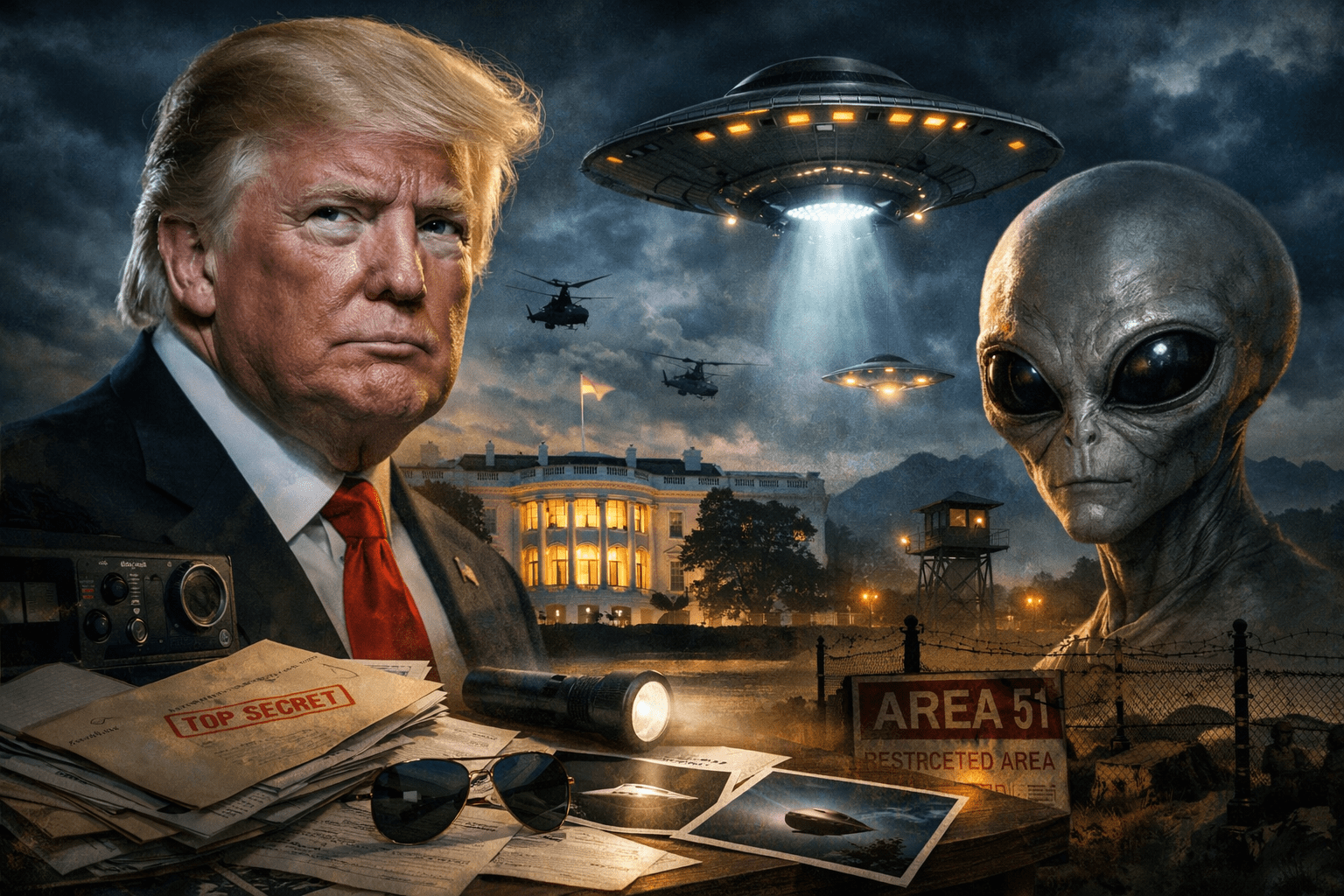
In February 2026, the announcement that former President Donald Trump would open previously classified files related to unidentified aerial phenomena (UAP), commonly referred to as UFOs, sent shockwaves through political and cultural spheres across the United States. This move not only reignited public interest in extraterrestrial life but also raised questions about the broader implications of conspiracy theories in American society. As Trump capitalizes on this moment to bolster his image among his base, it is crucial to examine why Americans lean into conspiracies and how this phenomenon shapes perceptions of reality.
The Historical Context of Conspiracy Theories in America
Conspiracy theories are not new to the American landscape; in fact, they have deep roots in the nation’s history. From the Boston Tea Party, which some viewed as a conspiracy against British rule, to the more recent theories surrounding the Kennedy assassination, Americans have long been drawn to narratives that challenge official accounts. The rise of the internet and social media has accelerated the spread of these theories, allowing fringe ideas to gain traction in mainstream discourse. The 2020 presidential election and the subsequent events surrounding the Capitol riot in January 2021 exemplify how conspiracy theories can influence political actions and public opinion.
Trump himself has been a central figure in the modern proliferation of conspiracy theories, often using them to energize his base. His rhetoric around the 2020 election being “stolen” has sparked ongoing debates about election integrity, leading to a significant portion of the American populace questioning the democratic process. This context is crucial when considering the implications of his recent announcement regarding the alien files, as it demonstrates a continuous cycle of distrust towards governmental institutions and the narratives they promote.
As Trump opens the alien files, many Americans may view this as an opportunity to uncover hidden truths, further feeding into the belief that the government has been withholding critical information. This aligns with a broader trend where citizens increasingly believe in the existence of conspiracies, partly fueled by a lack of transparency in government communications and a growing skepticism of mainstream media outlets. The historical context not only informs the current fascination with alien life but also illustrates a societal pattern where conspiracies offer a framework to make sense of complex realities.
The Psychological Appeal of Conspiracy Theories
Understanding the psychological underpinnings of conspiracy theories can shed light on why individuals are drawn to them, especially in the context of Trump’s announcement. Psychological research indicates that belief in conspiracy theories often stems from feelings of powerlessness and a desire for control in uncertain times. When faced with complex social and political issues, individuals may turn to conspiracies as a means of simplifying their understanding of the world.
Moreover, conspiracy theories provide a sense of belonging to a community of “informed” individuals who possess knowledge that the general public is unaware of. This phenomenon can be particularly appealing in an age marked by information overload, where distinguishing credible sources from misinformation has become increasingly challenging. The idea that one can possess “secret knowledge” about alien life or government cover-ups can enhance a person’s self-esteem and reinforce their identity, especially in a polarized environment.
Trump’s leveraging of the alien files taps into these psychological motivations, as it presents a narrative that suggests there are hidden truths waiting to be revealed. For many, this resonates deeply, as it aligns with their existing beliefs in government secrecy and a longing for transparency. The timing of this announcement is crucial; as societal anxieties rise due to economic uncertainties and geopolitical tensions, the allure of conspiracies grows stronger, offering individuals a psychological refuge.
The Role of Media in Amplifying Conspiracy Theories
The media landscape plays a pivotal role in shaping public perceptions of conspiracy theories, particularly in the context of Trump’s unveiling of the alien files. The intersection of traditional media, social media, and alternative news platforms creates an environment ripe for the dissemination of conspiracy narratives. Trump’s announcement has been met with a flurry of coverage, but the framing of this event varies greatly across different media outlets.
In the age of social media, platforms like Twitter and Facebook have become breeding grounds for conspiracy theories. The viral nature of these platforms allows misinformation to spread quickly, often outpacing fact-checking efforts. When public figures like Trump engage with or endorse conspiracy theories, it legitimizes these narratives in the eyes of many followers, making it essential to analyze how media reporting influences public belief systems.
Furthermore, the concept of “newsjacking” has become prevalent, where media outlets and individuals capitalize on breaking news events to promote their narratives. In this case, Trump’s disclosure of the alien files serves as a prime opportunity for various actors—ranging from political commentators to conspiracy theorists—to frame the conversation in ways that align with their agendas. This dynamic highlights the responsibility of media practitioners to navigate the fine line between reporting on conspiracies and inadvertently legitimizing harmful narratives.
The Social Implications of Conspiracy Beliefs
As conspiracy theories become increasingly mainstream, their social implications cannot be overlooked. The belief in conspiracies can lead to a fracturing of societal trust, as individuals become more skeptical of institutions, experts, and even each other. This erosion of trust has profound consequences for democratic processes, public health, and social cohesion.
Trump’s opening of the alien files may serve to further polarize public opinion. For some, this move could be seen as a validation of their long-held beliefs in governmental cover-ups, while for others, it may reinforce their skepticism towards both Trump and the claims being made. The implications extend beyond mere political discourse; they influence how communities interact, how families communicate, and how individuals view their roles within society.
In recent years, the COVID-19 pandemic has highlighted the dangers of conspiracy thinking, particularly surrounding vaccine hesitancy and public health measures. The belief in conspiracies can lead to resistance against evidence-based practices, ultimately jeopardizing collective well-being. As Trump reopens discussions on alien life and government secrecy, it is essential to consider the broader societal impact of such narratives and the need for fostering critical thinking and media literacy among the public.
Looking ahead, the fascination with conspiracies is unlikely to wane, especially in the context of ongoing political polarization and global uncertainty. Trump’s decision to open the alien files may serve as a catalyst for renewed interest in extraterrestrial life, but it also reflects a deeper societal issue regarding trust and transparency in governance. As more individuals embrace conspiracy theories, it raises critical questions about the future of American identity and the role of truth in public discourse.
The challenge for policymakers, educators, and media professionals will be to address the underlying causes of conspiracy beliefs while promoting a culture of critical thinking and open dialogue. As technology continues to evolve, so too will the methods by which conspiracies are propagated and challenged. Ultimately, the future of how Americans engage with conspiracy theories will depend on the collective efforts to foster an informed and engaged citizenry capable of navigating complex information landscapes.
Takeaways
Trump’s reopening of the alien files serves not only as a political maneuver but as a lens through which to examine the broader phenomenon of conspiracy beliefs in America. The historical context, psychological motivations, media influence, social implications, and future outlook all contribute to a nuanced understanding of why Americans lean into conspiracies. As we navigate this complex terrain, it is essential to engage critically with narratives that seek to redefine our perceptions of reality and foster a culture that values truth and transparency.
| Aspect | Conspiracy Theories | Mainstream Beliefs | Impact on Society |
|---|---|---|---|
| Origin | Often arise from distrust in authority | Based on scientific consensus and accepted knowledge | Can erode trust and create division |
| Psychological Appeal | Provide a sense of control and community | Offer stability and reassurance | Can lead to social fragmentation |
| Media Representation | Amplified by social media and sensationalism | Reported through traditional journalism | Can mislead public opinion |
| Acceptance | Growing among specific demographics | Generally accepted by the educated public | Influences political discourse and public health |
Frequently Asked Questions
What are the historical roots of conspiracy theories in America?
Conspiracy theories have a long history in the United States, dating back to pivotal events such as the Boston Tea Party and the assassination of President Abraham Lincoln. Throughout American history, various conspiracy narratives have emerged, often in response to political upheaval or social change. For example, the Cold War era saw the rise of fears surrounding communist infiltration, leading to theories about government plots and espionage. The internet has further accelerated the spread of conspiracy theories, allowing marginalized beliefs to gain mainstream traction, particularly during times of political tension and uncertainty. This context highlights how conspiracy theories are often a reflection of societal anxieties, revealing a persistent distrust in government and authority figures.
How do psychological factors contribute to belief in conspiracy theories?
Psychological research indicates that individuals are drawn to conspiracy theories for several reasons, including a desire for control, a need for social belonging, and a tendency to see patterns in random events. When faced with complex and uncertain situations, people often seek simplified explanations, and conspiracy theories provide a framework to understand chaotic events. The notion of possessing ‘secret knowledge’ can enhance an individual’s self-esteem and foster a sense of community among like-minded believers. This psychological appeal is particularly potent during times of societal stress, where individuals may turn to conspiracies as a coping mechanism, reinforcing their beliefs and distancing themselves from mainstream narratives.
What role does the media play in the proliferation of conspiracy theories?
The media landscape is instrumental in shaping public perceptions of conspiracy theories. Social media platforms, in particular, have become breeding grounds for the rapid dissemination of conspiracy narratives. The viral nature of these platforms can amplify misinformation, often outpacing traditional fact-checking efforts. Furthermore, news outlets engage in ‘newsjacking,’ where they capitalize on current events to promote specific narratives, which can legitimize conspiracy theories in the eyes of the public. This media environment creates challenges for critical engagement with information, as individuals may struggle to differentiate between credible reporting and sensationalized conspiracy claims. As such, the media holds a significant responsibility in navigating the fine line between reporting on conspiracies and inadvertently promoting harmful beliefs.
What are the social consequences of widespread belief in conspiracy theories?
The rise of conspiracy theories has profound social implications, as they can erode trust in institutions and create divisions within communities. When individuals embrace conspiracy beliefs, they may become more skeptical of experts, governmental authorities, and even each other, leading to a fragmentation of societal cohesion. This mistrust can have real-world consequences, such as vaccine hesitancy during public health crises, where conspiracy theories may discourage individuals from adopting evidence-based practices. Moreover, the polarization driven by conspiracy beliefs can complicate political discourse, as differing perceptions of reality hinder constructive dialogue and compromise. As society grapples with these challenges, fostering critical thinking and media literacy becomes essential to counteract the negative effects of conspiracy beliefs.
What is the future outlook for conspiracy theories in American culture?
The future of conspiracy theories in American culture appears poised for continued prominence, particularly as political polarization and societal anxieties persist. As more individuals engage with conspiracies, there is a pressing need for policymakers, educators, and media practitioners to promote critical thinking and open dialogue. The ongoing evolution of technology will further shape how conspiracies are communicated and challenged, necessitating adaptive strategies to address misinformation. Ultimately, the trajectory of conspiracy beliefs will depend on collective efforts to foster an informed citizenry capable of navigating complex information landscapes while maintaining a commitment to truth and transparency.