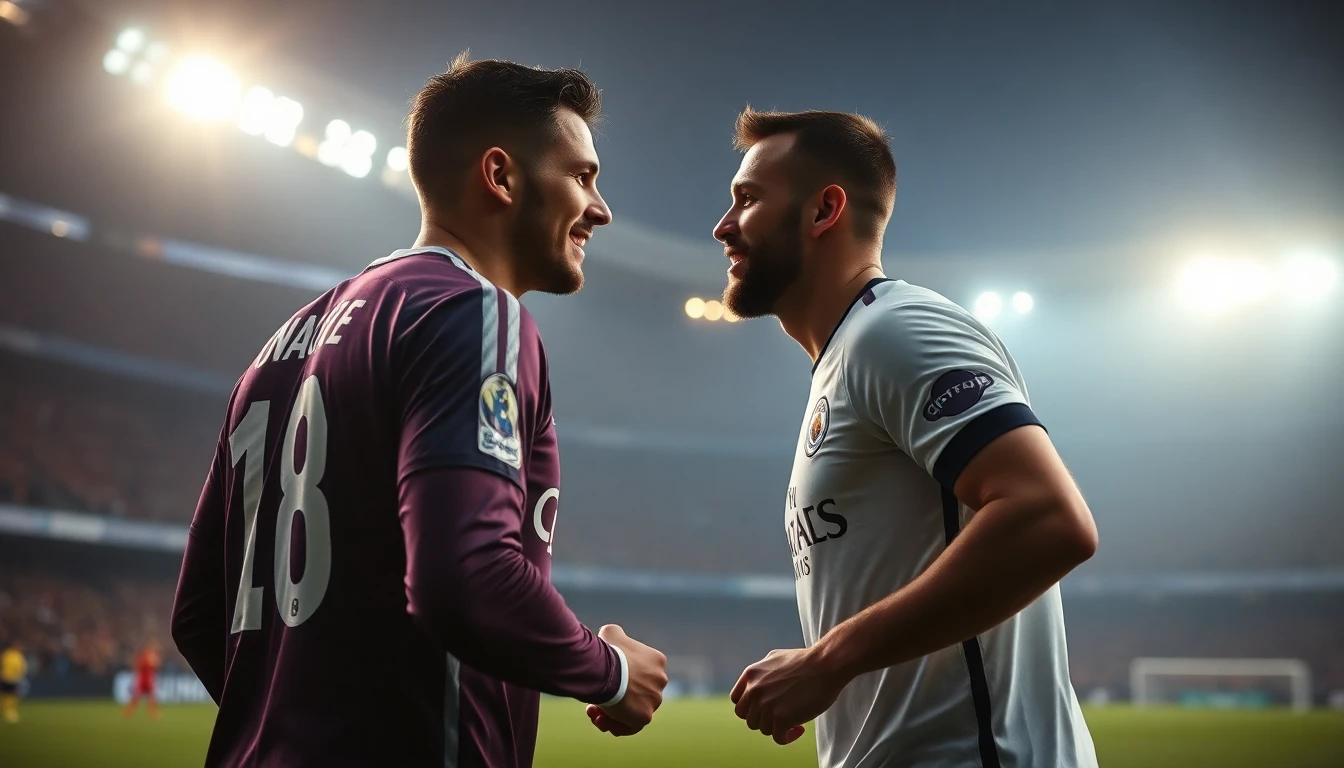
Real Madrid vs. Man City: Champions League Clash of Titans Looms Large
The Champions League draw has once again delivered a mouthwatering clash: Real Madrid versus Manchester City in the last 16. This is not just another knockout tie; it’s a meeting of two of the biggest, richest, and most strategically astute clubs in world football. Their recent history in the competition is already laced with drama, controversy, and moments of sheer brilliance, ensuring that this latest encounter is one circled on every football fan’s calendar.
While the draw itself generates immediate excitement, the months leading up to the tie will be filled with tactical analysis, player scouting, and relentless media speculation. Both teams will be meticulously preparing, fine-tuning their strategies to exploit weaknesses and nullify strengths. The pressure will be immense, the stakes extraordinarily high. For either club, progressing beyond this round is a critical step towards lifting the coveted Champions League trophy.
This article delves into the intricacies of this highly anticipated matchup, exploring the tactical nuances, dissecting the key player battles, and examining the historical context that adds weight to this titanic showdown. We’ll also consider the broader implications for both clubs, focusing on their ambitions for the remainder of the 2025-2026 season. This is more than just a game; it’s a clash of footballing philosophies, a test of mental fortitude, and a spectacle worthy of the Champions League stage.
Tactical Breakdown: Guardiola vs. Ancelotti – A Chess Match of Epic Proportions
When Manchester City and Real Madrid lock horns, the sideline battle between Pep Guardiola and Carlo Ancelotti becomes as fascinating as the action on the pitch. Guardiola, a known tactical innovator, often deploys intricate passing patterns, high pressing, and positional play aimed at dominating possession and creating scoring opportunities. Expect City to attempt to control the midfield, using players like Kevin De Bruyne and Rodri to dictate the tempo and unlock Real Madrid’s defense. Their full-backs might invert into midfield to create overloads, a tactic Guardiola has used successfully in the past.
Ancelotti, in contrast, typically favors a more pragmatic approach, focusing on defensive solidity and quick transitions. Real Madrid are masters of soaking up pressure, remaining compact defensively, and then unleashing devastating counter-attacks, often led by Vinícius Júnior’s blistering pace and Karim Benzema’s clinical finishing (assuming Benzema is still in top form and playing for Madrid). The Italian manager’s ability to adapt his tactics based on the opponent’s strengths is one of his greatest assets. Real Madrid’s midfield, potentially featuring the experience of Luka Modrić and Toni Kroos (depending on their form and future plans), will be crucial in disrupting City’s rhythm and providing the creative spark for the counter.
The midfield battle will be pivotal. If City can successfully suffocate Real Madrid’s creative players and dictate the flow of the game, they will have a significant advantage. However, if Real Madrid can bypass City’s press and exploit the spaces behind their high defensive line, they could cause considerable problems. Furthermore, set-pieces will be a critical area to watch. Real Madrid’s aerial threat, particularly from defenders like Eder Militão, could be a valuable weapon against a City side that has sometimes struggled to defend crosses. The game may come down to which team is more clinical in front of goal and which defense is better organized and resilient under pressure. The introduction of VAR has, as discussed in detail in coverage of the US Supreme Court adopting new technology to help identify conflicts of interest, added another layer of scrutiny, making discipline and avoiding unnecessary fouls even more critical.
Key Player Battles: Vinícius Júnior vs. Kyle Walker and More
The individual matchups within this tie promise to be explosive. A standout battle will undoubtedly be between Real Madrid’s Vinícius Júnior and Manchester City’s Kyle Walker. Vinícius’s electrifying pace and dribbling skills make him one of the most dangerous wingers in the world, capable of turning a game on its head with a moment of brilliance. Walker, renowned for his speed and defensive prowess, will be tasked with containing the Brazilian’s threat. This duel will be a fascinating test of skill, athleticism, and tactical awareness.
In midfield, the clash between Kevin De Bruyne and Luka Modrić (if Modrić is still a key player) will be a masterclass in creative genius. De Bruyne’s incisive passing and long-range shooting make him a constant threat, while Modrić’s vision and ability to dictate the tempo of the game are crucial for Real Madrid. Their ability to influence the game’s flow and create opportunities for their teammates will be vital. Another critical matchup will be in central defense, where Real Madrid’s center-backs will have to deal with the movement and finishing of Erling Haaland (assuming he is still at City and in form). His physicality and goal-scoring record make him a nightmare for any defender, and Real Madrid will need to be well-organized and disciplined to keep him quiet.
Beyond these individual battles, the performance of the goalkeepers could also be decisive. A moment of brilliance or a costly mistake could be the difference between victory and defeat. Both teams possess world-class goalkeepers capable of producing match-winning saves. In such a high-stakes encounter, the ability to remain calm under pressure and make crucial interventions will be paramount. These key battles, coupled with the tactical strategies employed by both managers, will shape the narrative of this enthralling Champions League tie. As seen in other high-profile cases, such as those discussed in Newsjack: The Epstein Files and the Hidden World of an Unaccountable Elite, individual accountability is paramount in determining the outcome of high-stakes events.
Historical Context: A Rivalry Forged in Champions League Fire
Real Madrid and Manchester City have developed a fierce rivalry in recent Champions League seasons, with their encounters often producing memorable moments and dramatic storylines. Their past meetings have been closely contested, with both sides claiming significant victories. Real Madrid’s dramatic comeback win in the 2022 semi-final, overturning a first-leg deficit to reach the final, remains etched in the memories of fans. City avenged that defeat in the 2023 semi-final, dismantling Real Madrid at the Etihad Stadium en route to winning their first Champions League title. These past clashes have created a sense of animosity and respect between the two clubs, adding an extra layer of intensity to their upcoming encounter.
Looking back, these matches have been defined by tactical shifts, individual brilliance, and moments of controversy. The tactical battles between Guardiola and Ancelotti have been particularly intriguing, with both managers constantly seeking to outwit each other. The individual performances of players like Karim Benzema, Kevin De Bruyne, and Vinícius Júnior have often proved decisive. The historical context also highlights the contrasting approaches of the two clubs. Real Madrid, with their unparalleled Champions League pedigree, represent the established elite of European football. Manchester City, backed by significant investment, represent the new wave of challengers seeking to establish themselves among the continent’s giants.
This rivalry is not just about trophies and titles; it’s also about legacy and prestige. For Real Madrid, winning the Champions League is ingrained in their DNA, a symbol of their status as the most successful club in the competition’s history. For Manchester City, winning the Champions League represents the culmination of their project, a validation of their ambition and investment. Their recent encounters have set the stage for a compelling and enduring rivalry that will continue to captivate football fans for years to come. The high stakes and intense competition mirror the pressures faced in other arenas, such as those highlighted in Newsjack: Trump meets with top Iran advisers as war threat grows, where geopolitical tensions often hinge on critical moments.
Future Outlook: Implications for Both Clubs and the Season Ahead
The outcome of this Champions League tie will have significant implications for both Real Madrid and Manchester City, shaping their ambitions for the remainder of the 2025-2026 season. For the victor, progressing to the quarter-finals will provide a major boost in confidence and momentum, strengthening their belief that they can go all the way and lift the trophy. It will also solidify their position as one of the leading contenders for the title. However, defeat would be a bitter blow, potentially derailing their season and raising questions about their ability to compete at the highest level.
Beyond the immediate impact on the Champions League, the result could also influence their domestic campaigns. A successful run in Europe often translates into improved form in the league, while a disappointing exit can lead to a loss of focus and motivation. For Real Madrid, maintaining their dominance in La Liga will be a key priority, while for Manchester City, challenging for the Premier League title is equally important. The psychological impact of this Champions League tie could therefore have a ripple effect throughout the season. Furthermore, the financial rewards associated with progressing in the competition could also provide a significant boost, allowing them to invest in new players and strengthen their squad.
Looking ahead, this tie also has broader implications for the future of European football. The rivalry between Real Madrid and Manchester City represents a clash of different models, reflecting the evolving landscape of the game. Real Madrid, with their rich history and tradition, represent the established order, while Manchester City, with their financial power and innovative approach, represent the modern challenge. Their ongoing battle for supremacy highlights the changing dynamics of European football and the increasing competition for the Champions League title. Similar shifts are occurring in other sectors, as illustrated by UN approves 40-member scientific panel on the impact of artificial intelligence over US objections, where the rise of AI challenges established norms.
Deep Dive: The Financial Stakes and Club Strategy
Beyond the on-field drama and tactical battles, the financial implications of this Champions League tie are immense. For both Real Madrid and Manchester City, progressing deep into the tournament is not only a matter of prestige but also a significant revenue generator. Reaching the quarter-finals, semi-finals, and ultimately the final, unlocks substantial prize money from UEFA, the governing body of European football. This financial windfall can then be reinvested in various areas, including player acquisitions, infrastructure improvements, and youth development programs. The Champions League has evolved into a pivotal source of income for Europe’s elite clubs.
For Real Madrid, a club with a long and storied history of success in the competition, financial stability is paramount. While they boast a global fanbase and lucrative sponsorship deals, the Champions League revenue provides a crucial buffer against economic fluctuations and allows them to maintain their competitive edge in the transfer market. They are actively striving to avoid situations like that described in Newsjack: What to Know About Traveling to Cuba Amid the Fuel Crisis, where unforeseen economic hardships hinder progress. Manchester City, backed by the Abu Dhabi United Group, have access to considerable financial resources. However, even for them, the Champions League revenue represents a significant opportunity to further strengthen their squad and build a sustainable financial model. It allows them to comply with Financial Fair Play regulations and invest in long-term projects without relying solely on owner funding.
The financial stakes also influence the clubs’ transfer strategies. A successful Champions League campaign enhances a club’s reputation and attractiveness to top players, making it easier to recruit talent from around the world. This creates a virtuous cycle, where success on the pitch leads to increased financial resources, which in turn allows them to attract better players and further enhance their chances of success. The financial pressures in modern football are intense, and the Champions League provides a vital avenue for clubs to secure their financial future and remain competitive at the highest level. Failure to progress in the competition can have significant financial consequences, potentially impacting their ability to compete in the transfer market and retain their key players. The drive for revenue also has some parallels with the surging interest in cryptocurrency, though the risks are also high as detailed in Newsjack: Bitcoin, Ethereum, XRP Drop. This Could Have a Big Impact on Crypto This Week..
Conclusion: A Tie Destined to Be a Classic
The Champions League clash between Real Madrid and Manchester City is more than just a game; it’s a meeting of titans, a battle of philosophies, and a spectacle that will captivate football fans worldwide. The tactical nuances, key player battles, historical context, and future implications all contribute to the anticipation surrounding this tie. Expect a closely contested encounter filled with drama, excitement, and moments of brilliance. Both teams will be desperate to progress to the next round, knowing that victory represents a significant step towards lifting the coveted Champions League trophy. This is a tie destined to be a classic, a game that will be talked about for years to come.
| Variable | Real Madrid | Manchester City |
|---|---|---|
| Managerial Style | Pragmatic, Adaptable | Possession-based, High Press |
| Key Player (Attacking) | Vinícius Júnior | Erling Haaland |
| Champions League Titles | 14 | 1 |
| Financial Strength | Very Strong | Extremely Strong |
Frequently Asked Questions
What are the key tactical differences between Real Madrid and Manchester City?
Real Madrid typically employs a more pragmatic approach, focusing on defensive solidity and quick counter-attacks, often relying on the individual brilliance of their attacking players. They tend to soak up pressure and then exploit spaces on the break. Manchester City, under Pep Guardiola, favors a possession-based style of play, aiming to dominate the midfield and create scoring opportunities through intricate passing patterns and high pressing. They often utilize inverted full-backs to create numerical advantages in midfield. The contrast in styles sets the stage for a fascinating tactical battle, where each team will attempt to impose their preferred game plan on the other. The emphasis that City places on precision, discipline, and planning bears resemblance to the focus shown by those practicing Newsjack: Lifestyle Practices That Help Prevent Heart Disease, as well.
Which players will be crucial to their respective teams’ success in this Champions League tie?
For Real Madrid, Vinícius Júnior’s pace and dribbling skills will be vital in unlocking City’s defense, while their midfield maestros, such as Luka Modrić and Toni Kroos (depending on their form), will need to control the tempo of the game. Karim Benzema’s finishing ability (if he is playing for Madrid and in top form) will also be crucial. For Manchester City, Kevin De Bruyne’s creativity and goal-scoring ability will be key, while Erling Haaland’s movement and finishing will pose a constant threat to Real Madrid’s defense. Kyle Walker’s ability to contain Vinícius Júnior will also be crucial in determining City’s defensive solidity. Both goalkeepers will also need to be at their best, as a moment of brilliance or a costly mistake could prove decisive. The performance of these key players will significantly influence the outcome of the tie.
What is the historical context of the rivalry between Real Madrid and Manchester City in the Champions League?
Real Madrid and Manchester City have developed a fierce rivalry in recent Champions League seasons, with their encounters often producing memorable moments and dramatic storylines. Real Madrid’s dramatic comeback win in the 2022 semi-final remains etched in the memories of fans, while City avenged that defeat in the 2023 semi-final en route to winning their first Champions League title. These past clashes have created a sense of animosity and respect between the two clubs, adding an extra layer of intensity to their upcoming encounter. The historical context also highlights the contrasting approaches of the two clubs, with Real Madrid representing the established elite and Manchester City representing the new wave of challengers. The way that both of these teams evolved is comparable to the evolution occurring with new AI technologies such as that covered in Newsjack: Gemini 3.1 Pro: A smarter model for your most complex tasks.
What are the financial implications of progressing in the Champions League for both clubs?
Progressing deep into the Champions League is not only a matter of prestige but also a significant revenue generator for both Real Madrid and Manchester City. Reaching the quarter-finals, semi-finals, and ultimately the final, unlocks substantial prize money from UEFA. This financial windfall can be reinvested in various areas, including player acquisitions, infrastructure improvements, and youth development programs. A successful Champions League campaign also enhances a club’s reputation and attractiveness to top players, making it easier to recruit talent from around the world. The financial pressures in modern football are intense, and the Champions League provides a vital avenue for clubs to secure their financial future and remain competitive at the highest level. The financial challenges that can occur when dealing with new technologies are somewhat similar to those described in relation to crypto in Newsjack: Crypto expert explains why bitcoin makes ‘perfect record’ for tracking down criminals, where lack of proper regulation can sometimes lead to unpredictable outcomes.
How could the outcome of this tie influence the remainder of the 2025-2026 season for Real Madrid and Manchester City?
The outcome of this Champions League tie will have significant implications for both Real Madrid and Manchester City, shaping their ambitions for the remainder of the 2025-2026 season. For the victor, progressing to the quarter-finals will provide a major boost in confidence and momentum, strengthening their belief that they can go all the way and lift the trophy. It will also solidify their position as one of the leading contenders for the title. However, defeat would be a bitter blow, potentially derailing their season and raising questions about their ability to compete at the highest level. Beyond the immediate impact on the Champions League, the result could also influence their domestic campaigns, with success in Europe often translating into improved form in the league, while a disappointing exit can lead to a loss of focus and motivation. The psychological impact of this Champions League tie could therefore have a ripple effect throughout the season.