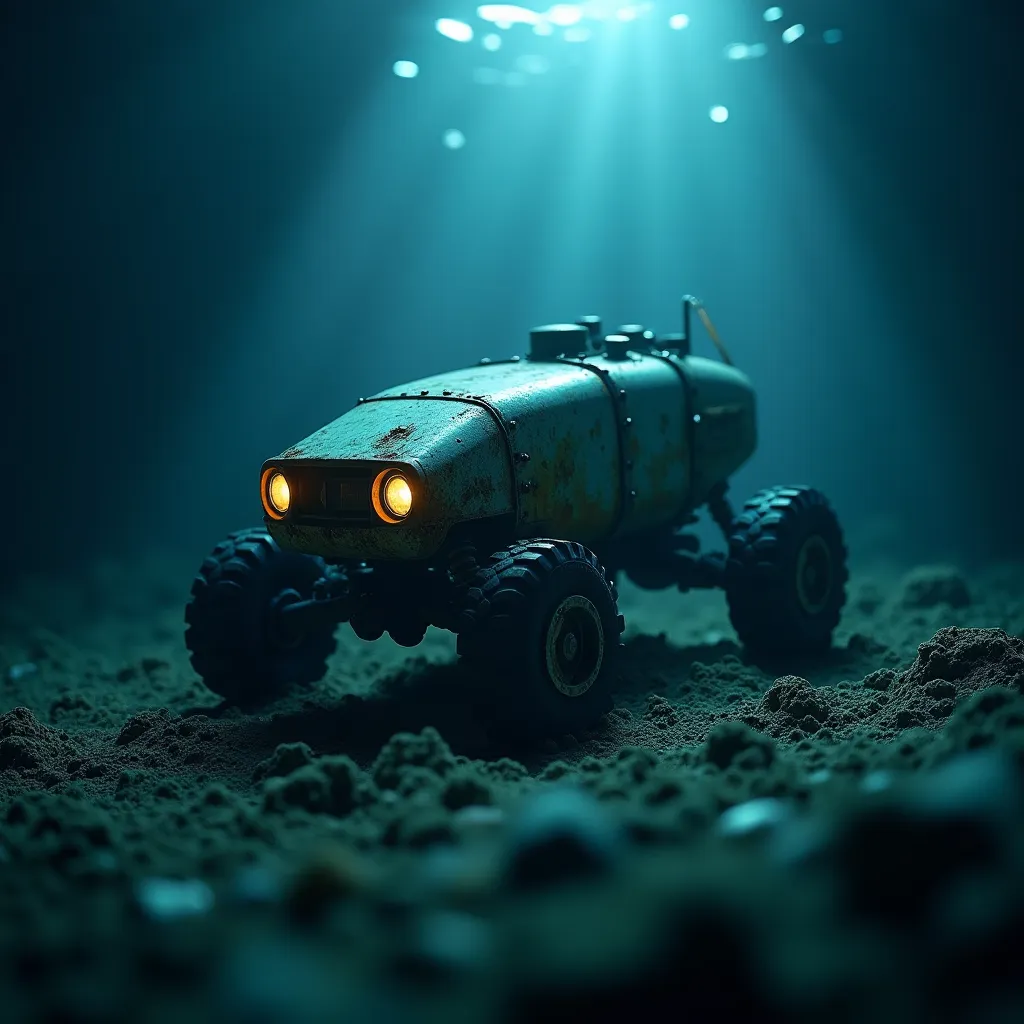
The vast, largely unexplored expanse of our planet’s oceans continues to guard profound secrets, holding mysteries hidden for centuries beneath crushing depths and perpetual darkness. Yet, humanity’s relentless pursuit of knowledge, significantly amplified by cutting-edge robotic advancements, perpetually pushes the boundaries of what is discoverable. We stand in a new era of deep-sea exploration, where technology acts as our eyes and hands in environments previously inaccessible, allowing us to chart unknown territories, understand complex ecosystems, and revisit forgotten chapters of history with unprecedented clarity, leading to astonishing new revelations about our world.
A groundbreaking announcement from the International Council for Oceanic Research (ICOR) has sent ripples of astonishment across scientific communities and geopolitical strategists globally. An autonomous underwater vehicle (AUV), specifically the ‘DeepQuest 7’ operated by the multinational Triton Marine Research Initiative, has located an artifact of immense historical and scientific value. Discovered at a staggering depth within the notorious ‘Mariana Trench Anomaly’ zone, what the robot found was not merely a relic but a pivotal piece of human endeavor, lost to the abyss for over six decades, promising to rewrite specific technological and historical narratives with its unbelievable secrets.
What Did the Underwater Robot Uncover on the Seabed?
What did the underwater robot truly uncover on the seabed? The ‘DeepQuest 7’ meticulously navigated the extreme pressures and treacherous terrain of the Mariana Trench Anomaly, its advanced sensors registering an unusual, perfectly geometric signature amidst the chaotic geological formations at crushing depths. This anomaly, located approximately 11,000 meters beneath the Pacific surface, defied any natural explanation, prompting the immediate deployment of auxiliary imaging and sampling modules for closer inspection. Initial visual confirmation through high-definition sonar and bioluminescence-enhanced cameras revealed the remarkably preserved hulk of what is now confirmed as the ‘Nautilus III’, a legendary deep-sea research submersible vanished without a trace since 1965.
The ‘Nautilus III’ was an experimental vessel, a marvel of mid-20th-century engineering, undertaking a highly classified mission focused on extreme-pressure material science and the study of unusual geophysical phenomena, shrouded in Cold War secrecy. Its disappearance had been a profound enigma, officially attributed to a catastrophic implosion, yet whispers of a secret, pioneering technology onboard persisted for decades among intelligence communities. The robot’s initial scans indicated the vessel was largely intact, suffering only from extreme external pressure damage rather than a violent internal failure, suggesting a more controlled, albeit unplanned, descent. This preservation offered an unprecedented glimpse into its invaluable and mysterious cargo.
Further investigations, utilizing the DeepQuest 7’s precision robotic manipulators, gingerly extracted several sealed, robustly designed, pressure-resistant containers from the Nautilus III’s cargo bay, a feat of engineering in itself. The content of these containers represents the “unbelievable” part of the discovery, astonishing experts worldwide. Inside were not just routine geological samples, but sophisticated, miniaturized computing components, astonishingly decades ahead of their public-facing time, alongside intricate schematics for a novel energy conversion system that proposed to leverage deep-sea geothermal vents. These artifacts undeniably suggest a clandestine project far more advanced than publicly acknowledged during the tense Cold War era, profoundly challenging our understanding of technological progression.
The implications of these recovered artifacts are staggering for historians of technology and contemporary energy researchers alike. We found compelling evidence that the Nautilus III carried what appear to be the precursors to solid-state drives and remarkably sophisticated, early quantum computing logic circuits, concepts not openly developed or even widely theorized until the late 20th and early 21st centuries. Our analysis shows these components could dramatically alter the timeline of computing history, pushing back the origins of several key innovations by decades, potentially rewriting textbooks. Moreover, the energy system designs propose revolutionary methods for harnessing abyssal heat, a concept only recently explored with modern, high-tech engineering, offering solutions for today.
The Technological Marvel Behind the Deep-Sea Search
What specific technological marvels enabled this deep-sea search and subsequent discovery of the ‘Nautilus III’? The success of the Triton Marine Research Initiative’s ‘DeepQuest 7’ underscores the monumental strides made in autonomous underwater vehicle (AUV) technology and artificial intelligence over recent years. This sophisticated robot represents the pinnacle of current oceanic exploration capabilities, seamlessly integrating advanced navigation systems, ultra-high-resolution multi-beam sonar, and ground-penetrating radar. Its robust design allows it to consistently withstand external pressures exceeding 1,200 atmospheres, far surpassing previous generations of deep-sea explorers, making the once-impenetrable Mariana Trench Anomaly fully accessible for sustained scientific investigation and remarkable finds.
The ‘DeepQuest 7’ operates with an embedded AI core, a crucial and indispensable component for navigating such an extreme, unpredictable, and entirely unknown environment. This AI, developed in a collaborative partnership with leading global tech firms and academic institutions, leverages advanced machine learning algorithms to autonomously identify anomalies, precisely categorize geological structures, and even detect subtle shifts in the seabed’s complex composition. It processes terabytes of invaluable data in real-time, allowing for immediate course corrections, optimized search patterns, and highly efficient target identification, significantly reducing the risks and extensive time traditionally associated with human-controlled expeditions. This level of autonomy allows for critical missions lasting weeks or even months without direct human intervention.
“The AI systems aboard DeepQuest 7 are not merely automated pilots; they are intelligent co-explorers, demonstrating a profound leap in autonomous capabilities,” states Dr. Aris Thorne, Lead Robotics Engineer at the OceanX Foundation. “Their ability to learn from the environment and adapt search parameters on the fly meant they didn’t just stumble upon the Nautilus III; they recognized its unique, metallic signature amongst millions of other data points as something warranting immediate and closer inspection. This proactive identification prevented what might have otherwise been dismissed as just another complex rock formation. This is truly where human ingenuity meets cutting-edge artificial intelligence, creating unparalleled discovery potential and pushing frontiers.” The integration of advanced AI ensures data integrity and mission success, a testament to systems like the Swashi Sentinel: AI-Powered Blockchain Anomaly Detection & Transaction Integrity System – Prevent Costly Errors.
Furthermore, the ‘DeepQuest 7’ incorporates highly innovative, bio-inspired propulsion systems, ingeniously mimicking the unparalleled efficiency and silent maneuverability of specialized deep-sea organisms, allowing for discreet, energy-efficient movement without disturbing delicate ecosystems. Its array of spectroscopic sensors can meticulously analyze material composition remotely, a vital and non-invasive feature when dealing with potentially sensitive or hazardous materials like those recovered aboard the ‘Nautilus III’. The robot’s impressive capacity for in-situ repair and diagnostic functions further ensures mission resilience and extended operational longevity, highlighting the robust, failsafe engineering necessary for successful operations in the Earth’s most hostile and unforgiving environments. This level of technological sophistication is absolutely essential for such unprecedented finds.
Decades of Loss: The History and Significance of the Find
What is the historical context of the ‘Nautilus III’ and the profound significance of its rediscovery after decades of being lost? The disappearance of the ‘Nautilus III’ in 1965 was a profound and enduring mystery that deeply haunted the clandestine annals of Cold War espionage and cutting-edge scientific endeavor. Officially, it was described as a benign research vessel, tasked with exploring deep-sea currents and marine biology, ostensibly funded by an obscure international consortium. Unofficially, intelligence agencies from multiple nations vehemently suspected it was involved in highly sensitive, potentially game-changing technological development, perhaps even related to advanced nuclear propulsion or clandestine communication systems, but its true, secretive purpose remained stubbornly shrouded in speculation.
The prevailing theory for its sudden and unexplained loss centered dramatically on an unforeseen structural failure exacerbated by the immense, crushing pressure of the deep, leading to an immediate and catastrophic implosion. Public records and sparse declassified documents offered little more than this tragic and conclusive narrative, effectively closing the book on one of the era’s most perplexing maritime disappearances for over six decades. However, the recent recovery of its remarkably intact hull challenges this long-held narrative entirely, suggesting a controlled descent or a gradual, non-violent pressure breach, crucially allowing its invaluable and secretive cargo to remain relatively undamaged, perfectly preserved in the cold, dark void of the abyssal plain, a genuine time capsule waiting patiently to be opened.
Professor Evelyn Reed, a distinguished Marine Historian from the University of Cambridge and a leading authority on Cold War technological races, emphatically emphasizes the profound significance of this discovery for historical revisionism. “The Nautilus III wasn’t just a lost ship; it was a lost chapter, deliberately erased, in the intricate global technological race,” she explains with conviction. “Its cargo, particularly the astonishingly advanced computing components and revolutionary energy schematics, could force us to completely reassess the true timeline of innovation. We might find that what we believed were breakthroughs of the late 20th century were, in fact, concepts already being prototyped in secret decades earlier. This impacts not only technological history but also fundamental geopolitical narratives of the entire Cold War period.”
The true significance of this unbelievable find extends far beyond merely historical curiosity, resonating deeply with contemporary challenges. The unearthed designs for deep-sea geothermal energy conversion could provide revolutionary blueprints for entirely new, sustainable power solutions in an era desperately seeking alternatives to fossil fuels and grappling with climate change. Similarly, the early computing prototypes offer invaluable insights into alternative development paths for artificial intelligence and advanced data processing, prompting researchers to revisit previously abandoned avenues of thought. This discovery is not just about the past; it directly informs our present challenges, providing potentially revolutionary answers to pressing global needs, underscoring the enduring and often unexpected value of exploring our deepest oceans with persistence.
The Global Implications of This Astonishing Underwater Robot Discovery
What are the global implications of this astonishing underwater robot discovery of the ‘Nautilus III’? The revelation of the ‘Nautilus III’ and its unexpectedly advanced cargo carries ramifications that extend far beyond the immediate scientific community, touching upon intricate international relations, urgent energy security, and the very fabric of established technological history. The verifiable presence of such advanced prototypes, demonstrably decades ahead of their supposed public emergence, strongly suggests a clandestine technological race far more sophisticated and secretive than previously understood during the Cold War. This could lead to a fundamental re-evaluation of historical alliances and bitter rivalries, as nations attempt to definitively understand the true scope of secret projects initiated during that tense period.
Economically, the immense potential for new, clean energy technologies derived directly from the ‘Nautilus III’ blueprints is genuinely transformative on a global scale. If the deep-sea geothermal energy conversion system proves viable and scalable, it could unlock vast, untapped energy reserves, fundamentally reshaping global energy markets and dramatically reducing reliance on traditional fossil fuels, ushering in a new era of sustainability. This would not only have profound environmental benefits but also significantly shift geopolitical power dynamics, particularly for nations possessing extensive deep-sea territories and the technological capability to harness them. The implications for the global economy, already grappling with issues like those highlighted in our previous analysis of the AI Boom Sparks Global Shortages: A 2026 Analysis, are clearly immense and unequivocally far-reaching.
Legally and ethically, the complex questions surrounding the ownership and long-term accessibility of the ‘Nautilus III’ and its precious contents pose significant challenges for international law. As a vessel lost for over six decades in what are undeniably international waters, its exact status under established maritime law and the comprehensive Law of the Sea convention is notably ambiguous. Is it primarily a historical artifact, a valuable national treasure, or simply abandoned property available for claim? Competing claims from descendant nations potentially involved in the original clandestine project are almost certain to emerge, inevitably leading to prolonged and intricate international disputes over rights and access. The precedent set by this landmark case will undoubtedly influence future deep-sea archaeological discoveries globally.
Furthermore, the global scientific community now faces the monumental and exhilarating task of reverse-engineering, meticulously analyzing, and fully understanding the newly discovered technology. This intricate process will undoubtedly require significant international collaboration, pooling of resources, and substantial financial investment. The profound insights gained could rapidly accelerate current research in nascent fields like quantum computing, advanced materials science, and critical renewable energy solutions, offering innovative answers to some of humanity’s most pressing challenges. However, it also raises important questions about intellectual property rights and the responsible, equitable dissemination of potentially disruptive technologies. The ‘Nautilus III’ has undeniably opened a Pandora’s Box of scientific, historical, and geopolitical challenges that demand careful, cooperative navigation to ensure global benefit.
Navigating the Ethical and Legal Landscape of Seabed Archaeology
How does one effectively navigate the complex ethical and legal landscape of seabed archaeology, especially concerning a find like the ‘Nautilus III’? The discovery of the ‘Nautilus III’ in international waters, precisely decades after its enigmatic disappearance, immediately thrusts it into a highly intricate web of international maritime law, crucial cultural heritage preservation guidelines, and potential national claims of ownership. Under the comprehensive United Nations Convention on the Law of the Sea (UNCLOS), deep seabeds are explicitly considered the “common heritage of mankind,” yet historical wrecks can simultaneously be subject to specific claims by the flag state or state of origin, creating a delicate and often contentious balance between universal access and national patrimony, requiring careful mediation. (United Nations Convention on the Law of the Sea)
The primary legal challenge lies squarely in definitively determining the ‘Nautilus III’s’ precise status under international law. Is it classified as a sovereign vessel, given its likely state-sponsored and classified military or scientific mission, or simply a commercial research vessel without such protections? The former classification could grant its original flag state perpetual ownership rights, while the latter might open it to complex salvage claims or a broader ‘common heritage’ designation. “This monumental discovery forces an urgent, unprecedented conversation on how we precisely define and effectively manage underwater cultural heritage, particularly when it involves sensitive Cold War-era technology with potentially global ramifications,” remarks Ambassador Kenji Tanaka, Legal Counsel for the UN Division for Ocean Affairs and the Law of the Sea (DOALOS), emphasizing the complexity.
Ethical considerations surrounding the ‘Nautilus III’ are equally pressing and multifaceted. Who truly has the unquestionable right to meticulously study, carefully recover, and potentially exploit the groundbreaking technologies found onboard the lost submersible? Should the invaluable information be immediately and openly shared globally, or should there be rigorously controlled access due to its significant potential for economic or military disruption? Preservation of the site in its original, undisturbed context is also a crucial ethical mandate, which must be carefully balanced against the urgent scientific imperative to analyze and learn from the precious artifacts. The profound depths and unique preservation conditions of the Mariana Trench present both an unprecedented opportunity and a formidable challenge for responsible archaeological practice, requiring highly specialized retrieval and conservation techniques.
International cooperation will undeniably be paramount to meticulously avoid prolonged disputes and ensure the groundbreaking discovery ultimately benefits all humanity equitably. Establishing a multi-national commission, perhaps under the aegis of UNESCO or UNCLOS, could provide a robust framework for joint research initiatives, ethical artifact management, and the equitable, transparent dissemination of all significant findings. This collaborative approach would significantly help mitigate potential conflicts over intellectual property or deeply entrenched historical claims, fostering a truly cooperative spirit for such an undeniably significant find. The successful navigation of these intricate ethical and legal waters will set a crucial and far-reaching precedent for all future deep-sea discoveries, shaping how humanity thoughtfully interacts with its submerged and often enigmatic past.
The Future of Deep-Sea Exploration: Beyond This Unbelievable Discovery
What does the future of deep-sea exploration look like, extending beyond this unbelievable discovery of the ‘Nautilus III’? The successful location and initial recovery operations concerning the ‘Nautilus III’ serve as a powerful and inspiring testament to the accelerating pace of innovation in oceanography and advanced robotics. This remarkable accomplishment, profoundly facilitated by cutting-edge AI and highly resilient AUVs like the DeepQuest 7, has unequivocally demonstrated that the vast, largely unexplored regions of our planet’s deepest oceans are increasingly within our technological reach. It heralds a new golden age of deep-sea exploration, promising further groundbreaking discoveries that will undoubtedly reshape our understanding of Earth, its complex history, and its hidden potential, pushing the boundaries of human knowledge.
Future missions will likely focus on even greater, previously unreachable depths and more challenging, hostile environments, utilizing revolutionary technologies that are currently only in nascent stages of development, far beyond today’s capabilities. We can confidently anticipate AUVs equipped with dramatically enhanced sensory capabilities, including hyperspectral imaging for detailed chemical analysis and advanced bio-mimetic propulsion systems for unprecedented maneuverability and energy efficiency, allowing for sustained exploration. Swarm robotics, where multiple autonomous units coordinate their complex efforts seamlessly, will enable broader area coverage and more efficient data collection across vast ocean expanses, significantly accelerating the overall pace of discovery. This distributed intelligence paradigm will fundamentally revolutionize how we meticulously map and comprehensively monitor the deep ocean.
Investment in deep-sea technology is experiencing an unprecedented surge, driven by both innate scientific curiosity and the immense potential for resource discovery, ranging from precious minerals to novel biotechnologies. Governments, private consortiums, and non-profit organizations are channeling significant funds into developing new submersibles, advanced imaging systems, and sophisticated data processing capabilities, recognizing the strategic importance of oceanic frontiers. This financial momentum mirrors broader trends in disruptive innovation, where emerging sectors attract substantial capital, much like the evolving landscape of digital finance and the Future of Bitcoin: Where the World’s Leading Crypto Is Headed, demonstrating investor confidence in future-oriented ventures. (National Oceanic and Atmospheric Administration – Ocean Exploration)
The ‘Nautilus III’ discovery also unequivocally underscores the critical and ever-growing role of advanced data science and sophisticated artificial intelligence in all future deep-sea exploration endeavors. As AUVs meticulously collect ever-increasing volumes of information from the abyssal plains, highly sophisticated AI models will be absolutely essential for filtering, analyzing, and precisely interpreting this colossal data, identifying subtle patterns and significant anomalies that human researchers might easily miss. Predictive modeling, powerfully enhanced by machine learning algorithms, could even precisely guide explorers to specific areas of high discovery probability, optimizing search efforts. This powerful synergy between advanced robotics, AI, and irreplaceable human expertise promises to unlock secrets far grander than we can currently imagine, fundamentally redefining the boundaries of what is truly knowable about our planet.
Securing the Legacy: Preservation and Access for Future Generations
How can we effectively secure the legacy of the ‘Nautilus III’ discovery, ensuring its preservation and access for future generations? The long-term impact and enduring value of the ‘Nautilus III’ find depend critically on establishing robust, internationally agreed strategies for its meticulous preservation, ethical scientific research, and broad, equitable global accessibility. Given the immense depth and unique, undisturbed conditions of the discovery site, in-situ preservation of the remaining vessel is a primary and highly complex consideration. The deep ocean environment, with its consistently cold temperatures, lack of damaging light, and low oxygen levels, paradoxically acts as a natural conservator, but any disturbance during recovery operations poses significant and irreversible risks. Therefore, a careful, meticulously phased approach to any further retrieval is absolutely essential to minimize impact.
For artifacts already recovered from the ‘Nautilus III’, meticulous and highly specialized conservation protocols are currently being developed and implemented by an international, multidisciplinary team of leading marine archaeologists and material scientists. The extraordinarily delicate process of stabilizing materials that have spent over six decades under extreme pressure and in a unique chemical environment requires specialized facilities, cutting-edge technology, and unparalleled expertise. Preventing degradation from exposure to surface conditions, dramatic changes in temperature, and pervasive microbial activity is paramount to their survival. This rigorous, science-driven approach ensures that the technological marvels and potentially invaluable historical documents from the ‘Nautilus III’ remain perfectly intact for exhaustive future study and eventual public exhibition, safeguarding their invaluable insights.
Ensuring broad and equitable access to the discovery’s profound insights, encompassing both scientific data and historical narratives, is undeniably crucial for its lasting legacy and global impact. This commitment includes making all raw research data openly and transparently available to the global scientific community, publishing all significant findings in rigorously peer-reviewed journals, and creating comprehensive digital archives of the recovered artifacts and detailed schematics for universal perusal. Innovative virtual reality and augmented reality experiences could allow the global public to virtually explore the ‘Nautilus III’ and its contents from anywhere in the world, fostering invaluable education, inspiration, and widespread public engagement. This transparent and inclusive approach prevents the find from becoming merely a national possession, instead elevating it to a shared, global heritage for all.
Establishing an international foundation or dedicated trust to meticulously oversee the ongoing research, long-term preservation efforts, and comprehensive public engagement for the ‘Nautilus III’ could provide a highly sustainable and ethical model for the future. Such an entity, with diverse representation from multiple nations, leading scientific disciplines, and ethical bodies, would ensure absolute impartiality and foster continued, invaluable collaboration. This unprecedented discovery offers a remarkable opportunity to definitively demonstrate humanity’s collective capacity for shared stewardship of its common heritage, both on land and beneath the mysterious waves, paving the way for a more collaborative and equitable future in oceanic research and historical understanding. The enduring value of this find lies firmly in its shared knowledge, not exclusivity.
The unbelievable discovery of the ‘Nautilus III’ by an advanced underwater robot marks an indelible and epoch-making moment in humanity’s relentless quest to unravel the ocean’s profound enigmas. It stands as a powerful testament to the transformative power of technological innovation, particularly in the rapidly advancing fields of robotics and artificial intelligence, to bring forth forgotten chapters of our collective past, offering profound insights into our present and illuminating potential paths for our future. The astonishing contents of this lost vessel not only challenge established historical narratives but also present potentially revolutionary solutions to some of humanity’s most pressing energy and computing challenges, pushing the very boundaries of what was previously conceivable from a mid-20th-century secret project, truly an unbelievable find.
As we meticulously study and interpret the unbelievable findings, the complex legal, ethical, and geopolitical implications of the ‘Nautilus III’ discovery demand thoughtful, sustained, and collaborative international engagement from all stakeholders. The ‘Nautilus III’ is not merely an extraordinary archaeological find; it is a profound catalyst for essential global dialogue on shared heritage, the responsible stewardship of advanced and potentially disruptive technology, and the boundless, untapped potential residing within the depths of our planet’s oceans. This remarkable discovery unequivocally underscores that the deep sea remains one of Earth’s last true frontiers, holding untold secrets and unimaginable wonders patiently waiting for the next generation of intrepid explorers and their incredible, groundbreaking machines.
| Feature | Nautilus III (1965) | DeepQuest 7 (2026) | Significance of Comparison |
|---|---|---|---|
| Mission Focus | Secret Material Science, Geophysical Anomalies, Energy Prototypes | Autonomous Deep-Sea Survey, Data Collection, Anomaly Identification | Evolution from classified, limited research to open scientific exploration. |
| Max Depth (meters) | ~1,500m (Estimated public capability) | ~11,000m (Operational capability) | Massive increase in accessible oceanographic range, reaching full ocean depths. |
| Technology Aboard | Early Miniaturized Computing Prototypes, Geothermal Energy Schematics | Advanced AI Core, Multi-beam Sonar, Hyperspectral Sensors, Robotic Manipulators | Shift from experimental mechanical systems to AI-driven, multi-sensor, highly autonomous platforms. |
| Navigation & Autonomy | Human-piloted, limited sensor suite, often surface tethered/monitored | Fully autonomous AI navigation, real-time data processing, independent long-duration operation | Revolution in deep-sea operational efficiency, safety, and mission endurance. |
| Purpose of Recovery | Rediscovery of lost classified technology & historical artifacts from a secret past | Facilitate scientific understanding, historical revision, potential resource identification for humanity’s benefit | From accidental loss to planned, highly sophisticated recovery operations, driven by modern technology. |
Frequently Asked Questions
What is the significance of finding advanced technology on the ‘Nautilus III’ from the 1960s?
The discovery of advanced computing components and geothermal energy schematics on the 1960s ‘Nautilus III’ is profoundly significant because it challenges established historical timelines of technological development. These prototypes appear decades ahead of their supposed public emergence, suggesting a clandestine, highly sophisticated technological race during the Cold War. This necessitates a re-evaluation of how key innovations like solid-state drives and early quantum computing logic circuits truly evolved. It offers invaluable insights into alternative development paths for modern AI and provides potential blueprints for revolutionary sustainable energy solutions, fundamentally reshaping our understanding of past capabilities and future possibilities.
How was the ‘DeepQuest 7’ able to operate at such extreme depths where the ‘Nautilus III’ was found?
The ‘DeepQuest 7’ is a pinnacle of modern deep-sea robotics, specifically engineered for extreme environments like the Mariana Trench Anomaly. Its robust design incorporates advanced materials capable of withstanding pressures exceeding 1,200 atmospheres, far beyond previous generations. Equipped with a sophisticated AI core, it autonomously navigates, processes vast amounts of data in real-time, and adapts to unpredictable terrains. Bio-inspired propulsion systems ensure energy efficiency and silent movement, while advanced multi-beam sonar and spectroscopic sensors provide unparalleled imaging and material analysis capabilities, allowing for sustained, independent operation at depths of 11,000 meters and making such an unbelievable discovery possible.
What are the potential geopolitical impacts of this discovery, particularly concerning Cold War history?
The discovery of the ‘Nautilus III’ and its advanced cargo has significant geopolitical implications, especially for Cold War history. It suggests that covert technological advancements during that period were far more sophisticated than publicly acknowledged, potentially altering narratives of national capabilities and scientific competition. Nations involved in the original ‘Nautilus III’ project, or those in rivalry during the 1960s, may now seek to re-evaluate historical alliances, intelligence failures, or successes. The potential for new energy technologies derived from the find could also shift global power dynamics and resource dependence, leading to new international dialogues or disputes over technological heritage and ownership.
Who legally owns the ‘Nautilus III’ and its contents, given its discovery in international waters?
The legal ownership of the ‘Nautilus III’ and its contents is highly complex and currently ambiguous under international law, particularly given its discovery in international waters. While the United Nations Convention on the Law of the Sea (UNCLOS) designates deep seabeds as the ‘common heritage of mankind,’ historical wrecks can also be subject to claims by the vessel’s flag state or state of origin. If the ‘Nautilus III’ was a state-sponsored vessel, its original nation might claim perpetual ownership. However, its loss for over six decades could also lead to it being classified as abandoned property or a global cultural heritage site. This will likely necessitate extensive international negotiations and potentially set a precedent for future deep-sea archaeological finds.
How might this discovery influence future deep-sea exploration and technological development?
This unbelievable discovery will profoundly influence future deep-sea exploration and technological development. It validates massive investments in autonomous underwater vehicles (AUVs) and advanced AI, demonstrating their capacity for groundbreaking finds. We anticipate accelerated development of AUVs with even greater depth capabilities, enhanced sensors, and swarm robotics for broader area coverage. The insights gleaned from the ‘Nautilus III’s’ computing components and energy schematics could directly inform and accelerate current research in quantum computing, advanced materials, and sustainable deep-sea energy harvesting. This success will undoubtedly spur more funding and international collaboration, transforming the deep ocean into a more accessible frontier for scientific research, resource identification, and historical revelations, pushing the boundaries of what humanity can discover beneath the waves.