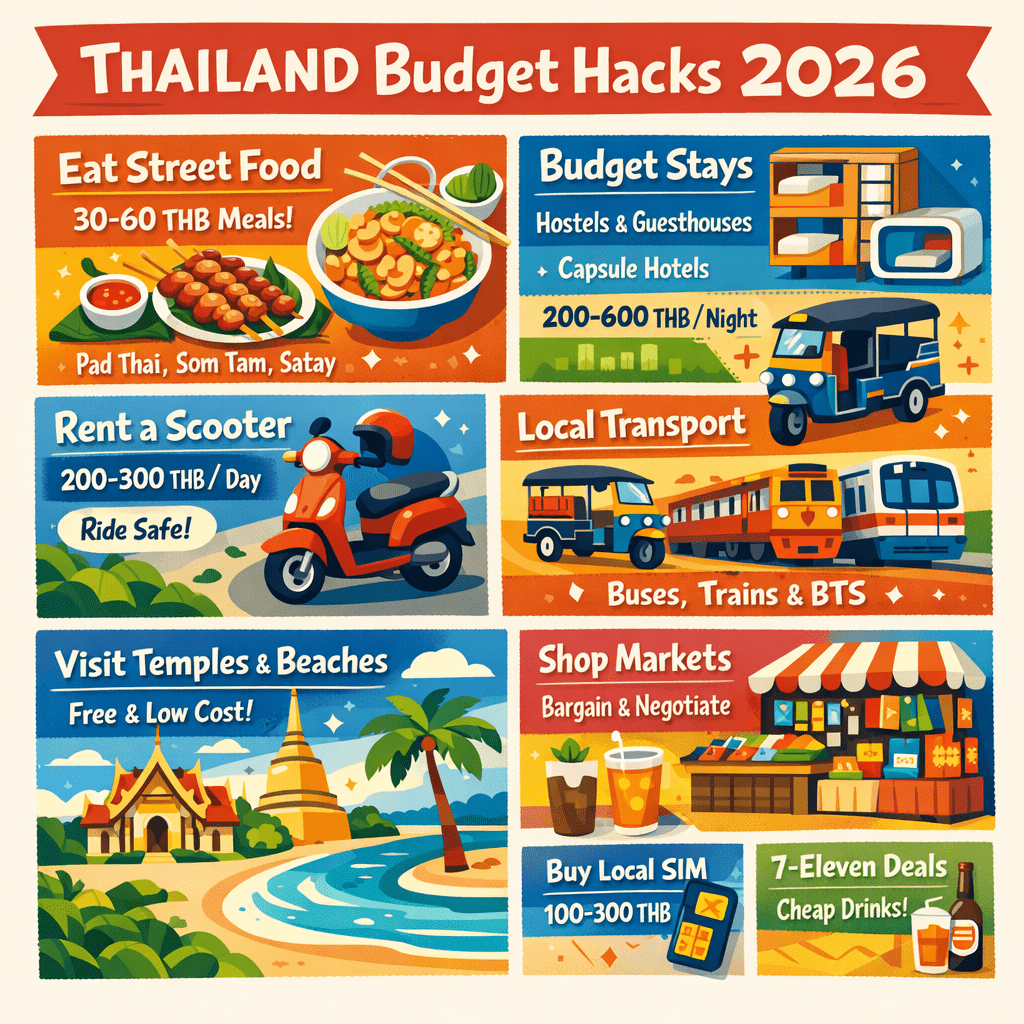
Thailand Budget Hacks 2026: Navigating Value in the Land of Smiles
Thailand remains an irresistible magnet for adventurers, digital nomads, and seasoned travelers alike. Its allure — from bustling Bangkok streets to the tranquil beaches of the south and the verdant mountains of the north — is undeniable. Yet, as global economic shifts continue to reconfigure travel dynamics, mastering your finances in this Southeast Asian gem is more crucial than ever. Our editorial board has observed a persistent myth: that Thailand is inherently ‘cheap.’ While it offers exceptional value, savvy spending is the true key to unlocking its full potential without overextending your wallet. This deep dive into Thailand budget hacks for 2026 will equip you with the insights to navigate its economic landscape with confidence.
We’re talking about more than just finding the cheapest meal; this is about strategic financial planning, understanding local nuances, and making informed choices that enhance your experience while preserving your funds. The goal isn’t austerity, but rather intelligent allocation — ensuring every baht spent contributes meaningfully to your journey. From pre-trip preparations to daily expenditures, we’ve meticulously analyzed the avenues where significant savings can be made, transforming a good trip into an extraordinarily affordable and rich one. Whether you’re planning a two-week holiday or considering a longer stint as a digital nomad, these proven strategies are designed to maximize your value proposition in the Land of Smiles.
The Foundations of Frugality: Pre-Trip Planning and Visa Acumen
Strategic budgeting for Thailand begins long before you even board your flight. The type of visa you secure, for instance, dramatically impacts your potential for long-term savings. Standard tourist visas often allow 30-60 day stays, which might require extensions, incurring additional fees and time. For those eyeing extended periods, exploring long-term tourist visas or leveraging the nation’s evolving digital nomad visa options can be a game-changer. These options provide legitimate pathways for longer stays, often reducing the administrative burden and costs associated with frequent border runs or multiple visa applications.
Our analysis indicates that flight booking is another critical area for pre-trip savings. Timing is everything; booking well in advance, especially during the shoulder seasons (May-June, September-October), typically yields more affordable fares than peak holiday periods. Being flexible with your travel dates, even by a few days, can lead to substantial reductions. Furthermore, consider flights with layovers in major regional hubs like Kuala Lumpur or Singapore, which can sometimes be significantly cheaper than direct routes, even accounting for the additional travel time. This initial investment in research can establish a robust financial buffer for your actual stay.
Accommodation Alchemy: Finding Your Sanctuary Without Breaking the Bank
Where you choose to lay your head can easily become the largest expenditure in your Thailand budget. The prevailing wisdom often steers visitors towards popular hubs like Bangkok, Phuket, or Koh Samui. While these offer undeniable attractions, they also command premium prices. For significant savings, we urge travelers to consider alternatives. Cities like Chiang Mai, while still popular, offer a more temperate cost of living, particularly for long-term rentals. Venturing further into regions like Isaan (Northeast Thailand) or smaller, less-developed islands can slash accommodation costs by half or even more.
When selecting your lodging, think beyond conventional hotels. Guesthouses and family-run bungalows often provide authentic experiences at a fraction of the price. For stays exceeding a week, consider negotiating directly with owners for discounted rates; many are open to this, especially during the low season. Digital nomads, in particular, can benefit from co-living spaces or shared apartments, which not only reduce rent but also foster a community. Websites like Airbnb, Agoda, and local Facebook groups are excellent resources for finding these hidden gems. Remember, a slight deviation from the beaten path can translate into substantial daily savings without sacrificing comfort or safety.
Culinary Cunning: Savoring Thailand on a Shoestring
Thailand’s street food scene is legendary, and for good reason: it’s incredibly delicious and exceptionally affordable. This is arguably the most impactful budget hack you can employ daily. A full, flavorful meal from a street vendor can often be had for as little as 40-70 baht (roughly $1.10-$2.00 USD). Our team often advises embracing this local dining culture, not just for the savings, but for the immersive experience it offers. Look for stalls bustling with locals – a clear indicator of quality and freshness. Don’t shy away from trying different vendors; variety is part of the charm.
Beyond street food, local markets are a treasure trove for fresh produce, snacks, and ready-to-eat meals at astonishingly low prices. Shopping at these markets and preparing some of your own meals, particularly if your accommodation includes a kitchenette, can further reduce food expenses. While supermarkets are convenient, they tend to cater to a different price point, particularly for imported goods. Avoid eating exclusively in tourist-centric areas, where prices are invariably inflated. A simple stroll a few blocks away from the main tourist drag can reveal authentic eateries serving equally delicious fare at significantly lower costs. This strategic approach to food consumption allows for an enriching culinary journey that doesn’t deplete your travel funds.
Navigating the Kingdom: Smart Transportation Strategies
Efficient and economical transportation is vital for any budget-conscious traveler in Thailand. In major cities like Bangkok, the BTS Skytrain and MRT subway are incredibly reliable, air-conditioned, and affordable ways to traverse long distances, bypassing traffic. Utilizing these public transit networks whenever possible significantly cuts down on daily commute costs. For shorter distances, ride-hailing apps such as Grab or Bolt offer transparent pricing and are generally more reliable than negotiating with tuk-tuk drivers or taxis, especially for foreigners who might be quoted inflated fares.
For exploring smaller towns or islands, motorbike rentals are a popular choice due to their flexibility and low daily rates. However, we must issue a strong caveat: only rent a motorbike if you are an experienced rider, possess the appropriate international driver’s license, and have adequate travel insurance. Accidents are unfortunately common. Always wear a helmet. For longer journeys between cities, overnight buses or trains are a classic budget traveler’s choice. They are considerably cheaper than domestic flights, and an overnight journey can even save you a night’s accommodation cost. Comparing these options is key, as highlighted in our broader guide on Nomad Destinations, where efficient transport is always a factor.
Everyday Savings: Connectivity, Shopping, and Experiences
Staying connected without breaking the bank is easier than ever in 2026. Purchasing a local SIM card upon arrival is one of the first and most effective budget hacks. Providers like AIS, DTAC, and TrueMove H offer highly competitive packages with generous data allowances for mere dollars. For those with compatible devices, an eSIM offers even greater convenience, allowing you to activate a local plan digitally without swapping physical cards. Our comprehensive guide on the Best Internet & eSIM Packages For Nomads details the most cost-effective options available today.
When it comes to managing your money, ATM fees in Thailand can accumulate rapidly. Most Thai banks charge a fixed fee (around 220 baht or ~6 USD) per transaction for foreign cards. To mitigate this, withdraw larger sums less frequently. Even better, consider opening an account with an international bank that offers fee-free overseas withdrawals, or a digital bank with favorable exchange rates. Our detailed analysis of Best Bank Accounts For Nomads provides excellent options for minimizing these costs. Haggling is also an accepted and expected part of shopping in markets and for services like tuk-tuks; a polite negotiation can often reduce prices by 10-30%.
Strategic Money Management and Long-Term Value
Beyond daily spending, embracing a holistic approach to financial management ensures long-term sustainability for your Thai adventure. Tracking your expenses meticulously, whether through a simple spreadsheet or a budgeting app, provides invaluable insights into where your money is actually going. This awareness empowers you to identify wasteful spending and reallocate funds towards experiences that genuinely enrich your trip. For instance, rather than paying for overpriced tourist shows, seek out free temple visits, local festivals, or inexpensive cooking classes that offer genuine cultural immersion.
It’s also crucial to understand the nuances of local pricing. While many vendors operate on a fixed-price model, others, particularly in markets or for services, expect some negotiation. Knowing when and how to bargain respectfully is a valuable skill. Finally, consider the inherent value of experiences over material possessions. Investing in a meaningful excursion, a unique workshop, or simply extended time in a less-visited region often yields far greater returns in personal satisfaction than accumulating souvenirs. These proactive and informed choices are the essence of mastering Thailand budget hacks, allowing you to craft an unforgettable journey that aligns perfectly with your financial goals.
| Budget Factor | Bangkok (Metropolitan Hub) | Chiang Mai (Northern Cultural Center) | Isaan Region (Northeastern Local Life) |
|---|---|---|---|
| Accommodation (Mid-range Private Room/Apartment per month) | ~20,000-35,000 THB (High) | ~12,000-25,000 THB (Moderate) | ~5,000-12,000 THB (Very Low) |
| Food (Street Food/Local Eateries per day) | ~200-350 THB (Moderate) | ~150-250 THB (Low) | ~100-200 THB (Very Low) |
| Local Transportation (Daily Average) | ~100-250 THB (Higher, due to BTS/MRT/Grab) | ~50-150 THB (Lower, motorbikes/songthaews) | ~30-100 THB (Lowest, local buses/walking) |
| Overall Monthly Lifestyle Cost (Excluding Visa/Flights) | ~35,000-60,000+ THB (Premium/Moderate) | ~20,000-40,000 THB (Affordable/Moderate) | ~10,000-25,000 THB (Budget-Friendly) |
Frequently Asked Questions
How much money do I need per day to travel affordably in Thailand?
For an affordable travel experience in Thailand, we recommend budgeting approximately 1,000 to 1,500 Thai Baht (roughly $28-$42 USD) per day as of early 2026. This estimate covers basic accommodation in guesthouses or budget hotels, delicious street food meals, local transportation like public buses or songthaews, and a few low-cost activities such as temple visits or market explorations. This daily allowance is achievable if you consciously seek out local eateries, utilize public transport, and are open to less luxurious lodging options outside of prime tourist areas. Keep in mind that this figure can fluctuate based on your travel style, the specific region you’re visiting (major cities and popular islands are often pricier), and any planned excursions or nightlife activities. Allocating an extra buffer for unexpected costs or special experiences is always a prudent financial move.
Is it cheaper to eat street food or cook my own meals in Thailand?
In almost all scenarios, eating authentic Thai street food is significantly cheaper and often more convenient than purchasing groceries and cooking your own meals. A substantial and flavorful street food dish can cost as little as 40-70 baht ($1.10-$2.00 USD), while even basic ingredients from a local market for a single meal might amount to a similar cost, without factoring in preparation time or utilities. Supermarkets, especially those catering to expats or selling imported goods, will invariably be more expensive. The only exceptions might be if you are traveling with a large group and buying in bulk, or if you have specific dietary needs that are difficult to accommodate with street food. Our extensive experience indicates that embracing the vibrant street food culture is not only a fantastic budget hack but also an integral part of the Thai cultural experience, offering incredible value and culinary diversity.
What’s the most cost-effective way to get around Thai cities?
The most cost-effective way to navigate Thai cities largely depends on the city itself. In Bangkok, the BTS Skytrain and MRT subway systems are unparalleled for efficiency and affordability, particularly for covering long distances and avoiding notorious traffic jams. Their fixed fares make budgeting simple. For shorter distances within cities, local buses are incredibly cheap, though they can be slower and less comfortable. In cities like Chiang Mai, songthaews (red pickup trucks acting as shared taxis) offer very low fares for specific routes, and for a bit more privacy, ride-hailing apps like Grab or Bolt provide transparent pricing and convenience. Renting a bicycle in smaller towns can also be a delightful and very inexpensive option. While tuk-tuks and metered taxis are iconic, they can be pricier if you don’t negotiate or insist on the meter, making them less ideal for strict budget travel.
Are ATM fees high in Thailand, and how can I avoid them?
Yes, ATM fees in Thailand for foreign cards are generally high, typically around 220 Thai Baht (approximately $6 USD) per transaction, regardless of the amount withdrawn. This fee is levied by the local Thai bank. To minimize these costs, we strongly advise making fewer, larger withdrawals rather than frequent small ones. Even more effectively, consider using an international debit card or an account from a digital bank (such as Revolut, Wise, or N26) that offers fee-free overseas withdrawals and favorable exchange rates. Some credit cards also offer cash advances without foreign transaction fees, but be mindful of their interest rates. Planning your cash needs in advance and carrying a sufficient amount for daily expenses can significantly reduce your reliance on ATMs, making your financial management smoother and more cost-efficient.
Can I bargain for prices in Thailand, and on what items?
Bargaining is a common and often expected practice in many parts of Thailand, particularly in markets, for souvenirs, clothing, and services like tuk-tuk rides. It’s a cultural interaction, not a confrontation. You can generally expect to negotiate prices for items without fixed price tags. Our advice is to approach bargaining with a friendly smile, a polite demeanor, and a respectful attitude. Start by offering around 50-70% of the initial asking price and work your way up. However, avoid bargaining in department stores, convenience stores (like 7-Eleven), pharmacies, or restaurants with clear menus and price lists, as this is considered inappropriate. Haggling over food prices at street stalls is also generally not done, as these items are already priced for local consumption and are incredibly cheap. Knowing when and where to bargain effectively can lead to considerable savings on your trip.