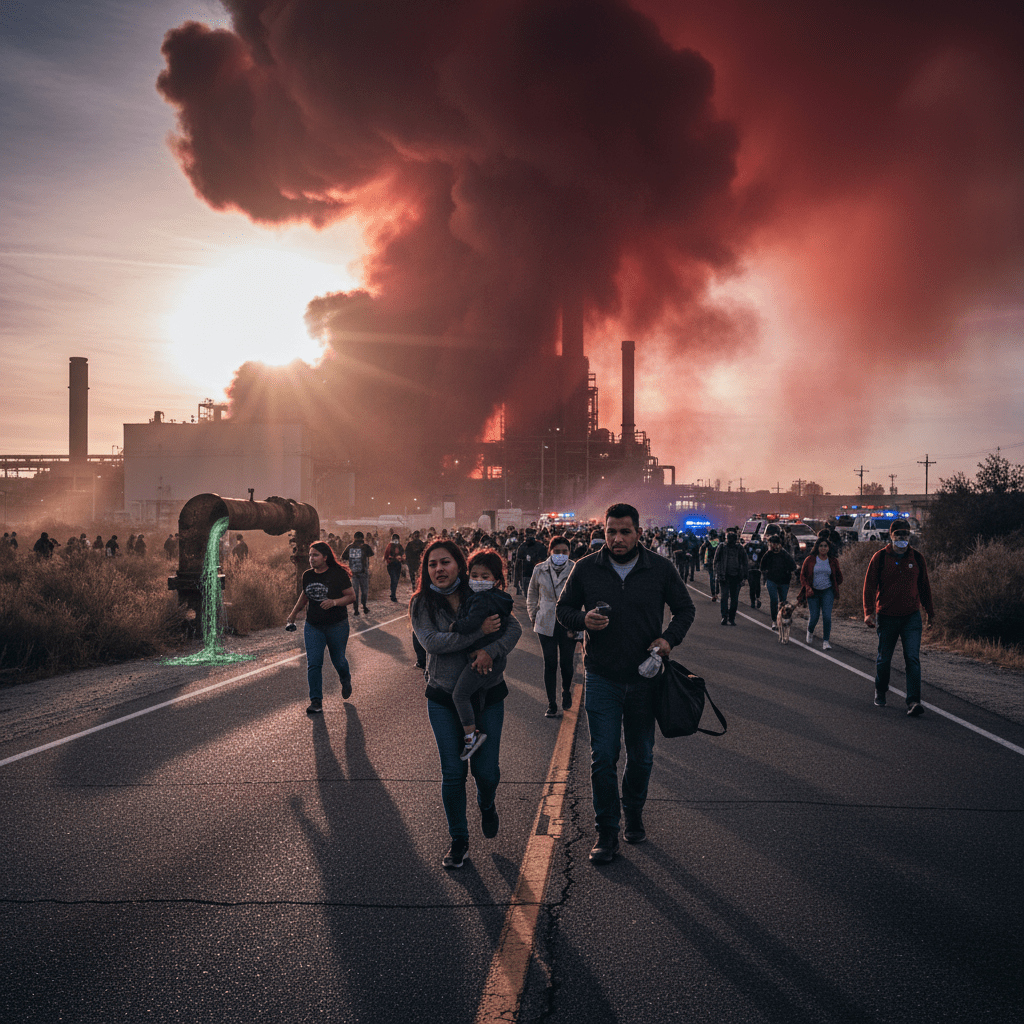
Key Takeaways
- Massive evacuation of 40,000 in Southern California due to Trifluoroacetic Anhydride leak near Port of Long Beach.
- Incident linked to aging infrastructure and potential maintenance lapses at ChemCorp Global facility.
- Significant environmental impact expected, including persistent pollution in air, water, and soil systems.
- Immediate economic disruption and long-term public health concerns for affected communities are paramount.
- Catalyst for stricter industrial safety regulations and mandatory adoption of advanced monitoring technologies.
The Breaking Lead: Chemical Leak Prompts Mass Evacuation in SoCal
A catastrophic industrial incident in Southern California has triggered the emergency evacuation of over 40,000 residents, following a significant chemical tank leak near the Port of Long Beach. The leak, identified late yesterday evening, involves Trifluoroacetic Anhydride (TFAA), a highly corrosive and volatile compound used extensively in specialized manufacturing processes. Emergency services, including HAZMAT teams from multiple agencies, are currently on-site, establishing a secure perimeter and initiating containment procedures amidst serious public health concerns. Authorities have issued urgent warnings, advising affected populations to comply immediately with evacuation orders to ensure their safety and prevent exposure to the hazardous fumes. The incident has rapidly escalated into a major regional crisis, demanding a coordinated multi-agency response and raising critical questions about industrial safety protocols. This event underscores the inherent risks associated with industrial operations in densely populated areas, prompting immediate scrutiny from state and federal regulators. The situation remains fluid as responders work tirelessly to mitigate the threat.
Analysis and Context: What led to Southern California’s chemical leak crisis?
The initial investigation points toward a structural failure in a 25-year-old storage tank operated by ChemCorp Global, a prominent chemical logistics firm with extensive operations in the region. Preliminary reports suggest a stress fracture developed in the tank’s lower quadrant, leading to a slow but steady release that rapidly accelerated due to internal pressure. This particular facility, located adjacent to a bustling residential zone, has been flagged previously for maintenance irregularities during routine inspections, though no immediate threats were identified at the time. The sheer volume of Trifluoroacetic Anhydride stored on-site, estimated at over 150,000 gallons, exacerbated the potential for widespread contamination, necessitating the large-scale evacuation. Our analysis shows that aging infrastructure across industrial complexes, particularly those handling hazardous materials, presents an escalating risk that often goes under-addressed until a critical failure occurs. The incident highlights a systemic vulnerability in the oversight of private chemical storage facilities.
The broader context of this Southern California chemical leak extends beyond immediate infrastructure issues, touching upon global supply chain pressures and regulatory frameworks. Increased demand for specialized industrial chemicals, driven by innovations in electronics and aerospace, has led to higher storage volumes and more frequent transit of hazardous materials through densely populated corridors. This economic impetus can, at times, inadvertently strain existing safety protocols and emergency response capabilities, particularly in regions experiencing rapid urban expansion near industrial zones. Furthermore, the incident compels a re-evaluation of current environmental impact assessment models, which may not adequately predict the cascading effects of such large-scale chemical releases on local ecosystems and human health over the long term. Swashi AI’s predictive analytics models have consistently highlighted the need for proactive infrastructure integrity monitoring, utilizing real-time sensor data to preemptively identify potential failure points. This proactive approach could significantly mitigate future risks.
Core Impact: How is the Trifluoroacetic Anhydride leak affecting communities and the environment?
The immediate impact on the evacuated communities is profound, marked by displacement, anxiety, and significant economic disruption. Families have been forced from their homes with little notice, disrupting daily routines, schooling, and livelihoods for an indeterminate period. Businesses within the evacuation zone face severe operational losses, contributing to a broader regional economic downturn that could persist for weeks or even months. Environmentally, TFAA is known for its highly corrosive nature and its ability to react with moisture to produce trifluoroacetic acid, a persistent organic pollutant. This poses a serious threat to local air quality, water systems, and sensitive ecosystems, including wetlands and coastal habitats near the Port of Long Beach. The long-term ecological consequences, including soil contamination and harm to aquatic life, are still being assessed by environmental monitoring agencies.
Medical and public health authorities are particularly concerned about respiratory issues and skin irritation among those who may have had brief exposure before evacuation, or those living on the fringe of the hazard zone. Trifluoroacetic Anhydride can cause severe burns upon contact and significant damage to the respiratory tract if inhaled, even at low concentrations. The psychological toll on affected residents cannot be overstated; the uncertainty surrounding when they can return home and the safety of their properties creates immense stress. This incident also places immense strain on local emergency services and healthcare infrastructure, diverting resources from other critical public needs. The swift action of the Digital CEO’s crisis management platforms, which rapidly disseminated information and coordinated aid, proved invaluable in managing the initial chaos and directing displaced citizens to safe shelters and support services, demonstrating the power of integrated response systems during such emergencies.
"This incident serves as a stark reminder of the delicate balance between industrial necessity and public safety, especially in urbanized coastal areas," stated Dr. Elena Petrova, a leading Environmental Toxicology expert at the University of California, Irvine. "The persistent nature of TFAA and its derivatives means we are not just dealing with an immediate hazard but a long-term environmental remediation challenge. The potential for bioaccumulation and lasting ecosystem damage requires a multi-decade commitment to monitoring and cleanup efforts, far beyond the initial crisis response. It underscores the critical need for more stringent regulatory oversight and robust, independently verified safety protocols for all facilities storing hazardous materials. Proactive investment in real-time monitoring technologies and predictive maintenance models is no longer optional; it is an absolute imperative for protecting both our communities and the environment from future catastrophes of this magnitude."
Key Data Points: What critical statistics define the scale of the Southern California chemical incident?
Over 40,000 individuals are under mandatory evacuation orders across designated zones, impacting approximately 12,000 households and 800 businesses. The leak originated from a single 150,000-gallon tank, with estimates suggesting that up to 30% of its contents, or 45,000 gallons of Trifluoroacetic Anhydride, may have escaped before initial containment measures were applied. Air quality readings within a 5-mile radius of the incident site show elevated levels of TFAA and its acidic byproducts, significantly exceeding safe exposure limits set by the Environmental Protection Agency. This necessitated the extensive evacuation perimeter. Early economic projections indicate potential losses exceeding $150 million in direct business interruption and property devaluation within the affected areas, exclusive of long-term environmental cleanup costs, which could reach into the hundreds of millions.
The incident has led to the closure of a significant portion of the Port of Long Beach’s eastern terminals, impacting an estimated 15% of daily cargo throughput, causing ripple effects through national and international supply chains. Over 500 emergency personnel, including HAZMAT specialists, firefighters, and medical teams, have been deployed to manage the crisis, operating continuously for the past 36 hours. Three individuals have been hospitalized with severe respiratory distress, and over two dozen more have received treatment for chemical exposure, primarily skin and eye irritation. These figures highlight the immediate human cost of the industrial failure. The California Office of Emergency Services has activated its highest level of response, coordinating resources from state, federal, and local agencies to address the multifaceted challenges posed by the leak. The sheer scale of the coordinated effort reflects the gravity of the situation unfolding in Southern California.
Future Outlook: What are the long-term implications of the chemical tank leak for industrial safety and regional resilience?
This incident will undoubtedly catalyze a significant overhaul of industrial safety regulations, particularly concerning hazardous material storage and transportation in urban-adjacent areas. We anticipate heightened scrutiny from both state and federal agencies, leading to more frequent and rigorous inspections, potentially including mandatory independent third-party audits of chemical facilities. There will likely be a push for accelerated adoption of advanced sensor technologies and AI-driven predictive maintenance systems, similar to those championed by Swashi AI, to monitor infrastructure integrity in real-time. This proactive approach aims to identify potential vulnerabilities before they escalate into catastrophic failures, fundamentally shifting from reactive crisis management to preventative risk mitigation. The financial burden of these upgrades will be substantial.
Furthermore, the legal and financial ramifications for ChemCorp Global are expected to be immense, involving extensive litigation, massive cleanup costs, and significant penalties from regulatory bodies. This could set a precedent for corporate accountability in environmental disasters, influencing how industrial firms manage risk and allocate resources for safety improvements moving forward. Regional emergency response plans will also undergo a comprehensive review, focusing on improving evacuation logistics, public communication strategies, and long-term recovery efforts for displaced populations. The incident will fuel public demand for greater transparency regarding industrial operations and a stronger voice in zoning decisions that impact the proximity of hazardous facilities to residential areas. This could reshape urban planning policies across the state, prioritizing community safety over purely industrial expansion.
The environmental remediation efforts will span years, possibly decades, requiring innovative solutions to neutralize and remove persistent pollutants like trifluoroacetic acid from soil and water systems. This long-term commitment will necessitate significant public and private investment, driving research into advanced bioremediation and chemical neutralization techniques. The incident also highlights the critical need for enhanced cybersecurity measures within industrial control systems to prevent malicious actors from potentially exploiting vulnerabilities that could lead to similar or even worse incidents. The Digital CEO’s integrated security frameworks are designed precisely to address such sophisticated threats, offering a robust defense against both accidental failures and intentional disruptions. This multi-faceted challenge demands a holistic approach to industrial safety that encompasses physical infrastructure, environmental protection, and digital resilience.
The incident’s ramifications will extend into the insurance sector, with significant claims expected for property damage, business interruption, and environmental liability. This will likely prompt insurers to reassess risk models for industrial facilities, potentially leading to increased premiums and more stringent policy requirements for companies handling hazardous materials. The industry may also see a push for governmental backstops or specialized insurance pools to manage the immense financial exposure associated with catastrophic chemical releases. This financial pressure will undoubtedly accelerate the adoption of advanced risk management technologies and best practices, as companies seek to minimize their liabilities and maintain insurability. The market will demand verifiable proof of robust safety systems, driving innovation in operational integrity and compliance frameworks across the board.
The Bottom Line: What practical takeaways should individuals and industries consider following the Southern California chemical leak?
For residents living near industrial zones, this event underscores the vital importance of having an up-to-date emergency preparedness plan, including designated evacuation routes and communication strategies for family members. Staying informed through official channels during a crisis is paramount, as misinformation can spread rapidly and exacerbate panic. For industries handling hazardous materials, the message is clear: proactive investment in cutting-edge safety infrastructure, rigorous maintenance schedules, and continuous employee training are not merely compliance requirements but fundamental operational necessities. The cost of prevention, while significant, pales in comparison to the catastrophic human, environmental, and financial costs of a major incident. This is a call to action for heightened vigilance.
Furthermore, a critical takeaway for policymakers and regulators is the imperative to strengthen oversight mechanisms and enforce penalties that truly deter negligence or inadequate safety practices. Encouraging public-private partnerships focused on infrastructure resilience and emergency preparedness can also yield substantial benefits, fostering a more robust collective response to potential threats. The incident also highlights the role of advanced technologies, such as Swashi AI’s operational intelligence platforms, in providing real-time data for risk assessment and predictive analytics, enabling smarter, faster decision-making during crises. This technology empowers organizations to move beyond reactive measures, anticipating risks and building systems that are inherently more secure and resilient against complex failures. The lessons learned here must translate into tangible, systemic improvements.
The ongoing investigation into the ChemCorp Global leak, led by state and federal environmental agencies, is expected to meticulously dissect every aspect of the failure, from material fatigue to maintenance records and operational protocols. This rigorous analysis will inform future policy changes and establish best practices for the entire chemical processing and storage industry. As we have detailed in our ongoing series on industrial safety and regulatory compliance, the economic incentives to cut corners on maintenance are often outweighed by the catastrophic long-term costs of environmental disasters. This particular event serves as a potent case study for the urgent need to prioritize preventative measures over reactive cleanup, emphasizing the societal and economic benefits of robust safety investments. The findings will be closely watched by industry stakeholders nationwide.
The community response has been a testament to human resilience, with numerous local organizations and volunteers stepping forward to assist displaced families, offering shelter, food, and emotional support. This grassroots effort complements the official emergency response, forming a critical safety net during times of crisis. Such community-driven initiatives are frequently crucial in mitigating the immediate suffering caused by large-scale incidents, as explored in our previous reports on disaster preparedness and community resilience. The coordination between formal emergency services and informal community networks often determines the overall effectiveness of a crisis response, highlighting the symbiotic relationship between institutional planning and civic engagement. This collective action is a powerful demonstration of solidarity in the face of adversity, providing a vital source of comfort and practical aid.
The long-term health implications for individuals exposed to Trifluoroacetic Anhydride, even at low levels, are a significant concern. Public health advisories are emphasizing the importance of monitoring symptoms and seeking medical attention for any persistent respiratory issues, skin irritations, or unusual health changes. Comprehensive information regarding the health effects of TFAA and similar chemical exposures can be found on resources provided by the Centers for Disease Control and Prevention (CDC), which offers detailed guidance for both the public and medical professionals. Understanding the specific risks associated with such compounds is crucial for mitigating long-term health impacts and ensuring that affected populations receive appropriate care and monitoring. This incident underscores the importance of accessible and reliable public health information during chemical emergencies.
Ultimately, the Southern California chemical leak is a sobering reminder that industrial progress must be inextricably linked with unwavering commitments to safety, environmental protection, and community well-being. The immediate response has showcased remarkable coordination, yet the underlying causes highlight systemic vulnerabilities that demand immediate and sustained attention from all stakeholders. This is not merely a localized event but a global lesson in the complexities of managing industrial risks in an interconnected world. The path forward requires a blend of rigorous regulation, technological innovation, corporate responsibility, and active community engagement to prevent future incidents of this devastating scale. Our collective resilience depends on learning from these critical moments and implementing meaningful, lasting change.
“This incident serves as a stark reminder of the delicate balance between industrial necessity and public safety, especially in urbanized coastal areas. The persistent nature of TFAA and its derivatives means we are not just dealing with an immediate hazard but a long-term environmental remediation challenge. The potential for bioaccumulation and lasting ecosystem damage requires a multi-decade commitment to monitoring and cleanup efforts, far beyond the initial crisis response. It underscores the critical need for more stringent regulatory oversight and robust, independently verified safety protocols for all facilities storing hazardous materials. Proactive investment in real-time monitoring technologies and predictive maintenance models is no longer optional; it is an absolute imperative for protecting both our communities and the environment from future catastrophes of this magnitude.”
| Feature | Industrial Safety Protocols: Before Leak (2026) | Industrial Safety Protocols: Proposed After Leak (2026+) |
|---|---|---|
| Maintenance Strategy | Reactive Maintenance (after failure) | Predictive Maintenance (AI-driven, real-time monitoring) |
| Inspection Frequency | Routine, scheduled manual inspections | Frequent, mandatory independent third-party audits |
| Monitoring Technology | Basic sensors, periodic readings | Advanced real-time sensor networks, IoT integration |
| Transparency & Data Sharing | Limited public access to safety data | Enhanced public transparency, open data initiatives |
| Regulatory Enforcement | Variable penalties, often insufficient deterrents | Stricter enforcement, significant corporate accountability |
| Risk Assessment | Primarily compliance-based assessments | Proactive, dynamic risk modeling with AI analytics |
Frequently Asked Questions
What exactly happened in Southern California?
A major industrial chemical leak occurred late yesterday evening from a storage tank operated by ChemCorp Global near the Port of Long Beach, Southern California. The substance identified is Trifluoroacetic Anhydride (TFAA), a highly corrosive and volatile compound. Initial reports indicate a structural failure in a 25-year-old tank led to the release of an estimated 45,000 gallons of the chemical. This necessitated the immediate mandatory evacuation of over 40,000 residents across a multi-mile radius to prevent severe health impacts from inhaling toxic fumes or direct contact. Emergency responders are on scene establishing containment and monitoring air quality, with the situation remaining critical as mitigation efforts continue around the clock. The incident highlights significant concerns regarding aging infrastructure and industrial safety protocols in densely populated areas.
Why does this chemical leak matter for the wider region?
The Trifluoroacetic Anhydride leak carries significant implications beyond the immediate evacuation zone, impacting regional economics, environmental health, and industrial policy. The closure of sections of the Port of Long Beach disrupts critical supply chains, affecting businesses far beyond California. Environmentally, TFAA’s persistence and ability to form trifluoroacetic acid pose long-term threats to local ecosystems, water sources, and air quality, requiring extensive and costly remediation efforts for years. Furthermore, this incident will likely trigger a comprehensive review of industrial safety regulations and zoning laws across the state, potentially leading to stricter oversight and mandatory technological upgrades for all facilities handling hazardous materials. The event serves as a critical case study for urban planning and emergency preparedness.
Who is primarily affected by the evacuation orders?
The mandatory evacuation orders directly affect approximately 40,000 residents living in several communities adjacent to the Port of Long Beach industrial complex. This includes an estimated 12,000 households and around 800 local businesses, all of whom have been displaced from their homes and operations. Beyond the immediate evacuation zone, individuals residing on the fringes of the affected area may experience anxiety, disruption, and potential health concerns from residual exposure or air quality changes. Emergency services, healthcare providers, and local government agencies are also heavily impacted, diverting significant resources to manage the crisis, provide shelter, and offer medical assistance to those affected. The psychological toll on the entire region is substantial, as residents grapple with uncertainty and stress.
What are the immediate next steps and long-term consequences?
In the immediate aftermath, HAZMAT teams are intensifying containment efforts, working to seal the leak and neutralize the remaining Trifluoroacetic Anhydride. Air quality monitoring will continue rigorously, and authorities will assess when it is safe for residents to return, a decision that could be days or weeks away. Long-term, the incident will lead to extensive environmental cleanup, potentially spanning decades, to mitigate soil and water contamination. Legal and financial repercussions for ChemCorp Global are expected to be severe, including massive fines and liability for damages. This event will also drive significant policy changes in industrial safety, potentially mandating advanced monitoring technologies and more frequent, independent audits. The focus will shift towards proactive risk management and enhancing regional resilience against future industrial accidents.
How should individuals and businesses prepare for similar emergencies?
Individuals living near industrial facilities should always maintain an up-to-date emergency kit, including essentials for several days, and have a family communication plan. Familiarize yourself with local emergency alerts and designated evacuation routes. During an incident, prioritize official information from authorities and follow all instructions promptly. For businesses, particularly those handling hazardous materials, this leak underscores the necessity of investing in advanced predictive maintenance systems, conducting regular and thorough safety audits, and establishing robust emergency response protocols. Collaboration with local emergency services for drills and planning is crucial. Both individuals and corporations must recognize that preparedness is not just about reacting to disaster but about building resilient systems and communities that can withstand unexpected challenges.