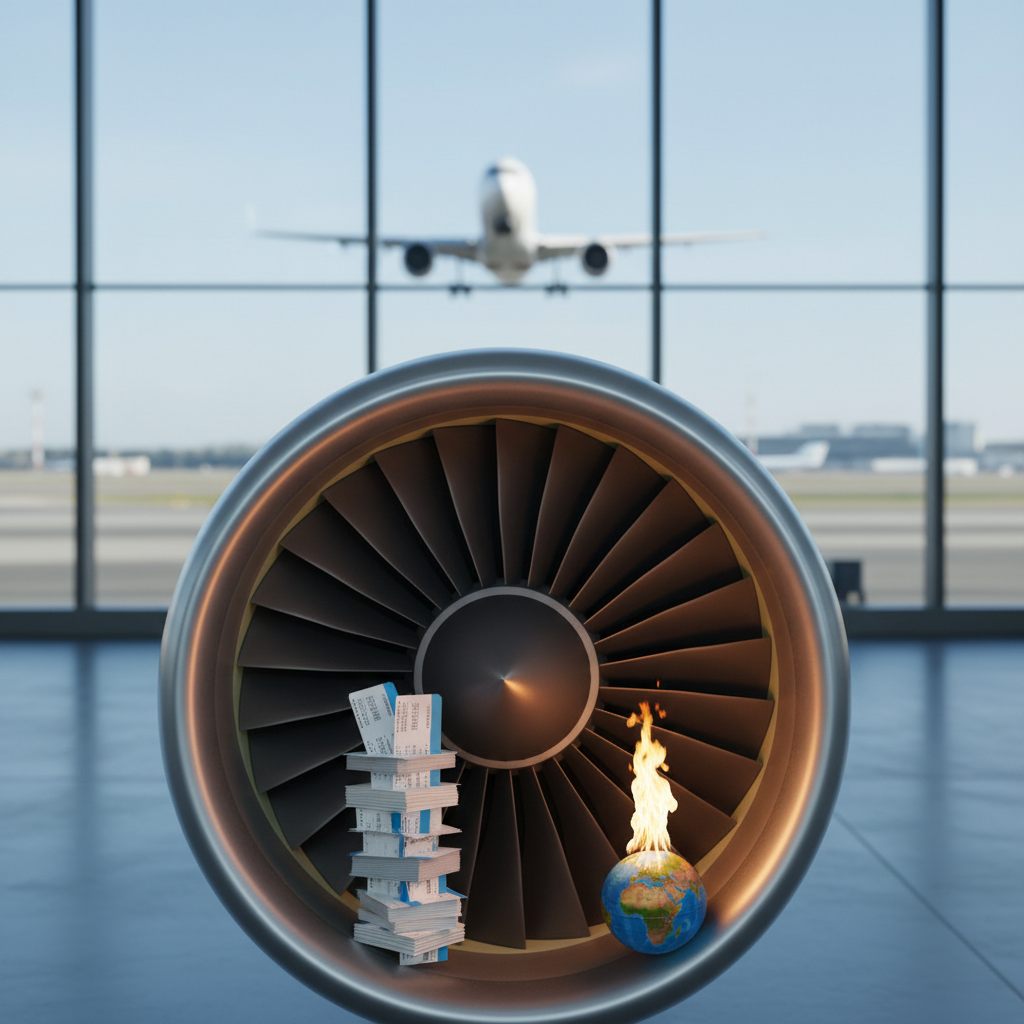
The airline industry, still buoyant from the resurgence of travel post-pandemic, now faces a turbulent forecast. Jet fuel prices have surged in recent weeks, threatening to erode profitability and potentially dampen the pent-up demand that has fueled the sector’s recovery. This sudden spike presents a complex dilemma for airlines: absorb the increased costs and risk thinning margins or pass them on to consumers through higher fares, which could stifle demand. Navigating this delicate balance will be crucial for maintaining momentum and ensuring long-term sustainability in an increasingly uncertain global landscape. How airlines respond will shape the future of air travel in 2026 and beyond. For now, all eyes remain fixed on the fluctuating price of fuel.
Key Takeaways
- Jet fuel price spikes are significantly impacting airline profitability.
- Airlines face a trade-off between absorbing costs and raising fares.
- Increased fares could reduce travel demand, especially for leisure travelers.
- Fuel hedging strategies are proving crucial in mitigating price volatility.
- Airlines are exploring operational efficiencies to cut fuel consumption.
- Government policies and regulations play a key role in airline economics.
The Perfect Storm: Factors Behind the Fuel Spike
Several converging factors have contributed to the recent surge in jet fuel prices. Geopolitical instability, particularly in key oil-producing regions, has created supply chain uncertainties, driving up crude oil costs. Additionally, refinery capacity constraints, exacerbated by recent shutdowns and maintenance, have limited the production of refined petroleum products, including jet fuel. Seasonal demand also plays a role, as the peak summer travel season typically leads to increased fuel consumption and price pressures. Environmental regulations, such as stricter emission standards, have added to the cost of refining and distribution, further compounding the challenges faced by airlines navigating this complex landscape. This perfect storm is far from over.
The ripple effects of these fuel cost increases are being felt across the entire aviation ecosystem. Airlines are forced to re-evaluate their operational budgets, potentially delaying fleet upgrades or route expansions. Airports face increased fuel costs for their own operations, which could translate to higher landing fees for airlines. Consumers ultimately bear the brunt, either through higher fares or reduced service offerings. The situation also impacts the competitiveness of different airlines, with those possessing more efficient fleets or effective hedging strategies better positioned to weather the storm. The future viability of the industry is a huge point of emphasis for all.
Beyond the immediate financial strain, the fuel spike also raises broader questions about the long-term sustainability of the airline industry. As pressure mounts to reduce carbon emissions, airlines are increasingly exploring alternative fuels and more fuel-efficient technologies. However, these solutions require significant investment and are not yet widely available or economically viable. The current crisis underscores the urgency of accelerating the transition to a more sustainable aviation model. Governments and industry stakeholders need to collaborate to incentivize innovation and create a regulatory framework that supports the adoption of cleaner fuel sources. The future could very well be quite green.
The situation also highlights the vulnerability of the airline industry to external shocks. Geopolitical events, economic fluctuations, and environmental regulations can all have a significant impact on airline profitability. Airlines need to develop more resilient business models that can withstand these challenges. This includes diversifying revenue streams, implementing more robust risk management strategies, and investing in operational efficiencies. A proactive approach to these challenges is essential for ensuring the long-term viability of the industry. All avenues are under consideration, with all viable options up for grabs.
Navigating the Turbulence: Airline Responses to Fuel Costs
Airlines are employing a variety of strategies to mitigate the impact of rising fuel costs. One common approach is fuel hedging, where airlines purchase contracts to secure fuel at a predetermined price, shielding themselves from price volatility. However, hedging strategies can be complex and may not always provide complete protection, especially in the face of sustained price increases. Airlines are also exploring operational efficiencies, such as optimizing flight routes, reducing aircraft weight, and improving fuel management practices. Investing in fuel-efficient aircraft is another long-term strategy, although the upfront costs can be substantial. The choices made by different airlines all vary greatly.
The trade-off between absorbing costs and raising fares is a central challenge for airlines. Raising fares can offset the increased fuel costs, but it also risks reducing demand, particularly among price-sensitive leisure travelers. Some airlines may choose to absorb a portion of the cost increase, sacrificing short-term profitability to maintain market share and customer loyalty. Others may implement a combination of fare increases and cost-cutting measures to strike a balance between profitability and demand. The final decision depends greatly on the current financial circumstances that any one airline faces.
Beyond fare adjustments, airlines are also considering ancillary revenue streams to offset fuel costs. This includes charging fees for checked baggage, seat selection, and onboard meals. Some airlines are exploring new revenue opportunities, such as offering premium services or partnering with other businesses to generate additional income. However, these strategies can be unpopular with customers and may not fully compensate for the impact of rising fuel costs. Diversifying sources of income is important for sustained success for any modern airline attempting to adapt.
Government policies and regulations can play a significant role in shaping airline responses to fuel costs. Tax incentives for fuel-efficient aircraft, subsidies for alternative fuels, and carbon pricing mechanisms can all influence airline behavior. Deregulation of the airline industry can also promote competition and encourage airlines to find innovative ways to reduce costs and improve efficiency. A proactive government can assist in adapting to the changing landscape of air travel in a significant way. Many will look to governments to guide their actions.
The Ripple Effect: Impact on Travel Demand and Consumer Behavior
Increased airfares are likely to have a dampening effect on travel demand, particularly for leisure travelers. As fares rise, discretionary spending on travel may decline, leading to a reduction in bookings. Price-sensitive travelers may opt for alternative transportation options, such as driving or taking trains, or choose to postpone or cancel their travel plans altogether. Business travel, which is often less price-sensitive, may be less affected, but even business travelers may become more cost-conscious and seek to reduce travel expenses where possible. All travel trends can change based on air fare rates for individuals.
Consumer behavior is also evolving in response to rising airfares. Travelers are becoming more savvy and are actively seeking out deals and discounts. They are using online travel agencies, comparison websites, and loyalty programs to find the best fares and maximize their travel budgets. Some travelers are becoming more flexible with their travel dates and destinations, choosing to travel during off-peak seasons or to less popular locations to take advantage of lower fares. The use of travel hacks to game the system is also a growing consumer behavior.
Furthermore, the rising cost of air travel is prompting some consumers to reconsider their travel priorities. They may choose to take shorter trips, travel closer to home, or prioritize experiences over material possessions. Some are exploring alternative forms of travel, such as sustainable tourism or adventure travel, which may offer a more affordable and environmentally friendly way to explore the world. Consumers need to adapt as air travel trends evolve and change.
This shift in consumer behavior has implications for the entire tourism industry. Destinations that rely heavily on air travel may need to adjust their marketing strategies to attract more domestic or regional tourists. Hotels, restaurants, and other tourism-related businesses may need to offer discounts or promotions to offset the impact of rising airfares. Collaboration between airlines and tourism stakeholders is essential for ensuring the continued viability of the travel industry. Working together to incentivize travel can benefit everyone involved in tourism.
Hedging Bets: Fuel Management Strategies in the Forefront
Fuel hedging has become a crucial tool for airlines to manage the risk of price volatility. By purchasing contracts to secure fuel at a predetermined price, airlines can protect themselves from unexpected price spikes. However, hedging strategies are not foolproof. If fuel prices fall below the hedged price, airlines may end up paying more than the market rate. Hedging strategies can also be complex and require expertise in financial markets. Some airlines have suffered significant losses due to poorly executed hedging programs. So a lot of planning is required, but it can be done.
The effectiveness of fuel hedging depends on a variety of factors, including the timing of the hedge, the duration of the contract, and the price differential between the hedged price and the market price. Airlines need to carefully analyze market trends and develop hedging strategies that align with their financial goals and risk tolerance. Diversifying hedging strategies, using a mix of short-term and long-term contracts, can help to mitigate risk. The key is to be ready for any circumstances, planned or unplanned. This is what can separate success from failure.
Beyond hedging, airlines are also exploring other fuel management strategies. This includes optimizing fuel purchasing practices, negotiating favorable fuel contracts with suppliers, and investing in fuel storage facilities. Some airlines are partnering with fuel suppliers to develop innovative fuel solutions, such as sustainable aviation fuels. These collaborations can help to reduce fuel costs and improve environmental performance. Partnerships can help to find solutions when circumstances demand it.
Fuel management is becoming an increasingly sophisticated function within airlines. It requires a combination of financial expertise, operational knowledge, and market intelligence. Airlines are investing in training and technology to improve their fuel management capabilities. A proactive and data-driven approach to fuel management is essential for ensuring long-term profitability and competitiveness. Without a solid foundation of planning and preparation, an airline could quickly fail. Airlines must be ever ready for potential turmoil.
Beyond the Barrel: Exploring Alternative Fuel Sources
As pressure mounts to reduce carbon emissions, airlines are increasingly exploring alternative fuel sources. Sustainable aviation fuels (SAF), produced from renewable resources such as algae, waste biomass, and agricultural residues, offer a promising solution. SAF can significantly reduce greenhouse gas emissions compared to conventional jet fuel. However, SAF production is still in its early stages, and the cost remains a major barrier to widespread adoption. Incentives are required for all SAFs.
Hydrogen fuel is another potential alternative, but it presents significant challenges for aircraft design and infrastructure. Hydrogen has a much lower energy density than jet fuel, requiring larger fuel tanks and potentially reducing aircraft range. Storing and transporting hydrogen also requires specialized infrastructure and safety protocols. Hydrogen-powered aircraft are still in the early stages of development, and it may be several decades before they become commercially viable. This is due to how difficult and dangerous it can be to properly handle the substance, according to professionals.
Electric propulsion offers another long-term possibility, but it is currently limited to short-range flights. Battery technology is not yet advanced enough to power large commercial aircraft over long distances. Electric aircraft are also heavier than conventional aircraft, reducing payload capacity and increasing energy consumption. Electric propulsion may be more suitable for regional flights and urban air mobility applications. Currently, the short term is quite limiting in its scope.
The transition to alternative fuel sources will require significant investment and collaboration between governments, industry, and research institutions. Governments can play a key role by providing incentives for SAF production, funding research and development, and establishing a regulatory framework that supports the adoption of cleaner fuels. Innovation is essential, and incentives are required to maintain a strong interest in sustainability for fuels. Regulation can assist in this transition effectively.
A Glimpse into the Future: Long-Term Implications for Air Travel
The current fuel spike underscores the need for a more sustainable and resilient air travel industry. Airlines need to adapt to a future where fuel costs are likely to remain volatile and environmental regulations will become increasingly stringent. Investing in fuel-efficient aircraft, exploring alternative fuel sources, and implementing innovative operational practices are essential for ensuring long-term viability. A shift towards sustainability is the key to a long term future. Airlines are already heading in that direction to adapt.
Technological advancements will play a key role in shaping the future of air travel. New aircraft designs, improved engine technology, and advanced air traffic management systems can all help to reduce fuel consumption and improve efficiency. Artificial intelligence and machine learning can be used to optimize flight routes, predict fuel demand, and manage maintenance schedules. Technology will be key in adapting and continuing to thrive and survive throughout 2026 and beyond. These are areas of emphasis that are continuing to grow.
The airline industry will also need to foster greater collaboration with other stakeholders in the tourism ecosystem. This includes airports, fuel suppliers, tourism boards, and government agencies. Working together to develop innovative solutions and promote sustainable travel practices is essential for ensuring the continued viability of the industry. A healthy working environment will assist in this shift.
Ultimately, the future of air travel will depend on the ability of the industry to adapt to changing market conditions and embrace new technologies and sustainable practices. Airlines that are proactive, innovative, and collaborative will be best positioned to weather the current storm and thrive in the long term. All future events are still yet to come to pass. But planning for tomorrow can benefit air travel tremendously, even today.
“The airline industry is at a critical juncture. The current fuel price volatility, combined with the growing pressure to reduce carbon emissions, requires a fundamental rethinking of airline business models. Innovation, collaboration, and strategic planning are essential for navigating this turbulence and ensuring a sustainable future for air travel. The path towards the future is paved with potential that is ever growing.”
— Dr. Emily Carter, Aviation Economics Professor, Global Aviation University
| Strategy | Description | Pros | Cons | Implementation Difficulty | Cost | Long-Term Impact |
|---|---|---|---|---|---|---|
| Fuel Hedging | Securing fuel at a predetermined price | Protects against price spikes, budget predictability | May pay more if prices fall, hedging expertise required | Medium | Low to Medium (transaction fees) | Medium |
| Operational Efficiency | Optimizing flight routes, reducing weight | Reduces fuel consumption, environmentally friendly | Limited impact, requires continuous monitoring | Low | Low | Low to Medium |
| Fuel-Efficient Aircraft | Investing in newer, more efficient models | Significant fuel savings, lower emissions | High upfront costs, long-term investment | High | High | High |
| Ancillary Revenue | Charging fees for extra services | Increases revenue, offsets fuel costs | Unpopular with customers, may reduce demand | Low | Low | Low to Medium |
| Sustainable Aviation Fuels (SAF) | Using renewable resources for fuel | Reduces emissions, environmentally responsible | High cost, limited availability | Medium to High | High | High |
| Hydrogen Fuel | Using hydrogen for propulsion | Zero emissions, potentially sustainable | Significant design and infrastructure challenges | High | Very High | Very High |
| Electric Propulsion | Using electric motors for power | Low emissions for short flights | Limited range, battery technology constraints | High | High | Medium to High |
Frequently Asked Questions
What exactly is fuel hedging, and why is it important for airlines?
Fuel hedging is a risk management strategy used by airlines to mitigate the impact of jet fuel price volatility. It involves purchasing contracts, such as futures or options, to secure fuel at a predetermined price for a future period. This helps airlines stabilize their fuel costs and protect their profitability from unexpected price spikes. The importance of fuel hedging lies in its ability to provide budget predictability and reduce the uncertainty associated with fluctuating fuel expenses. Airlines must carefully analyze market trends and develop hedging strategies that align with their financial goals and risk tolerance. Without this sort of preparation, airlines can struggle in the face of a crisis.
How do rising fuel costs impact airfares for consumers, and what can travelers do to mitigate these costs?
Rising fuel costs typically translate to higher airfares for consumers, as airlines attempt to pass on some of the increased expenses. The extent to which fares increase depends on various factors, including the competitive landscape, the airline’s hedging strategies, and the overall demand for air travel. To mitigate these costs, travelers can be flexible with their travel dates and destinations, choosing to travel during off-peak seasons or to less popular locations to take advantage of lower fares. Using online travel agencies, comparison websites, and loyalty programs can also help travelers find the best deals and maximize their travel budgets. Some people will even try to game the travel system and find discounts as well. By utilizing any available tool, consumers can save.
What are sustainable aviation fuels (SAF), and how can they contribute to a more environmentally friendly airline industry?
Sustainable aviation fuels (SAF) are alternative fuels produced from renewable resources, such as algae, waste biomass, and agricultural residues. These fuels offer a promising solution for reducing greenhouse gas emissions compared to conventional jet fuel. SAF can significantly lower the carbon footprint of air travel, contributing to a more environmentally friendly airline industry. However, SAF production is still in its early stages, and the cost remains a major barrier to widespread adoption. Government incentives, technological advancements, and increased demand are needed to accelerate the transition to SAF and create a more sustainable aviation model. Further research is needed to see how these fuels play out.
In addition to fuel hedging and alternative fuels, what other strategies can airlines implement to reduce fuel consumption and improve efficiency?
Beyond fuel hedging and alternative fuels, airlines can implement a variety of strategies to reduce fuel consumption and improve efficiency. This includes optimizing flight routes, reducing aircraft weight, improving fuel management practices, and investing in fuel-efficient aircraft. Advanced air traffic management systems, artificial intelligence, and machine learning can also be used to optimize flight operations and reduce fuel waste. Additionally, collaboration with airports, fuel suppliers, and other stakeholders can help to identify and implement innovative solutions for improving fuel efficiency across the entire aviation ecosystem. All planning can greatly assist in saving money.
What role do government policies and regulations play in shaping airline responses to fuel costs and promoting sustainability in the aviation industry?
Government policies and regulations play a crucial role in shaping airline responses to fuel costs and promoting sustainability in the aviation industry. Tax incentives for fuel-efficient aircraft, subsidies for alternative fuels, and carbon pricing mechanisms can all influence airline behavior and incentivize the adoption of cleaner technologies. Deregulation of the airline industry can also promote competition and encourage airlines to find innovative ways to reduce costs and improve efficiency. Additionally, governments can establish a regulatory framework that supports the development and deployment of sustainable aviation fuels, hydrogen-powered aircraft, and other innovative solutions. By setting clear environmental goals, providing financial support, and creating a level playing field, governments can help to create a more sustainable and resilient aviation industry.