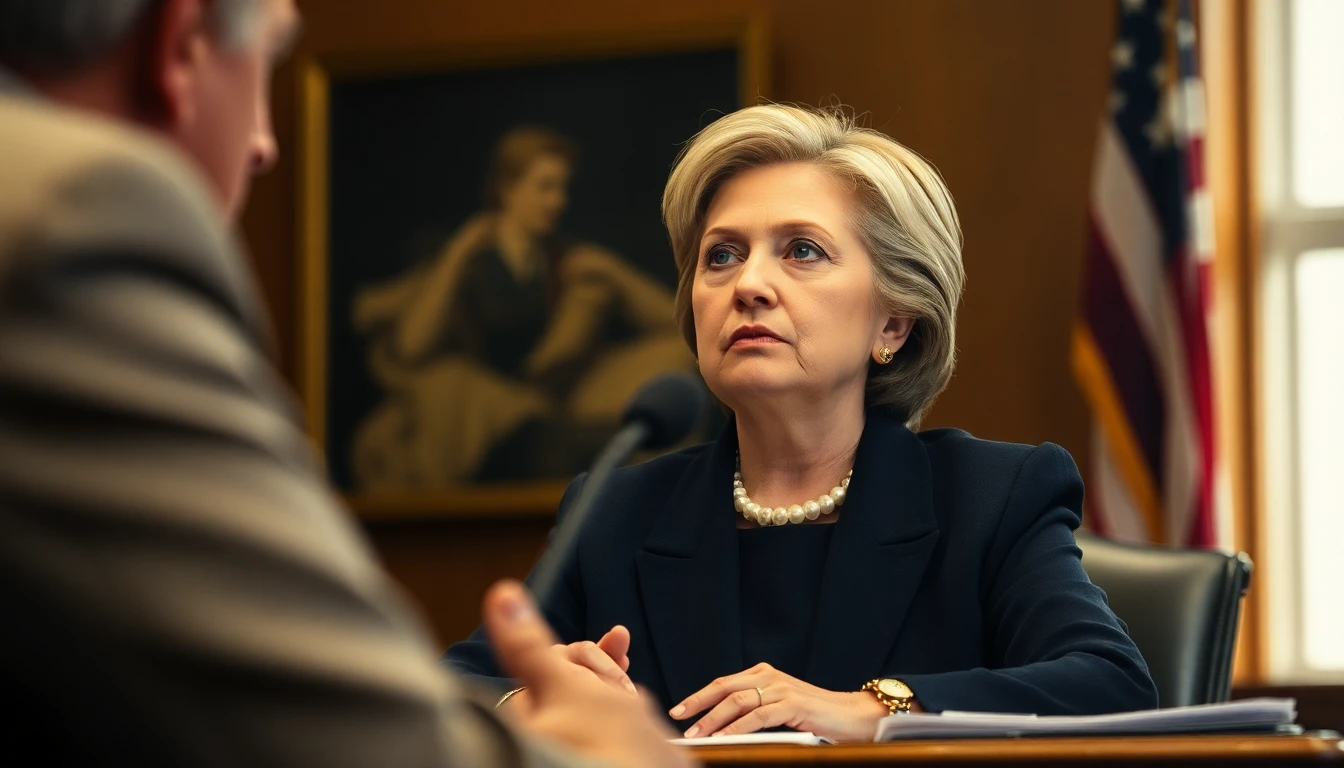
Hillary Clinton Denies Knowing Epstein or His Crimes in a Tense Deposition
New York, February 27, 2026 – In a highly anticipated and intensely scrutinized deposition, Hillary Clinton has vehemently denied any knowledge of Jeffrey Epstein’s alleged crimes. The deposition, conducted under oath, took place amidst renewed public interest in the Epstein case following the release of new documents and testimonies in recent months. Clinton’s denial has already ignited a firestorm of debate, with some questioning her credibility and others defending her statements as truthful.
The deposition, details of which were leaked shortly after its conclusion, reportedly focused on the nature and extent of Clinton’s interactions with Epstein, if any, and whether she was aware of his alleged sex trafficking activities. Clinton, according to sources familiar with the proceedings, maintained that her interactions with Epstein were minimal and primarily centered around charitable initiatives. She stated unequivocally that she had no knowledge of, nor did she participate in, any of the alleged criminal activities. The legal ramifications of this deposition could be extensive, potentially influencing future investigations and legal proceedings related to the Epstein case, which continues to cast a long shadow over numerous prominent figures. This development also arrives at a time when the US Supreme Court adopts new technology to help identify conflicts of interest, demonstrating a growing focus on transparency and accountability.
The Deposition: Key Moments and Contentious Exchanges
The deposition itself was described by attendees as tense, with frequent objections and pointed questions from both sides. Clinton’s legal team reportedly presented evidence to support her claims of limited interaction with Epstein, including travel logs, email correspondence, and witness testimonies. The opposing counsel, however, pressed Clinton on several key points, including past photographs of her with Epstein and potential connections to other individuals implicated in the scandal. One particularly contentious exchange involved a discussion of a reported flight on Epstein’s private jet, the “Lolita Express,” a claim Clinton’s team vehemently denied. They presented evidence suggesting Clinton was never on the flight manifest and that the photograph in question was misidentified. This denial echoes similar defenses made by other individuals linked to Epstein, highlighting a pattern of minimizing or denying connections to the disgraced financier.
The line of questioning also explored the possibility of Clinton receiving campaign donations or other financial benefits from Epstein. Clinton denied any such transactions, stating that all donations received by her campaigns were properly vetted and disclosed. However, the opposing counsel presented financial records indicating indirect contributions through third-party organizations with ties to Epstein. Clinton’s team argued that these contributions were made without her knowledge or consent and that she had no control over the actions of these organizations. The issue of campaign finance and its potential influence on political figures has become increasingly relevant, particularly in light of recent debates surrounding the role of artificial intelligence in political campaigns. As the UN approves a 40-member scientific panel on the impact of artificial intelligence over US objections, it underscores the global focus on regulating and understanding the influence of technology on political processes, including campaign financing.
Ultimately, the deposition concluded without a definitive resolution. While Clinton maintained her innocence and denied any knowledge of Epstein’s crimes, the opposing counsel argued that inconsistencies and unanswered questions remained. The transcript of the deposition is now under review by legal experts, and it is expected to play a significant role in future legal proceedings. The public release of the deposition details has fueled further scrutiny and speculation, with many questioning the veracity of Clinton’s statements. The ongoing controversy surrounding the Epstein case and its connection to prominent figures continues to dominate headlines and raise serious questions about accountability and justice. This aligns with the broader theme explored in “Newsjack: The Epstein Files and the Hidden World of an Unaccountable Elite,” which examines the lack of accountability among powerful individuals.
Public Reaction and Media Coverage: A Divided Nation
The immediate aftermath of the leaked deposition transcript saw a predictable division in public reaction and media coverage. Conservative media outlets seized on what they perceived as inconsistencies and evasions in Clinton’s testimony, accusing her of perjury and demanding further investigation. Social media platforms were flooded with hashtags such as #ClintonKnew and #EpsteinCoverUp, reflecting widespread skepticism and outrage among conservative users. On the other hand, liberal media outlets largely defended Clinton’s statements, emphasizing her long history of public service and questioning the motives of those attacking her. They pointed to the lack of concrete evidence directly linking Clinton to Epstein’s crimes and accused the opposing counsel of engaging in a politically motivated smear campaign. This partisan divide mirrors the broader political polarization that has characterized American society in recent years, making it increasingly difficult to have objective and nuanced discussions about sensitive issues.
The intensity of the public reaction underscores the enduring power of the Epstein scandal to provoke strong emotions and distrust, particularly towards those perceived as belonging to the elite. The case has become a symbol of systemic corruption and the perceived impunity of the wealthy and powerful, fueling a sense of resentment and disillusionment among many Americans. The public’s hunger for accountability and justice in the Epstein case has only intensified with the passage of time, making it difficult for anyone associated with Epstein to escape scrutiny and suspicion. This heightened scrutiny extends beyond the Epstein case, with increased attention being paid to the financial dealings and personal conduct of public figures across the political spectrum. As ICE officers are suspended after making ‘untruthful statements’ about a shooting, it reflects a broader trend of holding authorities accountable for their actions and ensuring transparency in law enforcement.
The media coverage of the Clinton deposition has also been shaped by the ongoing debate over the role of social media and its impact on public discourse. The rapid spread of misinformation and conspiracy theories on social media platforms has made it increasingly difficult to discern fact from fiction and has contributed to the polarization of public opinion. The rise of deepfakes and other forms of artificial intelligence-generated content has further complicated the situation, making it easier to manipulate public perception and spread false narratives. This underscores the need for greater media literacy and critical thinking skills among the public, as well as for stricter regulation of social media platforms to prevent the spread of harmful content. The situation is further complicated by ongoing tensions such as the threat of war, as exemplified by “Newsjack: Trump meets with top Iran advisers as war threat grows,” highlighting the need for accurate and responsible reporting in a complex global landscape.
Historical Context: Clinton’s Past Interactions with Epstein
Understanding the current controversy requires a look back at the historical context of Hillary Clinton’s past interactions with Jeffrey Epstein. While Clinton has consistently maintained that her relationship with Epstein was limited and primarily focused on charitable work, the available evidence paints a more complex picture. Clinton and Epstein were reportedly introduced to each other in the early 2000s, and they subsequently attended several social events together. Epstein reportedly contributed to the Clinton Foundation, and Clinton reportedly visited Epstein’s private island, Little St. James, on at least one occasion. While these interactions do not necessarily imply any wrongdoing, they do raise legitimate questions about the nature and extent of the relationship. The lack of transparency surrounding these interactions has fueled speculation and distrust, particularly among those who are already skeptical of Clinton’s motives.
It’s important to note that Clinton is not the only prominent figure who has faced scrutiny for their past associations with Epstein. Numerous politicians, business leaders, and celebrities have been linked to Epstein, and many have faced similar accusations of downplaying or denying their connections to him. The widespread nature of Epstein’s network underscores the systemic issues that enabled his alleged crimes to go unchecked for so long. The failure of law enforcement and other institutions to hold Epstein accountable has fueled a sense of frustration and outrage among the public, who are demanding greater transparency and justice. This demand for accountability extends beyond the Epstein case, as seen in “Newsjack: ICE officers suspended after making ‘untruthful statements’ about shooting,” highlighting a broader call for transparency in law enforcement.
In evaluating Clinton’s past interactions with Epstein, it’s also important to consider the broader political context. Clinton has been a prominent figure in American politics for decades, and she has been subjected to intense scrutiny and criticism throughout her career. Her political opponents have often sought to exploit any perceived weaknesses or vulnerabilities, and her association with Epstein has provided them with ample ammunition. While legitimate questions can and should be asked about Clinton’s past interactions with Epstein, it’s important to avoid engaging in politically motivated attacks or spreading unsubstantiated rumors. The focus should be on uncovering the truth and holding all those responsible for Epstein’s alleged crimes accountable, regardless of their political affiliation or social status. The ongoing efforts to track down criminals, as highlighted in “Newsjack: Crypto expert explains why bitcoin makes ‘perfect record’ for tracking down criminals,” underscore the importance of utilizing technology to ensure accountability and justice.
Legal Ramifications: Potential for Further Investigation and Charges
The legal ramifications of Hillary Clinton’s deposition are potentially significant, depending on the findings of ongoing investigations and the decisions of prosecutors. While Clinton has denied any knowledge of Epstein’s crimes, her testimony could be used as evidence in future legal proceedings. If prosecutors believe that Clinton has committed perjury or obstructed justice, she could face criminal charges. Even if she is not charged with a crime, her testimony could be used to impeach her credibility as a witness in other cases. The political fallout from such charges, even if ultimately dismissed, would be considerable, further damaging her reputation and potentially derailing any future political ambitions. Given the current political climate, any legal action against Clinton would likely be met with intense partisan opposition, further dividing the nation.
The possibility of further investigation into Clinton’s past interactions with Epstein cannot be ruled out. Law enforcement agencies may seek to interview her again or subpoena additional documents and records. The outcome of these investigations will depend on the evidence that is uncovered and the decisions of prosecutors. It is also possible that private individuals or organizations could file civil lawsuits against Clinton, alleging that she aided and abetted Epstein’s crimes. Such lawsuits could be costly and time-consuming to defend, and they could further damage Clinton’s reputation, especially since “Newsjack: How ICE is using technology, databases to track people,” demonstrates how technology is being used to track individuals, suggesting a potential avenue for uncovering further information in the Epstein case.
The legal proceedings related to the Epstein case are ongoing, and it is impossible to predict with certainty what the future holds. However, it is clear that the case will continue to cast a long shadow over numerous prominent figures, including Hillary Clinton. The public’s demand for accountability and justice will likely intensify in the coming months and years, putting pressure on law enforcement and prosecutors to pursue all available leads and hold all those responsible for Epstein’s alleged crimes accountable. The focus on accountability is also evident in discussions about lifestyle practices, such as those mentioned in “Newsjack: Lifestyle Practices That Help Prevent Heart Disease,” where personal responsibility is emphasized for maintaining health and well-being.
Future Outlook: Impact on Clinton’s Legacy and Political Landscape
The controversy surrounding Hillary Clinton’s deposition is likely to have a lasting impact on her legacy and the broader political landscape. Regardless of the outcome of any future legal proceedings, the association with Jeffrey Epstein will forever be a stain on her reputation. The extent of the damage will depend on the specific details that emerge and the public’s perception of her actions. However, it is safe to say that the controversy will make it more difficult for Clinton to rehabilitate her image and regain the trust of those who have been alienated by her association with Epstein. The ongoing scrutiny of Clinton’s past could also discourage her from pursuing future political endeavors. While she may still play a role in Democratic politics, it is unlikely that she will ever again be a candidate for public office.
The Epstein case has already had a significant impact on the political landscape, and it is likely to continue to do so in the years to come. The case has exposed the dark underbelly of the elite and has fueled a sense of distrust and resentment among the public. This distrust could lead to increased political polarization and a decline in civic engagement. It could also empower populist movements that promise to challenge the establishment and hold the powerful accountable. The implications of these trends are far-reaching and could reshape the future of American politics. The global implications of AI’s impact, as discussed in “UN approves 40-member scientific panel on the impact of artificial intelligence over US objections,” highlights the need for international cooperation to address emerging challenges.
In the long run, the Clinton deposition and the broader Epstein scandal could serve as a catalyst for meaningful reforms. The case has highlighted the need for greater transparency and accountability in government and the private sector. It has also underscored the importance of protecting vulnerable individuals from abuse and exploitation. If the public and policymakers are willing to learn from the mistakes of the past, the Epstein case could lead to a more just and equitable society. The situation in Gaza, as seen in “Newsjack: Indonesia Says It’s Preparing Thousands of Peacekeeping Troops for Trump’s Gaza Plan,” underscores the importance of proactive measures to ensure stability and prevent further conflict. Similarly, addressing the systemic issues that enabled Epstein’s alleged crimes requires proactive measures and a commitment to accountability.
Conclusion: A Continuing Saga of Truth and Accountability
Hillary Clinton’s denial of knowledge regarding Jeffrey Epstein’s crimes during her tense deposition has added another layer of complexity to an already convoluted and disturbing saga. The conflicting accounts, the intense media scrutiny, and the polarized public reaction all point to a case that will continue to reverberate through the political and social landscape for years to come. Whether Clinton’s claims hold up under further scrutiny remains to be seen, but the damage to her reputation, and the erosion of public trust, is undeniable. As investigations continue and new evidence potentially surfaces, the quest for truth and accountability in the Epstein case remains paramount, serving as a stark reminder of the importance of transparency and justice in a world where power and privilege often shield the guilty.
The implications extend beyond individual culpability, highlighting systemic failures that allowed such atrocities to occur for so long. The ongoing scrutiny of those connected to Epstein, regardless of their position or influence, underscores a growing demand for accountability among the elite. This demand is fueled by a sense of betrayal and a desire to prevent future abuses. The legacy of the Epstein case, therefore, is not just about punishing the perpetrators but also about reforming the systems that enabled them. The recent developments in the crypto market, as reported in “Newsjack: Bitcoin, Ethereum, XRP Drop. This Could Have a Big Impact on Crypto This Week,” serve as a reminder of the interconnectedness of various sectors and the potential for widespread impact when accountability and regulation are lacking. The future of the Epstein case, and its impact on the political and social landscape, remains uncertain, but the pursuit of truth and justice must continue to guide our actions.
| Factor | Hillary Clinton’s Stance | Potential Counter-Arguments | Overall Assessment |
|---|---|---|---|
| Knowledge of Epstein’s Crimes | Vehemently denies any knowledge or involvement. | Photographic evidence, alleged connections through third parties. | Contested; reliant on evidence presented and perceived credibility. |
| Nature of Relationship with Epstein | Claims interactions were minimal and focused on charitable work. | Reported attendance at social events, contributions to Clinton Foundation. | Disputed; degree and purpose of interactions remain unclear. |
| Potential Financial Benefits | Denies receiving any direct financial benefits from Epstein. | Indirect contributions through third-party organizations. | Unclear; dependent on establishing a direct link and intent. |
Frequently Asked Questions
What was the main focus of Hillary Clinton’s deposition in the Epstein case?
The deposition primarily focused on the nature and extent of Hillary Clinton’s interactions with Jeffrey Epstein, if any, and whether she had any knowledge of his alleged sex trafficking activities. Lawyers questioned Clinton about past photographs of her with Epstein, potential connections to other individuals implicated in the scandal, and whether she received any campaign donations or other financial benefits from Epstein. Clinton maintained that her interactions with Epstein were minimal and primarily centered around charitable initiatives, and she denied any knowledge of, or participation in, any of the alleged criminal activities. The deposition aimed to determine the veracity of her claims and to uncover any potential involvement or awareness of Epstein’s illicit activities.
What evidence, if any, was presented during the deposition to contradict Hillary Clinton’s claims?
During the deposition, the opposing counsel presented financial records indicating indirect contributions to Clinton’s campaigns through third-party organizations with ties to Epstein. Additionally, they questioned Clinton about a reported flight on Epstein’s private jet, the “Lolita Express,” and presented photographs of her with Epstein at various social events. While Clinton’s team denied the flight claim and argued that the contributions were made without her knowledge, the opposing counsel used these points to challenge her assertions of limited interaction and lack of awareness of Epstein’s activities. These pieces of evidence aimed to cast doubt on Clinton’s credibility and suggest a closer relationship with Epstein than she admitted.
How has the public and media reacted to Hillary Clinton’s denial of knowledge regarding Epstein’s crimes?
The public and media reaction to Hillary Clinton’s denial has been sharply divided along partisan lines. Conservative media outlets have seized on perceived inconsistencies and evasions in Clinton’s testimony, accusing her of perjury and demanding further investigation. Social media platforms have been flooded with hashtags expressing skepticism and outrage. Liberal media outlets, on the other hand, have largely defended Clinton’s statements, emphasizing her long history of public service and questioning the motives of those attacking her. They have pointed to the lack of concrete evidence directly linking Clinton to Epstein’s crimes and accused the opposing counsel of engaging in a politically motivated smear campaign. This division reflects the broader political polarization in American society, making objective discussion difficult.
What are the potential legal ramifications for Hillary Clinton based on her deposition testimony?
The legal ramifications for Hillary Clinton could be significant, depending on the findings of ongoing investigations and the decisions of prosecutors. If prosecutors believe that Clinton committed perjury or obstructed justice during her deposition, she could face criminal charges. Even if she is not charged with a crime, her testimony could be used to impeach her credibility as a witness in other cases. Additionally, private individuals or organizations could file civil lawsuits against Clinton, alleging that she aided and abetted Epstein’s crimes. Such lawsuits could be costly and time-consuming to defend and could further damage her reputation. The possibility of further investigation into Clinton’s past interactions with Epstein cannot be ruled out, and law enforcement agencies may seek to interview her again or subpoena additional documents and records.
How might this controversy affect Hillary Clinton’s legacy and the broader political landscape?
The controversy surrounding Hillary Clinton’s deposition is likely to have a lasting negative impact on her legacy, regardless of the outcome of any future legal proceedings. The association with Jeffrey Epstein will forever be a stain on her reputation, making it more difficult for her to rehabilitate her image and regain the trust of those who have been alienated by her association with Epstein. This could discourage her from pursuing future political endeavors. More broadly, the Epstein case has exposed the dark underbelly of the elite and has fueled a sense of distrust and resentment among the public. This distrust could lead to increased political polarization, a decline in civic engagement, and the empowerment of populist movements that promise to challenge the establishment and hold the powerful accountable. The Lunar New Year 2026, as highlighted in “Newsjack: Lunar New Year 2026 live: Year of the Fire Horse”, brings with it a sense of change and renewal, yet the shadows of past controversies like the Epstein case continue to shape the political and social landscape.