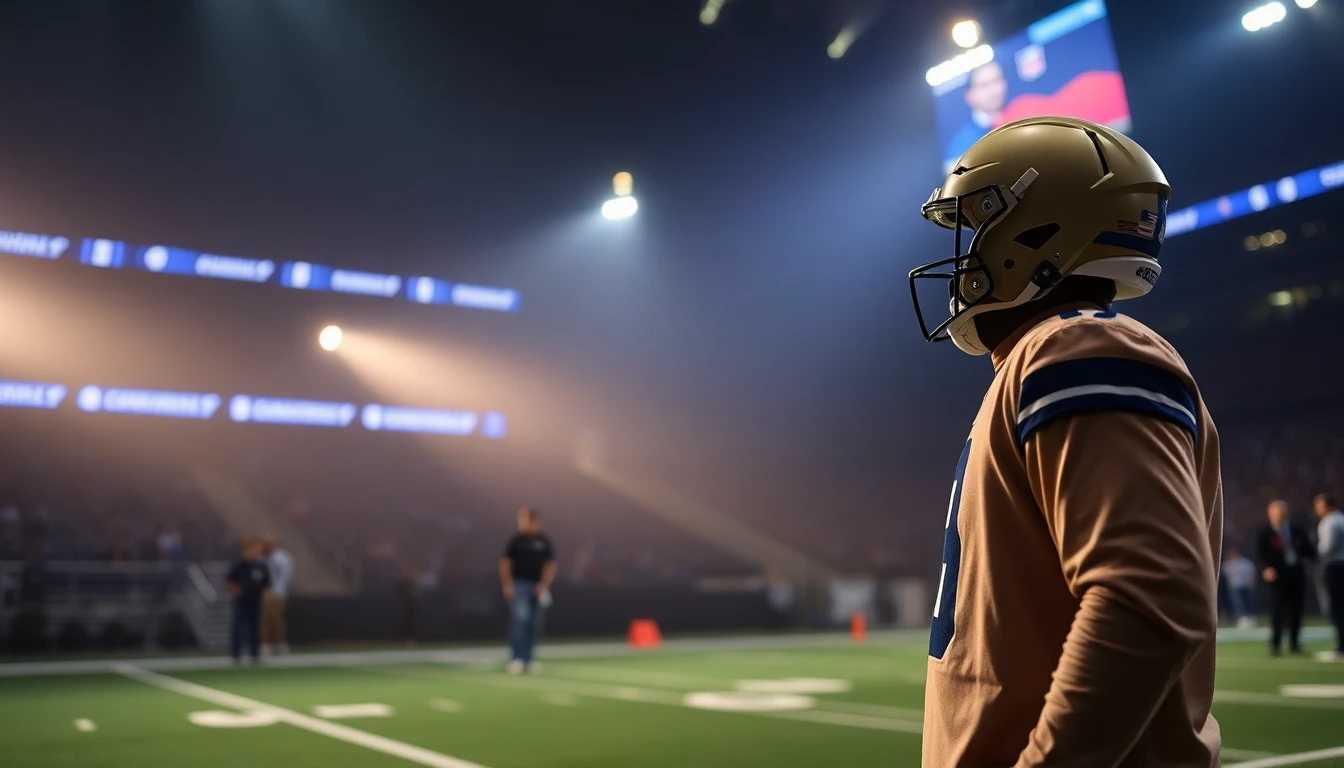
The 2026 NFL Scouting Combine kicked off today in Indianapolis, and as always, the first day delivered a mix of expected performances, surprising standouts, and plenty of draft stock movement. While on-field drills don’t begin until later in the week, the measurements, medical evaluations, and, most importantly, the interviews are already shaping the narrative surrounding this year’s class. This year’s Combine feels particularly significant, as teams are grappling with the long-term ramifications of new player safety regulations implemented league-wide and the increasing reliance on data analytics in talent evaluation. Let’s dive into the four biggest takeaways from day one.
Quarterback Intrigues and Injury Concerns
The quarterback class of 2026 has been a point of contention among scouts and analysts for months. While there’s no consensus number one overall pick, the intrigue surrounding several prospects makes for a compelling storyline. Today, the focus wasn’t so much on arm strength or accuracy (those come later), but on the mental acuity and leadership qualities displayed in the formal interview process. Early reports suggest that both Malik Jefferson from State and Ethan Carter from Western Tech impressed teams with their poise and understanding of complex offensive schemes. Jefferson, in particular, seems to have addressed concerns about his decision-making under pressure, reportedly outlining specific adjustments he made throughout his collegiate career to improve his pre-snap reads. This aligns with the growing trend of teams prioritizing quarterbacks who can quickly process information and make smart decisions, a skillset that’s become even more crucial in the face of increasingly sophisticated defensive strategies.
However, the day wasn’t without its concerns. Pre-Combine buzz surrounding sleeper pick Daniel O’Connell from Northern University was dampened by reports of lingering concerns about his throwing shoulder. While he insists he’s fully recovered from the injury he sustained late in the season, several teams reportedly expressed hesitation during medical evaluations. This uncertainty could significantly impact his draft stock, potentially causing him to slide from a projected second-round pick to the late rounds or even undrafted territory. The risk-reward assessment for quarterbacks with injury histories is always a delicate balance, and teams must weigh the potential upside against the possibility of re-injury and long-term durability issues. The increased emphasis on player safety, especially regarding concussions and other head injuries, makes teams even more cautious when evaluating players with pre-existing medical conditions. The league is still grappling with the long-term effects of head trauma, a challenge that’s only compounded by advancements in our understanding of neurological disorders, as discussed in recent analyses of the Epstein files and the hidden world of accountability. Furthermore, the reliance on artificial intelligence in player evaluation, though helpful, doesn’t fully capture the human element of injury recovery and the mental fortitude required to overcome physical setbacks, similar to the challenges discussed in the UN report on AI’s impact.
Offensive Line Depth: A Welcome Surprise
One of the biggest surprises of day one was the depth and athleticism displayed by the offensive line prospects during initial measurements. While the 2026 draft class was initially considered to be thin at the offensive line position, the Combine has revealed a number of players who could potentially develop into starting-caliber tackles or guards. Several prospects exceeded expectations in terms of height, weight, and arm length, indicating the potential for them to excel in pass protection. This is particularly crucial in today’s NFL, where pass-rushing prowess is at an all-time high, and quarterbacks need reliable protection to thrive.
The performance of these offensive linemen is a welcome development for teams looking to bolster their protection units. The league-wide emphasis on quarterback safety and offensive efficiency has made quality offensive line play a premium commodity, and teams are willing to invest significant resources to acquire and develop talented blockers. This year’s Combine is demonstrating that there are more options available than initially anticipated, potentially driving down the cost of acquiring offensive line talent in the draft. Moreover, the increased understanding of biomechanics and training methodologies has led to improvements in offensive line coaching, allowing teams to better develop raw talent and maximize the potential of their players. This trend reflects a broader emphasis on data-driven decision-making and personalized training programs, similar to the advancements being made in personalized medicine and preventative healthcare, which are increasingly focused on lifestyle practices that help prevent heart disease and other chronic conditions. The improved offensive line talent pool also underscores the importance of scouting and player development at the collegiate level, highlighting the success of programs that prioritize technical proficiency and physical conditioning. Furthermore, the emergence of new training technologies and analytical tools is enabling teams to identify and develop offensive linemen with the specific skillsets needed to excel in different offensive schemes.
Wide Receiver Speed and Agility Showcase
The wide receiver group is consistently one of the most exciting position groups to watch at the Combine, and this year is no different. Day one provided a glimpse into the raw speed and agility of several highly touted prospects. While the 40-yard dash is the headlining event for receivers later in the week, the initial measurements and interviews provided valuable insights into their physical attributes and mental approach to the game. Several receivers impressed scouts with their height, weight, and wingspan, indicating the potential to win contested catches and create separation from defensive backs. In the interviews, many prospects emphasized their commitment to film study and route running precision, demonstrating a strong understanding of the nuances of the position.
The emphasis on speed and agility reflects the evolving nature of the modern NFL, where offenses are increasingly reliant on explosive plays and dynamic route combinations. Teams are constantly searching for receivers who can stretch the field, create mismatches, and make plays after the catch. This year’s Combine is showcasing a number of players who possess the requisite physical tools and mental acumen to excel in these areas. The success of these receivers will depend not only on their raw athleticism but also on their ability to learn and adapt to the complexities of NFL offenses. The growing sophistication of defensive schemes requires receivers to be able to read coverages, adjust their routes on the fly, and consistently make smart decisions in high-pressure situations. Furthermore, the increased emphasis on player safety has led to changes in tackling techniques, which may create more opportunities for receivers to make plays after the catch. The ongoing debate about the role of technology in sports performance is also relevant here, as advancements in data analytics and biomechanics are enabling teams to better evaluate and train wide receivers. Similar technological considerations are being implemented across other industries, including the legal sector where the US Supreme Court adopts new technology to help identify conflicts of interest.
Defensive Back Versatility: Adapting to the Modern Game
In today’s NFL, defensive backs are expected to be versatile and adaptable, capable of playing multiple positions and excelling in both coverage and run support. Day one of the Combine highlighted this trend, with several prospects showcasing their ability to play cornerback, safety, and even linebacker in certain situations. During the interview process, many defensive backs emphasized their understanding of different defensive schemes and their willingness to embrace a variety of roles. This versatility is highly valued by NFL teams, as it allows them to create more flexible and unpredictable defensive packages.
The emphasis on defensive back versatility reflects the increasing complexity of NFL offenses, which are constantly evolving to exploit weaknesses in opposing defenses. Teams need defensive backs who can match up against a variety of receivers, from speedy slot receivers to bigger, more physical tight ends. Additionally, the emphasis on run-stopping ability at the defensive back position has increased in recent years, as teams are looking for players who can effectively support the run and prevent opposing offenses from establishing a consistent ground game. The challenges faced by these players are not dissimilar to the challenges faced by law enforcement in tracking down criminals, as highlighted in analysis of how bitcoin can be used for tracking criminals. The emphasis on versatility also underscores the importance of coaching and player development at the collegiate level. Teams are looking for defensive backs who possess a strong understanding of the fundamentals of the game and a willingness to learn new techniques and adapt to different schemes. The ability to communicate effectively with teammates and make quick decisions under pressure is also crucial for success at the defensive back position. Furthermore, the increased emphasis on player safety has led to changes in tackling techniques, which may require defensive backs to adjust their approach to run support. The shift in focus towards more comprehensive defensive back skillsets also reflects a broader trend towards specialization and adaptability in the modern NFL.
Key Takeaways from Day 1
Day one of the 2026 NFL Scouting Combine provided valuable insights into the strengths and weaknesses of this year’s draft class. The quarterback intrigue remains a key storyline, with several prospects vying for the top spot. The depth of the offensive line class was a welcome surprise, while the wide receivers showcased their speed and agility. The defensive backs emphasized their versatility and adaptability, reflecting the evolving nature of the modern NFL. As the Combine progresses, it will be interesting to see how these narratives continue to evolve and how teams adjust their draft strategies based on the information they gather.
| Attribute | Malik Jefferson (State) | Ethan Carter (Western Tech) | Daniel O’Connell (Northern University) |
|---|---|---|---|
| Arm Strength | Above Average | Average | Average |
| Accuracy | Consistent | Inconsistent at times | Above Average, but questions remain about injury impact |
| Decision Making | Improved significantly throughout college | Generally good, but can be rushed | Good, but needs to be quicker under pressure |
| Mobility | Good mobility, can extend plays | Limited mobility, pocket passer | Above average mobility |
| Leadership | Strong leader, commands respect | Respected, leads by example | Emerging leader |
Frequently Asked Questions
What are the most important things NFL teams look for at the Scouting Combine?
NFL teams use the Scouting Combine to gather comprehensive information about prospective players, going beyond what’s visible on game film. Key aspects include medical evaluations, providing a detailed understanding of a player’s physical health and injury history; physical measurements, assessing height, weight, arm length, and hand size to determine positional fit; on-field drills, showcasing athleticism, speed, agility, and skill execution; and perhaps most importantly, the formal and informal interviews, which allow teams to gauge a player’s intelligence, character, football IQ, and ability to learn and adapt to complex systems. Increasingly, psychological assessments are also used to evaluate a player’s mental toughness, resilience, and ability to handle the pressures of professional football.
How much does the Combine actually impact a player’s draft stock?
The impact of the Combine on a player’s draft stock can vary significantly. For some players, a stellar performance can propel them up the draft board, while a disappointing showing can cause them to slide. However, it’s important to remember that the Combine is just one piece of the puzzle. Teams also heavily weigh game film, medical evaluations, and interviews when making their draft decisions. A player with exceptional athleticism but poor game film might not be as highly valued as a player with solid game film and a more moderate Combine performance. Conversely, a player with a questionable medical history might see their draft stock plummet, regardless of their on-field performance at the Combine. Ultimately, the Combine serves as a valuable tool for teams to confirm or dispel their pre-existing evaluations of players, and to gather additional information that can help them make more informed decisions on draft day. It’s also important to consider the influence of agents and media hype, which can sometimes inflate or deflate a player’s perceived value.
What’s the difference between the formal and informal interviews at the Combine?
The formal interviews at the Combine are structured, 15-minute sessions where teams have the opportunity to meet with players in a more controlled setting. These interviews are typically conducted by a team’s coaching staff and scouting personnel, and they are designed to assess a player’s intelligence, football IQ, and personality. Teams often use whiteboards and film clips to quiz players on their understanding of offensive and defensive concepts. The informal interviews, on the other hand, are more casual interactions that take place throughout the week in various settings, such as the hotel lobby or cafeteria. These interactions allow teams to get a better sense of a player’s personality and character in a less structured environment. While both types of interviews are valuable, the formal interviews are generally considered to be more important, as they provide teams with a more in-depth assessment of a player’s football acumen and ability to learn.
How are the increasing player safety regulations affecting teams’ draft strategies?
The increasing emphasis on player safety is significantly influencing teams’ draft strategies in several ways. Firstly, teams are becoming more cautious when evaluating players with a history of injuries, particularly concussions and other head injuries. They are investing more resources in medical evaluations and seeking second opinions from independent doctors to assess the long-term health risks associated with drafting players with pre-existing medical conditions. Secondly, teams are prioritizing players who demonstrate proper tackling techniques and a commitment to playing the game safely. They are looking for players who can avoid unnecessary collisions and minimize the risk of injury to themselves and their opponents. Thirdly, teams are placing a greater emphasis on character and leadership qualities, seeking players who will set a positive example for their teammates and uphold the league’s standards of conduct. The recent ICE officers suspended after making ‘untruthful statements’ case highlights the importance of character. Ultimately, teams are looking for players who are not only talented and athletic but also responsible and safety-conscious.
With the growing reliance on data analytics, are traditional scouting methods becoming obsolete?
While data analytics is playing an increasingly important role in player evaluation, traditional scouting methods are far from obsolete. Data analytics can provide valuable insights into a player’s performance metrics, such as speed, agility, and efficiency, but it cannot fully capture the nuances of the game, such as a player’s instincts, leadership qualities, and ability to adapt to different situations. Traditional scouting methods, on the other hand, rely on the expertise of experienced scouts who have a keen eye for talent and a deep understanding of the game. Scouts can assess a player’s physical attributes, technique, and mental approach to the game by watching them in person and talking to their coaches and teammates. The most successful teams are those that combine the best of both worlds, using data analytics to identify potential prospects and then relying on traditional scouting methods to evaluate their overall potential. It’s a synergistic approach where data complements, but doesn’t replace, the human element of talent evaluation. This is similar to how Gemini 3.1 Pro is being used for complex tasks, aiding but not replacing human intelligence.