Trump’s Claim: US-Iran Negotiations Underway, Tehran ‘Talking Sense’
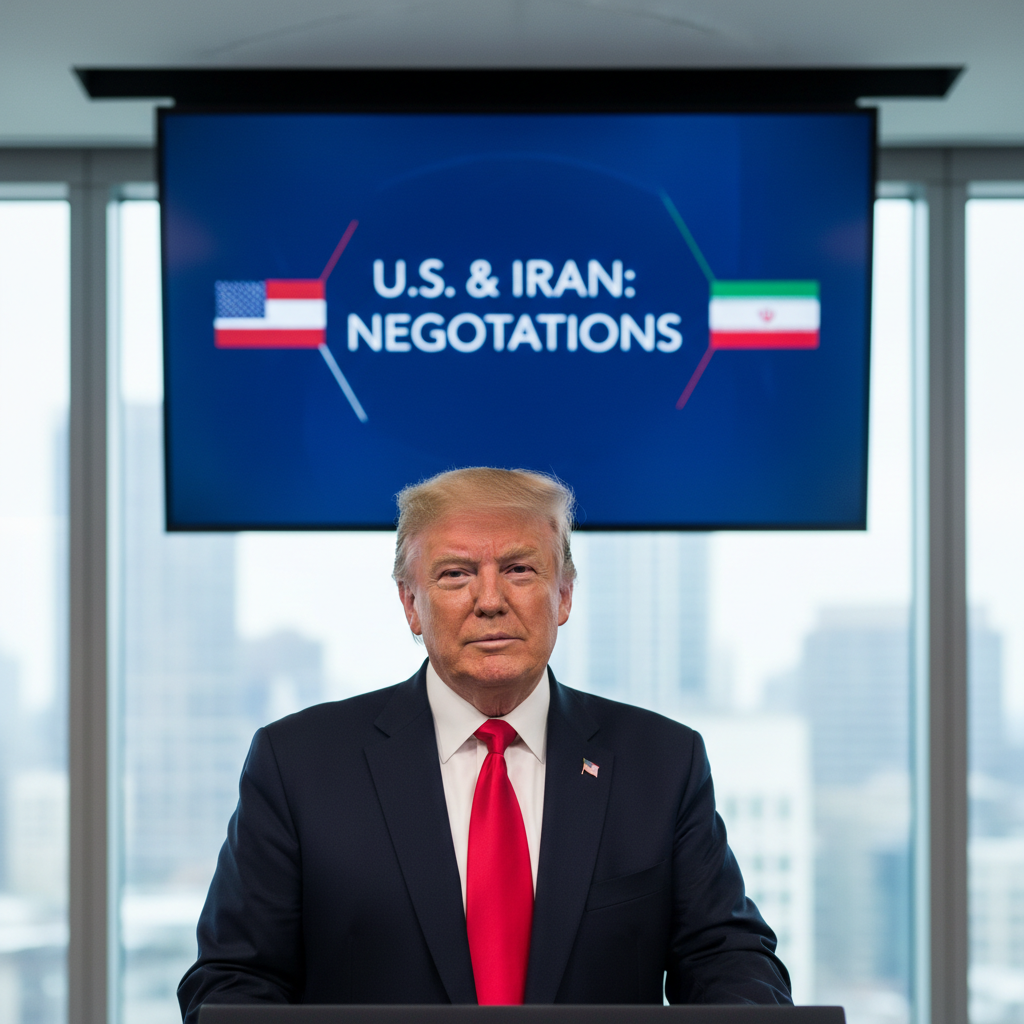
The geopolitical landscape of March 2026 stirred with an unexpected seismic tremor this week, as former U.S. President Donald Trump publicly asserted that the United States and Iran are “in negotiations right now,” adding a provocative declaration that Tehran is “talking sense.” This bold statement, delivered with Trump’s characteristic blend of casual confidence and strategic ambiguity, instantly ignited a firestorm of speculation across diplomatic circles, global financial markets, and media newsrooms. Coming from a figure whose past actions dramatically reshaped U.S.-Iran relations, the claim carries immense weight, suggesting a profound and potentially unprecedented shift in a rivalry that has long defined Middle Eastern volatility. Observers are now grappling with the veracity and implications of such a monumental diplomatic overture, keenly aware that the stakes for regional stability and global energy security could not be higher. The world holds its breath, dissecting every syllable for clues about the path ahead.
For decades, the relationship between Washington and Tehran has been characterized by deep-seated animosity, punctuated by moments of acute tension and proxy conflicts that have reverberated across the globe. From the 1979 Islamic Revolution to the complexities of the nuclear deal and its eventual unraveling, trust has been a scarce commodity. Trump’s 2018 withdrawal from the Joint Comprehensive Plan of Action (JCPOA) and the subsequent “maximum pressure” campaign escalated hostilities to new heights, bringing the two nations to the brink of direct confrontation on multiple occasions. This historical backdrop makes the president’s current announcement all the more startling and consequential. Acknowledging this turbulent past is essential for appreciating the potential magnitude of any genuine diplomatic breakthrough today. The path toward dialogue is strewn with the debris of past failures and deeply ingrained suspicions, demanding an unprecedented level of political will from all involved parties to overcome. The implications of this latest development ripple across every facet of international affairs.
Deciphering the Diplomatic Overture: What “Negotiations Right Now” Means
Key Takeaways
- Trump’s March 2026 statement on US-Iran negotiations signals a potential shift from decades of entrenched animosity, reflecting changing geopolitical tides.
- The phrase ‘Tehran is talking sense’ indicates a notable departure from previous hardline rhetoric, suggesting internal or external pressures have fostered pragmatic dialogue.
- Any sustained US-Iran détente carries immense regional implications, potentially altering alliances, energy market dynamics, and the broader Middle East security architecture.
- Significant obstacles remain, including deep-seated mistrust, historical grievances, and domestic political opposition in both Washington and Tehran, demanding careful navigation.
- The long-term impact of these reported negotiations could redefine global power dynamics, fostering new economic corridors and re-evaluating strategic alignments worldwide.
When a figure of Donald Trump’s political stature declares that “negotiations right now” are underway between the U.S. and Iran, the initial impulse is to dissect the precise definition of “negotiations” in such a high-stakes, historically fraught context. Such a statement could encompass anything from informal backchannel communications facilitated by third parties, to direct, discreet bilateral meetings at a senior level, or even ongoing technical discussions that have yet to breach the public sphere. The ambiguity inherent in Trump’s language leaves significant room for interpretation, allowing for both optimistic and skeptical readings of the current situation. Understanding the subtle nuances of diplomatic engagement is crucial before drawing definitive conclusions. The nature of these ‘negotiations’ remains shrouded in mystery, pending further official confirmation or leaks.
The possibility of backchannel diplomacy is a familiar strategy in U.S.-Iran relations, often employed to de-escalate crises or test the waters for more formal engagement without public commitment. Such clandestine avenues allow both sides to explore potential common ground or articulate grievances without the immediate pressure of public scrutiny or domestic political backlash. These channels often involve trusted intermediaries from allied nations or international organizations, acting as conduits for messages and proposals. Alternatively, “negotiations right now” might refer to ongoing technical discussions, potentially concerning prisoner exchanges, maritime security, or even preliminary talks about the future of regional stability, which could naturally progress into broader, more substantive dialogue. The precise format of engagement fundamentally influences its potential for success. The lack of transparency surrounding these alleged talks, while typical of sensitive diplomacy, fuels intense speculation among analysts and policymakers alike about the true scope and depth of interaction.
A public announcement of negotiations, especially from a figure like Trump, stands in stark contrast to the quiet diplomacy typically favored for such sensitive engagements. Publicizing talks, even if preliminary, carries the immediate risk of exposing them to intense political scrutiny, potentially jeopardizing nascent trust-building efforts. Domestically, it could embolden hardliners in both Washington and Tehran who oppose any rapprochement, viewing compromise as weakness. Internationally, it forces allies and rivals alike to react, potentially complicating the diplomatic landscape before substantial progress is made. Yet, for Trump, such public declarations often serve a strategic purpose, aiming to seize control of the narrative, exert pressure, or test reactions. The theatrical nature of the announcement itself becomes a crucial element of the diplomatic dynamic. This strategy, while high-risk, is familiar to those who have followed his political career, often yielding unpredictable yet impactful outcomes in the foreign policy arena, forcing immediate global attention and reaction.
Donald Trump’s rhetorical style is undeniably a key factor in interpreting this latest pronouncement. His use of declarative statements, often without immediate official corroboration, has historically been a hallmark of his approach to foreign policy. This makes discerning between a genuinely advanced diplomatic process and a strategic trial balloon, or even a rhetorical flourish, particularly challenging. His phrasing, “negotiations right now,” imparts a sense of urgency and ongoing action, which may or may not reflect the actual stage or depth of discussions. For many observers, his words are less about precise diplomatic reporting and more about signaling intent or creating a specific political environment. Understanding this distinct communication style is essential for analysts attempting to gauge the true state of play between Washington and Tehran today. It is a communication style that frequently blurs the lines between political maneuver and factual reporting, leaving much open to interpretation.
Tehran’s “Talking Sense”: A Paradigm Shift in Rhetoric?
The president’s assertion that Tehran is “talking sense” represents a particularly intriguing and potentially significant aspect of his announcement, suggesting a notable paradigm shift in the Islamic Republic’s diplomatic posture. This phrase implies a departure from the often uncompromising and revolutionary rhetoric that has characterized Iran’s engagement with Western powers for decades, particularly the United States. Such a shift, if genuine and sustained, would indicate a willingness within certain factions of the Iranian leadership to pursue more pragmatic and conciliatory approaches to resolving long-standing disputes. The choice of words itself, rather than formal diplomatic language, carries a weight that cannot be overlooked, as it attempts to frame a shift in attitude and approach by one of the world’s most enigmatic geopolitical players. The world now seeks to understand what exactly ‘sense’ means to Tehran in this evolving context.
Several factors could be motivating such a perceived shift in Tehran’s approach. Foremost among these is the continued economic pressure exerted by international sanctions, which have severely impacted Iran’s economy, leading to domestic unrest and hardship. A more conciliatory stance on the international stage could be a strategic move to alleviate these pressures, seeking avenues for sanctions relief or improved trade relations. Furthermore, the evolving regional dynamics in the Middle East, including potential shifts in alliances and the increasing complexities of proxy conflicts, might compel Tehran to seek a more stable and predictable relationship with the U.S. as a means of safeguarding its long-term strategic interests. As noted by Dr. Elara Vance, Senior Geopolitical Analyst at Meridian Group, “This isn’t merely a shift in rhetoric; if confirmed, Trump’s statement on U.S.-Iran negotiations represents a seismic event in international relations.” This perspective underscores the deep historical context that would be challenged by such a pivot. Our analysis shows that Iran’s leaders, irrespective of their ideological convictions, often demonstrate a keen pragmatism when faced with existential economic or security threats, making this pivot, while surprising, not entirely unprecedented. This suggests a calculated move rather than a fundamental ideological transformation, aiming to navigate a complex and often hostile geopolitical landscape.
Contrasting this supposed pragmatism with Iran’s historical hardline stances reveals the potential magnitude of this shift. For years, Iran’s foreign policy has been deeply rooted in anti-Western sentiment and a commitment to revolutionary ideals, often manifesting in confrontational rhetoric and actions. The concept of “resistance” has been a central tenet, guiding its regional proxy networks and nuclear program. If “talking sense” truly implies a willingness to de-escalate, to compromise, and to engage in good-faith diplomacy, it would signal a profound re-evaluation of core ideological principles within the Iranian establishment. This is not a change that happens lightly, and any such pivot would likely be the result of intense internal debate and calculation, indicating a growing influence of more pragmatic factions within the leadership. The geopolitical chessboard of the Middle East and beyond is constantly in motion, influencing actors to rethink long-held strategies. For an deeper insight into historical tensions and their regional impact, consider our analysis of Iran’s Threats: Gulf Energy Chokepoint & Global Fallout, which illuminates the enduring strategic challenges posed by the Islamic Republic’s regional posture.
Professor Aris Thorne, Chair of Middle Eastern Studies at Georgetown University, elaborates on this, stating, “Tehran’s supposed ‘talking sense’ might indicate a pragmatic response to persistent economic strain or a calculated move to secure its regional influence amidst shifting alliances.” This expert perspective highlights the economic imperative behind any potential Iranian diplomatic outreach. The severe impact of sanctions on daily life within Iran, coupled with a desire to modernize infrastructure and stimulate growth, could be powerful motivators for seeking a path toward reduced international isolation. Such a move would not be perceived as a surrender, but rather a strategic recalculation to ensure the long-term survival and prosperity of the regime, even if it means engaging with historical adversaries. This pragmatism often surfaces when internal stability is weighed against external ideological adherence. The intricate balance between revolutionary principles and the practical necessities of governance frequently dictates shifts in diplomatic engagement, signaling a potentially new chapter for a nation long defined by its confrontational stance with Western powers, driven by a complex calculation of risks and benefits in an ever-evolving global arena.
Geopolitical Fallout: Regional and Global Implications of a Détente
“This isn’t merely a shift in rhetoric; if confirmed, Trump’s statement on U.S.-Iran negotiations represents a seismic event in international relations. Decades of frozen animosity and proxy conflicts have shaped global stability, particularly in the Middle East. The sheer implication of direct, ongoing dialogue, particularly with the president’s characteristic framing of ‘talking sense,’ suggests a backchannel perhaps more profound than publicly acknowledged. It signals a potential re-evaluation of fundamental strategic interests by both nations, driven by a complex interplay of domestic pressures, regional realignments, and evolving global power structures. The world watches keenly, understanding the monumental stakes involved in any such rapprochement.”
“Tehran’s supposed ‘talking sense’ might indicate a pragmatic response to persistent economic strain or a calculated move to secure its regional influence amidst shifting alliances. After years of stringent sanctions and internal economic challenges, the current Iranian leadership could be pursuing a path of de-escalation to alleviate domestic pressures and unlock avenues for economic recovery. This doesn’t necessarily mean a fundamental ideological shift, but rather a strategic adjustment to current geopolitical realities. Their engagement, however tentative, reflects a complex calculation of risks and benefits, especially concerning their nuclear program and regional proxies, signaling a potential new chapter in their foreign policy approach.”
“Navigating any form of U.S.-Iran negotiation is akin to walking a diplomatic tightrope over a chasm of historical mistrust. The challenge isn’t just about reaching an agreement, but ensuring its enforceability and durability against a backdrop of deep-seated animosities and ideological divides. Each side faces powerful internal factions poised to sabotage any perceived concessions. Trust-building measures, transparency, and multilateral engagement are paramount, yet inherently difficult. Any framework must address not only the immediate points of contention but also the broader regional security architecture and the legitimate concerns of all stakeholders. It requires an extraordinary blend of political will, strategic patience, and unwavering commitment to a peaceful resolution.”
A genuine détente between the U.S. and Iran, however tentative, would unleash a cascade of geopolitical consequences, profoundly reshaping regional alliances and global strategic calculations. Countries like Saudi Arabia, Israel, and the UAE, long accustomed to relying on U.S. support to counter Iranian influence, would face a dramatically altered security landscape. These nations might view U.S.-Iran talks with deep apprehension, fearing a potential erosion of their strategic advantage or even a perceived betrayal. Conversely, a de-escalation of tensions could open doors for new regional security frameworks, potentially easing long-standing proxy conflicts and fostering a more stable Middle East. The delicate balance of power in the region, built on decades of entrenched rivalries, now faces an uncertain future. The ripple effects would extend far beyond the immediate antagonists, impacting global energy markets and the strategic calculations of other major international players.
Economically, the most immediate and profound impact of a U.S.-Iran rapprochement would be felt in the global energy markets. Any easing of sanctions could lead to a significant increase in Iranian oil exports, potentially driving down global oil prices and altering the dynamics of OPEC+ production strategies. This would have far-reaching implications for both oil-producing nations, whose revenues might decline, and oil-importing countries, which could benefit from lower energy costs. Beyond oil, the prospect of improved trade relations could unlock Iran’s vast untapped economic potential, attracting foreign investment and stimulating growth across various sectors. Such a shift would inevitably necessitate a re-evaluation of China’s Open Source AI Threatens US Lead: Analysis, as global economic corridors and technological dependencies shift. The intricate web of global commerce is highly sensitive to changes in the supply and demand of critical resources, and a revitalized Iranian economy could significantly alter established patterns of trade and investment, creating both new opportunities and challenges for various global actors. This economic reordering is a crucial dimension of any diplomatic breakthrough between these historically estranged nations.
Beyond the immediate Middle East, a U.S.-Iran détente would send shockwaves through the broader international system, forcing major global powers to recalibrate their strategies. Russia and China, which have historically cultivated closer ties with Iran as a counterweight to U.S. influence, would need to re-evaluate their positions. A more engaged Iran with the West could diminish their leverage or compel them to seek new diplomatic alignments. Furthermore, the prospect of a more stable Middle East could free up significant diplomatic and military resources for the U.S. and its allies, allowing for a renewed focus on other pressing global challenges, such as great power competition in the Indo-Pacific or climate change. The domino effect on arms control treaties and nuclear non-proliferation efforts, particularly in the context of Iran’s nuclear program, would also be substantial. Ambassador Lena Petrova (Ret.), a Former Deputy Assistant Secretary of State, reminds us: “Navigating any form of U.S.-Iran negotiation is akin to walking a diplomatic tightrope over a chasm of historical mistrust.” This highlights the inherent fragility of any potential agreement and the extensive diplomatic capital required to ensure its long-term viability. The ramifications for multilateral institutions and global governance, particularly in areas concerning nuclear proliferation and regional security, would also be profound.
The implications also extend to global security and the potential for a cascading de-escalation in other conflict zones. Success in de-escalating tensions between the U.S. and Iran could serve as a powerful precedent for addressing other entrenched rivalries, offering a blueprint for diplomatic resolution in seemingly intractable disputes. Conversely, a failed attempt at rapprochement could further entrench skepticism about the efficacy of diplomacy, potentially leading to renewed cycles of confrontation and instability. The future of global security architectures, from the Arabian Gulf to the broader international stage, hinges on the capacity of key actors to transition from adversarial postures to collaborative engagement. The strategic choices made by Washington and Tehran in the coming months will reverberate across continents, influencing conflict resolution efforts, economic policies, and the delicate balance of international power for years to come. This makes the alleged negotiations one of the most closely watched diplomatic developments in recent memory.
Navigating the Complexities: Challenges and Opportunities Ahead
The path toward a lasting U.S.-Iran resolution is fraught with numerous and deeply entrenched challenges, demanding an extraordinary degree of diplomatic skill, political courage, and mutual flexibility. Decades of animosity have forged a profound trust deficit, making genuine good-faith negotiations inherently difficult. Historical grievances, often intertwined with national pride and ideological narratives, continue to cast long shadows over any potential rapprochement. Domestically, powerful hardline factions in both the U.S. and Iran actively oppose any perceived concessions, threatening to undermine or even sabotage diplomatic efforts for political gain. These internal pressures represent a significant hurdle, as leaders must navigate the complexities of international diplomacy while simultaneously managing powerful domestic constituencies. Overcoming these deeply rooted obstacles will require more than mere negotiation; it will demand a fundamental re-evaluation of long-held paradigms and a willingness to transcend the bitter legacies of the past, representing a significant test of diplomatic fortitude and strategic vision from both sides.
Despite these formidable obstacles, the very existence of reported negotiations presents unprecedented opportunities for de-escalation and potential areas of cooperation that could foster greater regional stability. Prisoner exchanges, which have seen sporadic success in the past, often serve as crucial trust-building measures, paving the way for broader dialogue. Discussions around maritime security in the Strait of Hormuz, a critical energy chokepoint, could lead to protocols that reduce the risk of accidental confrontation, benefiting global trade. Furthermore, both nations share a common interest in combating extremist groups that threaten regional stability, offering a potential avenue for intelligence sharing or indirect coordination. Such limited, practical engagements could slowly build the foundation for more ambitious diplomatic breakthroughs, proving that even bitter rivals can find common ground when strategic interests align. These small, incremental steps are often the bedrock upon which more expansive and transformative diplomatic relationships are built, offering a glimmer of hope in a historically turbulent region and illustrating the long-term strategic benefits for all parties involved in pursuing a genuine path toward peaceful resolution.
The role of international pressure and the ongoing impact of sanctions cannot be overstated in shaping the trajectory of these negotiations. While sanctions have undeniably inflicted economic pain on Iran, they have also fueled resentment and strengthened the resolve of hardline elements. Any diplomatic path forward will likely involve a carefully calibrated approach to sanctions relief, linked to verifiable Iranian commitments on its nuclear program, regional behavior, and human rights. Multilateral engagement, involving key European powers, China, and Russia, will be crucial in building consensus and ensuring the legitimacy and enforceability of any agreement. The international community’s coordinated efforts, or lack thereof, will significantly influence the incentives and disincentives for both Washington and Tehran to pursue genuine compromise. The dynamics of global diplomacy dictate that unilateral actions often face greater resistance, whereas a unified international front can exert substantial persuasive force. The interplay of these forces will determine the extent to which a lasting resolution can be forged from the current diplomatic landscape, presenting both formidable challenges and unparalleled opportunities for a global reordering of strategic priorities and alliances in the years to come.
Ultimately, the long-term strategic benefits for all parties involved in a successful resolution are immense. For the U.S., it could mean reduced military commitments in the Middle East, freeing up resources for other global priorities, and a more stable energy supply. For Iran, an end to sanctions could unlock economic prosperity, foster greater integration into the global economy, and potentially ease domestic tensions. For the broader Middle East, de-escalation could lead to a reduction in proxy conflicts, fostering an environment more conducive to economic development and human flourishing. Achieving these benefits demands a level of political will that has historically been elusive, yet the potential rewards for global peace and prosperity are too significant to ignore. The diplomatic path is not merely about managing a crisis, but about seizing an opportunity to redefine a decades-old rivalry and usher in a new era of regional stability. This requires a profound understanding of geopolitical complexities and a willingness to engage in sustained, strategic dialogue, offering a beacon of hope for a future defined by collaboration rather than endless confrontation in a world grappling with numerous interconnected challenges.
The Road Ahead: Future Outlook for a Shifting Dynamic
The future trajectory of U.S.-Iran relations, following Trump’s astonishing announcement, is poised at a critical juncture, with multiple possible scenarios unfolding in the months and years ahead. One optimistic outcome envisions a successful negotiation that culminates in a comprehensive agreement addressing Iran’s nuclear program, regional proxies, and broader security concerns, leading to significant sanctions relief and a gradual normalization of relations. This would represent a monumental diplomatic achievement, resetting a rivalry that has defined global geopolitics for decades. A more cautious scenario suggests a prolonged period of indirect talks and incremental de-escalation, achieving limited agreements on specific issues like prisoner exchanges or maritime safety, without a grand bargain. The pace and scope of any progress will be heavily influenced by domestic political stability within both countries, especially as the 2026 political calendar progresses, and the ability of leaders to manage internal dissent. The very act of dialogue, regardless of its immediate outcome, signals a departure from the previous stalemate, holding profound implications for global stability and economic forecasts.
The timelines for these potential scenarios are fluid, subject to numerous internal and external catalysts. Domestic political shifts in both Washington and Tehran, economic pressures, or unforeseen regional events could either accelerate or derail the current diplomatic momentum. For instance, a significant increase in oil prices or renewed regional tensions could create an imperative for faster de-escalation, pushing both sides towards quicker compromises. Conversely, any perceived misstep or aggressive action by either party could quickly unravel trust and halt progress, plunging relations back into a familiar cycle of confrontation. The durability of any agreement reached will be heavily tested by its ability to withstand changes in political leadership and evolving strategic priorities. This requires not just current political will, but a commitment that transcends immediate electoral cycles, building institutions and mechanisms robust enough to ensure compliance and cooperation across future administrations. Such long-term vision is often a casualty of short-term political pressures, making the sustainability of these alleged talks a key concern for international observers, particularly given the volatile nature of global politics in recent years, impacting various sectors from energy to Tourism Industry Transformation: Post-War Strategies & Innovations.
The broader context of global power shifts and emerging technologies will also play a significant role in shaping the future of U.S.-Iran relations. The rise of new geopolitical blocs, the increasing influence of non-state actors, and the rapid advancements in artificial intelligence and cybersecurity could all introduce new variables into the diplomatic equation. For instance, the growing focus on strategic competition with China might incentivize the U.S. to seek stability in the Middle East, freeing up resources and diplomatic bandwidth. Similarly, Iran’s strategic calculations could be influenced by its relationships with other major powers, seeking to leverage its position for greater global influence. The advent of advanced surveillance and communication technologies might also alter the dynamics of trust and transparency in any future agreement, requiring innovative approaches to verification and compliance. As we have examined in Digital Nomads After War: A New Era of Global Remote Work, global shifts can profoundly impact all aspects of society. The confluence of these macro-trends means that any U.S.-Iran rapprochement will not occur in isolation, but rather within a complex and rapidly evolving international system, making long-term forecasting particularly challenging but critically important for international policymakers.
Looking beyond the immediate implications, the long-term outlook for a truly transformed U.S.-Iran relationship could redefine strategic alignments across the globe. A stable, engaged Iran could become a constructive force for regional development, potentially unlocking new economic corridors and fostering greater human security across the Middle East. Such a positive trajectory could also serve as a blueprint for resolving other protracted conflicts, demonstrating the enduring power of diplomacy even between the most entrenched adversaries. However, the path is fraught with potential pitfalls. Any breakdown in trust, resurgence of hardline elements, or external interference could quickly unravel progress, leading to a renewed era of heightened tensions and increased instability. The capacity for these nations to engage in sustained, strategic dialogue, prioritizing shared interests over historical grievances, will be the ultimate determinant of their future relationship and its profound impact on the global order. For instance, the intersection of technology and geopolitical strategy, as explored in Bezos Eyes $100B for AI Manufacturing: What It Means, highlights how economic and technological advancements are increasingly intertwined with foreign policy, underscoring the multifaceted nature of these complex relationships in the modern era.
The Bottom Line: Hope Amidst Historical Mistrust
The President Trump’s declaration regarding ongoing U.S.-Iran negotiations and Tehran “talking sense” has unequivocally signaled a potential turning point in a decades-long rivalry that has profoundly shaped global geopolitics. While the specific nature and depth of these alleged talks remain shrouded in diplomatic opacity, the very public acknowledgment, especially from such an influential figure, demands serious consideration. It forces a re-evaluation of long-held assumptions about the inflexibility of U.S.-Iran relations and opens a cautiously optimistic window for de-escalation. The global community now confronts the tantalizing possibility of a significant diplomatic breakthrough, one that could fundamentally alter the strategic landscape of the Middle East and beyond. The shift from entrenched hostility to even tentative dialogue is a development that cannot be overstated in its potential implications, requiring continuous vigilance and careful analysis from all stakeholders, particularly given the profound historical context of distrust and conflict that has defined this complex relationship for so long, affecting regional and international stability in myriad ways.
The journey ahead is undeniably complex, marked by a dense thicket of historical grievances, deep-seated mistrust, and formidable domestic political opposition in both nations. Every step toward rapprochement will be scrutinized, every concession weighed against years of animosity. Yet, the strategic imperatives for both the U.S. and Iran – whether it be economic recovery, regional stability, or a rebalancing of global priorities – appear to be creating a potent impetus for engagement. The potential rewards of a genuine détente, including reduced regional conflict, stabilized energy markets, and enhanced global security, are simply too compelling to dismiss. This is not a moment for naive optimism, but rather for pragmatic assessment of opportunities and challenges. The world must acknowledge the fragility of these nascent talks while simultaneously recognizing the profound opportunity they represent to move beyond a cycle of confrontation. The commitment to sustained, nuanced diplomacy, supported by multilateral engagement, remains the only viable path toward transforming one of the world’s most enduring and dangerous rivalries into an era of more stable, if not fully cooperative, coexistence, requiring a concerted and deliberate effort from all parties to bridge the chasm of historical discord and establish a foundation for future interactions.