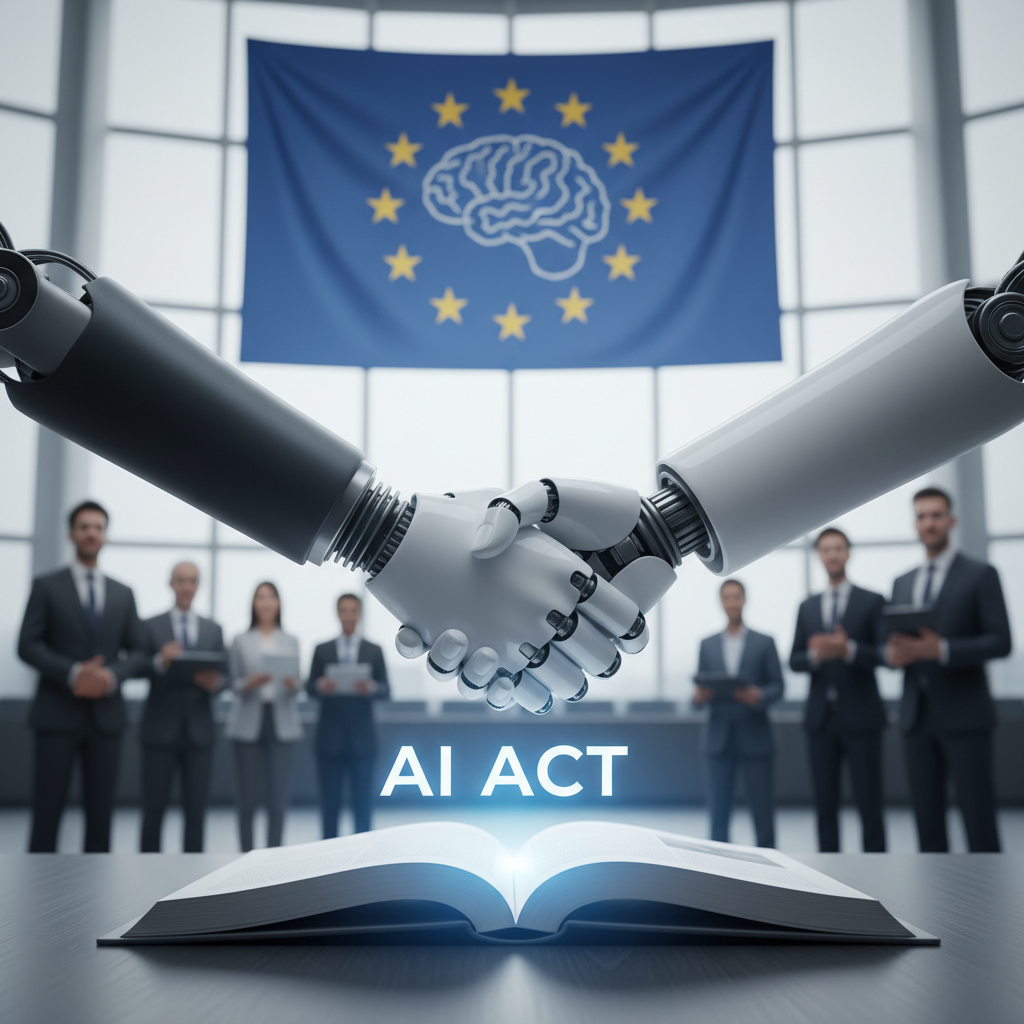
The European Union’s AI Act, finally ratified this month, represents a watershed moment in the global governance of artificial intelligence. Years in the making, this comprehensive piece of legislation aims to foster innovation while simultaneously mitigating the risks associated with AI technologies. It’s not just another regulation; it’s a framework designed to ensure that AI systems are developed and deployed ethically, safely, and with respect for fundamental rights. The Act establishes a tiered risk-based approach, categorizing AI applications based on their potential to cause harm. High-risk applications, such as those used in critical infrastructure or healthcare, will face stringent requirements and oversight. While lower-risk applications will be subject to fewer regulations. This landmark legislation is poised to reshape the AI landscape, not only within the EU but also globally. Its influence will likely extend far beyond the European borders, setting a precedent for AI regulation worldwide. Understanding the Act’s provisions is now crucial for businesses and consumers alike.
Key Takeaways
- The EU AI Act is now law, imposing significant obligations on businesses.
- AI systems are classified by risk, with high-risk applications facing the strictest rules.
- Businesses must ensure AI systems comply with the Act before deployment in the EU.
- The Act includes provisions for consumer protection and fundamental rights.
- Non-compliance can result in hefty fines, impacting profitability.
- The Act will likely influence AI regulation beyond the EU.
Understanding the AI Act’s Risk-Based Approach
The cornerstone of the EU AI Act is its risk-based approach, categorizing AI systems based on their potential to cause harm. This approach ensures that regulatory burdens are proportional to the risks involved. At the highest end are ‘unacceptable risk’ AI systems, which are banned outright. These include AI systems that manipulate human behavior, exploit vulnerabilities, or conduct indiscriminate surveillance. Next are ‘high-risk’ AI systems, which are permitted but subject to rigorous requirements. Think AI in critical infrastructure, education, and healthcare. They require strict adherence to data governance, transparency, and human oversight. Finally, ‘low’ or ‘minimal risk’ AI systems face lighter regulation, focused on transparency, ensuring users know they’re interacting with AI. This includes AI used for chatbots or spam filters.
The Act’s risk-based system demands careful AI assessment prior to release. Businesses deploying AI within the EU must determine the risk category of their system. High-risk systems require extensive documentation, conformity assessments, and ongoing monitoring. These assessments must demonstrate adherence to strict data quality standards, ensuring fairness, accuracy, and reliability. Transparency is another key requirement, allowing users to understand how the AI system works and make informed decisions. Moreover, human oversight mechanisms must be in place to prevent AI from acting autonomously and ensure human intervention when needed. The risk categorization process demands deep knowledge of the AI Act to properly assess and deploy technology.
For companies, proper risk assessments is now paramount. The consequences of misclassifying an AI system can be severe. Incorrectly labeling a high-risk system as low-risk could result in substantial fines and reputational damage. The EU will establish a regulatory body to oversee compliance and enforce the Act’s provisions. This body will have the authority to conduct audits, investigate complaints, and impose penalties. The Act also empowers individuals to file complaints if they believe an AI system has violated their rights. Navigating this regulatory landscape will require expertise and ongoing vigilance. Failing to accurately assess the risk posed by AI systems is no longer acceptable.
While risk assessments are the key for all businesses, they are particularly vital for SMEs and startups that are building AI systems. These organizations often lack the resources and expertise to conduct thorough risk assessments and ensure compliance with the Act. The EU recognizes this challenge and is providing support through guidance documents, training programs, and financial assistance. It is imperative that SMEs take advantage of these resources to avoid falling foul of the law. Failing to comply with the AI Act could cripple a startup’s ability to enter the EU market and hinder its growth potential. This is especially relevant to deep tech companies pushing the boundaries of innovation.
Obligations for Businesses Under the AI Act
The EU AI Act places a range of obligations on businesses that develop, deploy, or use AI systems within the EU. These obligations vary depending on the risk category of the AI system, but all businesses must be prepared to comply with transparency requirements. Businesses must inform users when they are interacting with an AI system. High-risk systems are subject to stricter requirements, including data governance, documentation, conformity assessments, and human oversight. Data governance requires businesses to implement processes to ensure the quality, integrity, and security of the data used to train and operate AI systems. Documentation requires businesses to maintain detailed records of the design, development, and testing of AI systems.
Conformity assessments require businesses to demonstrate that their AI systems meet the requirements of the Act. This can be done through self-assessment, third-party certification, or a combination of both. Human oversight requires businesses to put in place mechanisms to ensure that AI systems are subject to human control and can be overridden when necessary. This includes providing users with clear ways to intervene in the operation of AI systems and providing training to human operators on how to oversee AI systems effectively. Businesses should also ensure clear lines of accountability and responsibility, which is a growing issue in the industry. These requirements are designed to ensure that AI systems are safe, ethical, and transparent.
For EU-based AI companies, a proactive approach is crucial. They must integrate compliance considerations into their product development lifecycle from the outset. This means considering the Act’s requirements when designing AI systems, collecting data, and implementing algorithms. EU-based AI companies should also actively engage with regulators to stay abreast of evolving interpretations and enforcement priorities. They should invest in internal expertise to navigate the complex regulatory landscape and ensure that their AI systems are compliant by design. Proactive compliance is not just a legal obligation; it’s a competitive advantage. This is also key for any company selling into the EU.
Non-EU businesses selling into the EU are equally accountable. The Act applies to any AI system deployed or used within the EU, regardless of where the business is located. Non-EU businesses must appoint a representative within the EU to act as their point of contact for regulatory matters. They must also ensure that their AI systems comply with the Act’s requirements, even if they are not subject to those requirements in their home country. This means investing in compliance efforts, understanding the Act’s provisions, and engaging with EU regulators. Ignoring the AI Act is a risky strategy for any business that wants to operate within the EU market.
Consumer Rights and Protections Under the Act
The EU AI Act places a strong emphasis on consumer rights and protections. The Act aims to ensure that AI systems are used in a way that respects fundamental rights, including privacy, freedom of expression, and non-discrimination. One of the key protections is the right to information. Consumers have the right to be informed when they are interacting with an AI system, especially if that system is making decisions that affect them. This transparency requirement empowers consumers to make informed choices about whether to use AI-enabled products and services. It also enables them to understand how AI systems work and how they make decisions.
The Act also prohibits certain AI practices that are considered to be manipulative or exploitative. For example, AI systems that exploit vulnerabilities or manipulate human behavior in a way that is likely to cause harm are banned. The Act gives consumers the right to redress if they are harmed by an AI system. Consumers can file complaints with the EU regulatory body and seek compensation for damages. The Act also requires businesses to implement mechanisms to ensure that AI systems are used in a non-discriminatory way. This includes conducting bias assessments and implementing mitigation measures to prevent AI systems from perpetuating or amplifying existing inequalities.
The Act also empowers consumers to make informed decisions about AI usage. This means providing clear and understandable information about the AI system’s capabilities, limitations, and potential impacts on their rights. Consumers also have the right to opt out of certain AI-enabled services or to choose alternative options that do not rely on AI. This ensures that consumers have control over their interactions with AI and are not forced to use AI systems against their will. Empowering consumers to make informed choices is key to building trust in AI and promoting its responsible adoption.
These new rights bring responsibilities for AI developers to build safe systems. They must be proactive in identifying and mitigating potential risks to consumer rights, including privacy, non-discrimination, and freedom of expression. This requires investing in research, ethical design practices, and robust testing procedures. AI developers should also engage with consumers to gather feedback and understand their concerns. By prioritizing consumer rights, AI developers can build trust, promote responsible adoption, and ensure that AI benefits everyone.
Impact on AI Innovation and Development
While the EU AI Act aims to mitigate the risks associated with AI, it also seeks to foster innovation and development. The Act recognizes that AI has the potential to bring significant benefits to society and the economy. The Act seeks to create a regulatory framework that is both protective and enabling. By setting clear rules and standards, the Act aims to provide businesses with the certainty and predictability they need to invest in AI. It also aims to promote trust in AI by ensuring that AI systems are safe, ethical, and transparent. This can lead to increased adoption of AI technologies and greater economic benefits.
To support innovation, the Act includes provisions for regulatory sandboxes. These sandboxes allow businesses to test their AI systems in a controlled environment without being subject to the full weight of the Act’s requirements. This provides a safe space for businesses to experiment with new AI technologies and develop innovative solutions. The EU is also investing in research and development to promote AI innovation. These investments aim to support the development of cutting-edge AI technologies and ensure that the EU remains at the forefront of AI innovation. Innovation is the key to maintaining competitiveness.
To make the system work, AI developers can play a crucial role in shaping the Act’s implementation. By engaging with regulators, participating in consultations, and providing feedback on draft regulations, AI developers can help ensure that the Act is practical, workable, and effective. Developers should also promote responsible innovation by adopting ethical design practices and prioritizing safety and transparency in their AI systems. Collaboration with regulators is a recipe for success.
The AI Act’s impact will vary by business size; large and small. Large companies may have more resources to adapt to the Act’s requirements, but they may also face greater scrutiny due to their larger market presence and potential impact. SMEs and startups may face greater challenges in complying with the Act, but they may also benefit from the regulatory sandboxes and other support measures. The Act’s overall impact on AI innovation will depend on how effectively it balances the need for regulation with the desire to promote innovation. Striking the right balance is key to unlocking the full potential of AI.
Enforcement and Penalties for Non-Compliance
The EU AI Act includes robust enforcement mechanisms and substantial penalties for non-compliance. The Act aims to ensure that businesses take their obligations seriously and comply with its provisions. The EU will establish a regulatory body to oversee compliance and enforce the Act. This body will have the authority to conduct audits, investigate complaints, and impose penalties. The Act also empowers individuals to file complaints if they believe an AI system has violated their rights. This gives consumers a direct say in how AI systems are used and promotes greater accountability.
Penalties for non-compliance can be significant, up to 6% of global annual turnover or €30 million, whichever is higher. This level of penalty is designed to deter businesses from flouting the Act and to ensure that they prioritize compliance. The actual amount of the penalty will depend on the severity of the violation and the size of the business. Repeat offenders may face even higher penalties. The Act also includes provisions for other types of enforcement action, such as orders to cease and desist from using an AI system and orders to recall AI systems from the market.
These penalties should serve as a wake-up call for businesses using AI. Compliance efforts must now be a top priority, as the financial and reputational risks of non-compliance are significant. Businesses should invest in compliance programs, train their staff on the Act’s requirements, and implement robust processes to ensure ongoing compliance. Ignorance of the law is no excuse.
The EU AI Act’s enforcement mechanisms are designed to be effective and proportionate. The goal is not to stifle innovation or punish businesses unnecessarily. Rather, the goal is to ensure that AI systems are used in a responsible and ethical way. By enforcing the Act effectively, the EU aims to create a level playing field for businesses, promote trust in AI, and unlock the full potential of AI for the benefit of society.
Global Implications and Influence of the EU AI Act
The EU AI Act is poised to have a significant global impact. The Act sets a new standard for AI regulation that is likely to influence other countries and regions around the world. As the EU is a major economic power, its regulatory decisions often have a ripple effect. The Act may become a model for other countries seeking to regulate AI. Companies that want to operate in the EU will have to comply with the Act, even if they are based in other countries. This will incentivize businesses around the world to adopt AI ethics and compliance measures.
The Act’s definition of ‘AI system’ is broad and encompasses a wide range of technologies. It applies not only to AI systems developed in the EU but also to those used within the EU, regardless of where they were developed. This has significant implications for businesses outside the EU that want to offer AI-enabled products and services to the European market. They will have to ensure that their AI systems comply with the Act’s requirements, even if they are not subject to those requirements in their home country. The extraterritorial reach of the Act is likely to incentivize businesses worldwide to adopt AI ethics and compliance measures.
The Act may lead to the development of new AI standards and best practices. By setting clear rules and standards for AI, the Act may spur the development of new industry standards and best practices. These standards and practices may then be adopted by businesses around the world, even if they are not legally required to do so. This could lead to a more harmonized approach to AI regulation globally and promote greater trust in AI. This is a great way to promote innovation and adoption.
The EU AI Act is expected to have far-reaching consequences for the global AI landscape. Its influence will extend far beyond the borders of the EU, shaping the development and deployment of AI technologies worldwide. Businesses that want to remain competitive must prepare for this new reality. This is a great oppotunity to ensure best practices in AI are adopted globally.
“The EU AI Act is a game-changer. It’s not just about compliance; it’s about building trust in AI. Businesses that embrace ethical AI practices will not only avoid fines but also gain a competitive advantage in the long run. This Act sets the stage for a future where AI benefits everyone, not just a select few.”
— Dr. Anya Sharma, AI Ethics Consultant
| Requirement | High-Risk AI Systems | Limited-Risk AI Systems | Unacceptable-Risk AI Systems |
|---|---|---|---|
| Data Governance | Strict requirements for data quality, integrity, and security. | No specific requirements. | Prohibited. |
| Documentation | Detailed records of design, development, and testing. | Limited documentation requirements. | Prohibited. |
| Conformity Assessment | Mandatory conformity assessments (self or third-party). | Conformity assessments not required. | Prohibited. |
| Human Oversight | Mechanisms for human control and intervention. | Human oversight recommended but not mandated. | Prohibited. |
| Transparency | Extensive transparency requirements, including explainability. | Transparency to inform users of AI interaction. | Prohibited. |
| Risk Management | Ongoing risk management and mitigation measures. | No specific risk management requirements. | Prohibited. |
| Enforcement | Strict enforcement, audits, investigations, and penalties. | Limited enforcement actions. | Strict enforcement, bans, and severe penalties. |
| Examples | AI used in critical infrastructure, healthcare, and education. | AI used for chatbots or spam filters. | AI systems that manipulate behavior or conduct indiscriminate surveillance. |
| Penalties for Non-Compliance | Up to 6% of global annual turnover or €30 million, whichever is higher. | Lower penalties, warnings, and corrective actions. | Bans, severe penalties, and potential criminal charges. |
Frequently Asked Questions
What types of AI systems are completely banned under the EU AI Act?
The EU AI Act prohibits AI systems that pose an unacceptable risk to fundamental rights and safety. This includes AI systems designed to manipulate human behavior, exploit vulnerabilities of individuals or specific groups (such as children), or conduct indiscriminate surveillance in a generalized and untargeted manner. Additionally, AI systems that are used for social scoring by governments or those that make biometric identification and categorization of natural persons inferring sensitive or protected attributes are also banned. The explicit goal is to prevent AI from being used in ways that could undermine human dignity, autonomy, and democratic processes, especially those systems that could systematically discriminate or surveil citizens without their knowledge or consent. This is about ensuring that technology is used responsibly.
How can businesses determine if their AI system is considered ‘high-risk’ under the Act?
Determining whether an AI system is ‘high-risk’ under the EU AI Act involves assessing its potential impact on individuals’ fundamental rights, safety, and health. The Act provides a list of sectors and use cases considered high-risk, such as AI used in critical infrastructure, education, employment, essential private and public services, and law enforcement. If an AI system falls within these sectors or involves similar use cases, it’s likely to be classified as high-risk. Furthermore, businesses should evaluate the extent to which the AI system makes decisions that significantly affect individuals’ lives, such as determining access to employment, credit, or healthcare. It’s crucial to consult the AI Act’s detailed guidelines and seek legal advice to ensure accurate classification, as misclassification can lead to severe penalties.
What specific steps must businesses take to ensure ‘human oversight’ of high-risk AI systems?
Ensuring ‘human oversight’ of high-risk AI systems under the EU AI Act requires implementing mechanisms that allow humans to intervene in and override the decisions made by AI. This involves designing AI systems with clear intervention points, providing human operators with the authority and ability to monitor the AI’s performance, and offering the technical means to correct or disable the AI system when necessary. Human operators must have a thorough understanding of the AI’s capabilities and limitations, as well as the potential risks and consequences of its decisions. Additionally, businesses should provide ongoing training and support to human operators to ensure they can effectively oversee the AI system and exercise their intervention rights. Clear protocols and procedures must be in place to guide human intervention decisions.
How does the EU AI Act address the issue of bias and discrimination in AI systems?
The EU AI Act addresses bias and discrimination in AI systems through several key provisions. First, it requires businesses to ensure that the data used to train and operate AI systems is of high quality and free from bias. This involves carefully selecting and curating data to avoid perpetuating or amplifying existing inequalities. Second, the Act mandates that businesses conduct bias assessments to identify and mitigate potential sources of discrimination. This includes evaluating the AI system’s performance across different demographic groups and implementing measures to address any disparities. Third, the Act requires that AI systems be designed in a way that promotes fairness and transparency. This involves using explainable AI techniques to understand how the AI system makes decisions and ensuring that those decisions are not based on discriminatory factors. Moreover, accountability and constant monitoring are key for success.
What resources and support are available to small and medium-sized enterprises (SMEs) to help them comply with the EU AI Act?
The EU recognizes that SMEs may face unique challenges in complying with the AI Act and is providing several resources and support measures to assist them. These include the development of comprehensive guidance documents that explain the Act’s requirements in clear and accessible language. These documents are updated as new rules are added. The EU is also funding training programs to help SMEs develop the expertise needed to assess the risks of their AI systems and implement appropriate compliance measures. Additionally, the Act establishes regulatory sandboxes that allow SMEs to test their AI systems in a controlled environment without being subject to the full weight of the Act’s requirements. These sandboxes provide a safe space for experimentation and innovation, helping SMEs to develop compliant AI systems. Lastly, financial assistance in the form of grants and loans may be available to SMEs to support their compliance efforts. SMEs can visit the EU’s official AI website for more information on these resources and support programs.