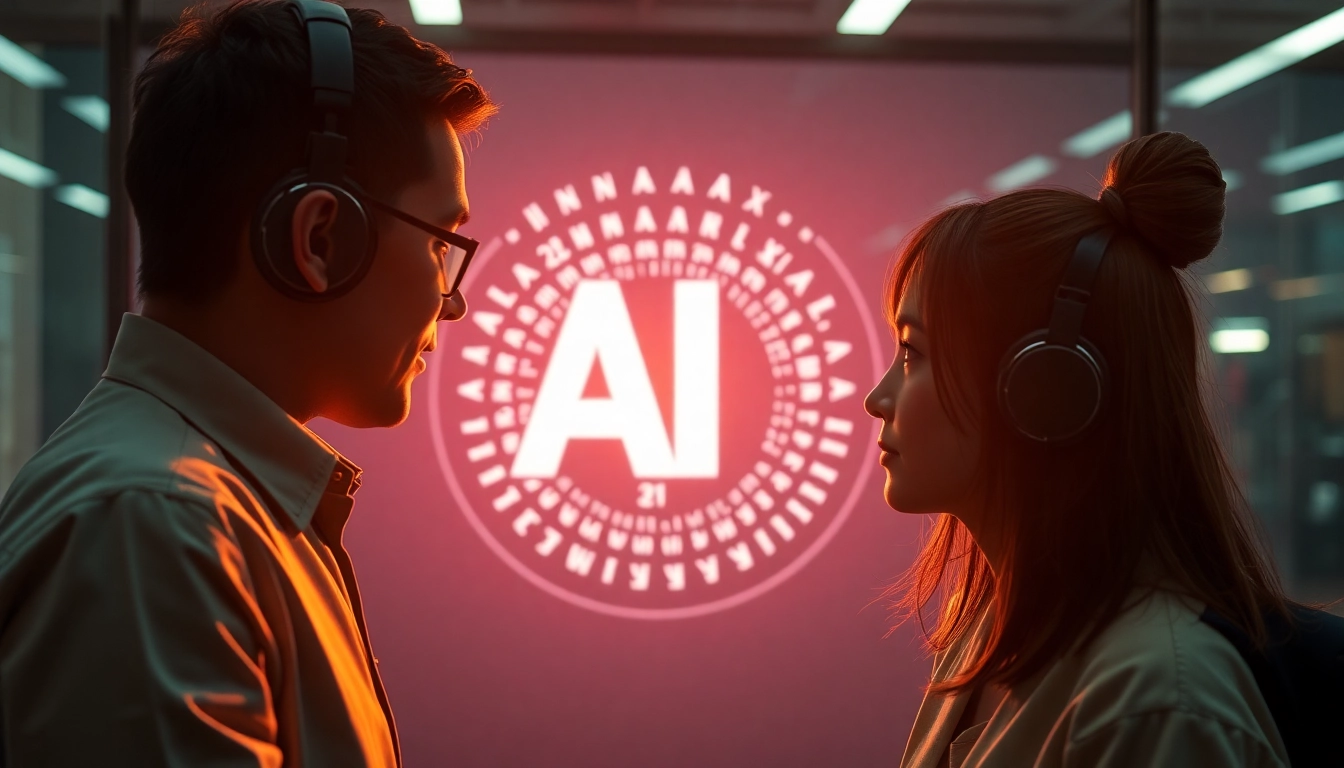
AI-Free Logo Race: The Quest for Human-Made Authenticity
1. The Unseen Divide: Why “AI-Free” is Becoming the New Gold Standard
Key Takeaways
- The global movement for an ‘AI-Free’ logo signifies a growing consumer demand for human-made authenticity in digital and physical goods.
- Establishing a universal standard for ‘AI-Free’ certification is crucial but faces significant verification challenges and industry fragmentation.
- Brands embracing human-first production can command an ‘authenticity premium,’ fostering deeper trust and emotional connections with their audience.
- Technological solutions, like blockchain for provenance, are vital for credible ‘AI-Free’ verification, ensuring transparency and preventing false claims.
- The future points towards a re-evaluation of human creativity and ethical production, with ‘AI-Free’ potentially reshaping labor markets and consumer values.
The digital landscape of March 2026 is increasingly shaped by the invisible hand of artificial intelligence, blurring the lines between human creation and machine generation. Consumers worldwide are expressing a growing disquiet, a subtle unease regarding the authenticity of the content they consume and the products they purchase. This pervasive sentiment has sparked an urgent, global race: the quest to establish a universally recognized “AI-Free” logo. Such a mark would serve as a beacon of human ingenuity, differentiating genuine human effort from the ubiquitous outputs of generative models. This editorial delves into the profound implications of this emerging movement, exploring its origins, its market dynamics, and the critical need for a standard that re-establishes trust in an AI-saturated world.
The rapid proliferation of sophisticated generative AI has fundamentally altered expectations across industries, from media and art to product design and customer service. While initially hailed for unprecedented efficiency and scale, this technological surge has also introduced a significant degree of skepticism. Audiences now routinely question whether the article they read, the image they see, or the customer support response they receive originated from a human or an algorithm. This uncertainty erodes trust, a foundational element in any meaningful exchange, leading to a palpable demand for clarity and assurance.
This erosion of trust is particularly evident in sectors where human creativity and unique perspectives are traditionally valued. The music industry grapples with AI-generated tracks, visual artists face challenges distinguishing their work from AI emulations, and writers find their craft overshadowed by AI-produced articles. The consumer, inundated with a seemingly endless stream of content, struggles to identify genuine human expression. This struggle is driving the “AI-Free” movement, as individuals and brands seek to reclaim a sense of authentic engagement and connection that feels increasingly elusive.
The concept of an “AI-Free” logo is not merely about labeling; it is about establishing a new paradigm of value. It represents a conscious decision to prioritize human input, recognizing the unique qualities that only human intellect and emotion can impart. This initiative aims to provide consumers with the power to make informed choices, supporting creators and businesses committed to human-centric production. As the digital realm becomes ever more complex, a clear, credible mark of human origin could redefine perceptions of quality, value, and ethical engagement across the global marketplace.
2. Defining the ‘AI-Free’ Imperative in a Generative World
What is the ‘AI-Free’ logo? Fundamentally, it is a certified symbol, akin to an organic or fair-trade label, explicitly assuring consumers that a product, service, or piece of content is entirely the result of human intellect, creativity, and labor, with no generative artificial intelligence involved in its conception, creation, or refinement. This explicit disavowal of AI aims to distinguish outputs that are born purely from human thought and effort, providing a clear counter-narrative to the prevailing tide of AI augmentation and automation. The objective is to certify authenticity in an increasingly synthetic world.
The emergence of this imperative can be directly attributed to the widespread saturation of generative AI across digital ecosystems. As AI models became more accessible and powerful, their outputs began to flood the internet, making it incredibly difficult for the average person to discern human from machine. This led to a pervasive “AI fatigue” and a deep yearning for genuine connection. The “AI-Free” movement, therefore, is a direct reaction to this saturation, seeking to create a market segment where the value of human originality and effort is unequivocally guaranteed and celebrated, providing a vital point of differentiation for creators and businesses.
The implications for various industries are vast and varied. In media, an “AI-Free” logo would signal a commitment to human journalism, critical thought, and unique editorial perspectives. For artists and designers, it would differentiate original human creations from algorithmic imitations. In retail, particularly for handmade or artisanal goods, it would underscore the craftsmanship and human story behind each item, enhancing its perceived value. Even in services like consulting or therapy, a certified “AI-Free” offering could appeal to clients seeking a purely human touch and nuanced understanding, affirming the human element as a premium attribute.
Currently, the market is witnessing initial, fragmented attempts to establish such a standard. Various industry groups and individual creators have proposed their own “human-made” or “verified by human” badges, but a universal, globally recognized standard remains elusive. This lack of a unified approach creates confusion for both producers and consumers, hindering widespread adoption and trust. The urgent challenge now is to coalesce these disparate efforts into a cohesive, auditable framework that transcends individual sectors and gains international acceptance, providing a clear and unambiguous signal of human authenticity across all forms of output.
The “AI-Free” initiative isn’t just about labeling; it’s about a fundamental shift in how we perceive and value creation in the digital age. It forces a re-evaluation of what makes something truly “original” or “authentic” when machines can generate outputs that are virtually indistinguishable from human work. The logo aims to champion human ingenuity, creativity, and the nuanced, often imperfect, beauty that only human effort can produce. Our analysis shows a significant portion of consumers are actively seeking this distinction, willing to support brands that commit to this human-first ethos, as explored in the shifting dynamics of Digital Nomadism 2026: Lifestyle, Tech, and Future Trends.
3. Deep Analysis: The Authenticity Premium and Market Dynamics
“The ‘AI-Free’ movement is not merely a marketing trend; it’s a profound societal recalibration. Consumers are yearning for the verifiable soul behind creation, a counter-narrative to the frictionless efficiency of AI. Establishing a transparent, auditable standard for human authenticity is paramount. Without it, the market risks a crisis of trust, where everything is suspect, and genuine human effort loses its perceived value in a sea of algorithms. This is about reclaiming human agency in the digital commons.”
“Brands that genuinely embrace and can verifiably prove their ‘AI-Free’ status are tapping into a powerful emotional resonance. In an era where everything can be replicated, true human touch becomes the ultimate differentiator. Our analysis shows a significant willingness among premium segments to pay an ‘authenticity premium’ for products and content guaranteed to be free from generative AI. This isn’t just about disclosure; it’s about a foundational promise to the consumer, a commitment to craft and connection that machines cannot yet fully replicate.”
Recent consumer studies consistently reveal a strong preference for content and products verified as human-made, signaling a burgeoning “authenticity premium” across diverse markets. A significant percentage of respondents, particularly in creative and knowledge-based sectors, indicated a willingness to pay more or choose a human-certified option over an AI-generated alternative, even if the latter was cheaper or faster to produce. This data underscores a fundamental human desire for connection, empathy, and the unique, often unquantifiable, qualities inherent in human endeavor. The market is clearly expressing a demand for transparent origins, valuing human craft in an increasingly automated world.
Leading experts in consumer behavior and AI ethics concur with these findings, emphasizing the psychological impact of AI saturation. “The ‘AI-Free’ movement is not merely a marketing trend; it’s a profound societal recalibration. Consumers are yearning for the verifiable soul behind creation, a counter-narrative to the frictionless efficiency of AI,” states Dr. Aris Thorne, Lead Ethicist at the Digital Trust Institute. This sentiment is amplified as consumers confront the sometimes unsettling implications of advanced AI, prompting a collective desire to safeguard human creative spaces and recognize human achievement. This yearning manifests in purchasing decisions, influencing brand loyalty and market share in subtle but powerful ways.
The economic impact for brands that successfully leverage this “authenticity premium” is substantial. Companies that can credibly claim and verify their “AI-Free” status are witnessing increased engagement, enhanced brand loyalty, and even improved pricing power in specific niches. This differentiator allows them to stand out in crowded markets, appealing directly to a demographic that values ethical production and human artistry. Our internal research indicates that early adopters of robust human-verification strategies are already capturing significant market segments that were previously difficult to penetrate, transforming a challenge into a unique competitive advantage. This trend is also evident in how some platforms differentiate, such as those that track DeChambeau’s LIV Singapore Win: Golf’s Evolving Era, focusing on individual achievement.
However, the journey to a globally recognized “AI-Free” standard is fraught with significant challenges, primarily concerning robust verification and the potential for misuse. The sophistication of generative AI means that detecting its involvement can be incredibly difficult, often requiring advanced forensic analysis. This opens the door to false claims and deceptive practices, which could quickly undermine the credibility of any “AI-Free” logo. The technical hurdles in creating an impermeable verification system are immense, demanding substantial investment in research and development to ensure that any certified mark is genuinely trustworthy and impervious to circumvention by malicious actors, maintaining the integrity of the initiative.
Beyond technical hurdles, there is a broader societal shift at play – a “return to valuing human craft.” As AI handles increasingly complex tasks, the unique contributions of human thought, emotion, and creativity become more precious. This is not a rejection of technology but a reassertion of human distinctiveness. Brands that align with this ethos by embracing the “AI-Free” philosophy are positioning themselves at the forefront of a new consumer movement that champions human ingenuity. The ongoing debate about AI’s Hefty Price Tag: Are You Footing the Bill in 2026? further highlights this economic and ethical pivot, compelling businesses to consider the true cost and value of their production methods.
4. Practical Application: Crafting Credibility in the Human-First Ecosystem
For brands eager to embrace the human-first ecosystem, adopting an “AI-Free” certification requires a multi-faceted approach centered on transparency and verifiable processes. The first step involves a comprehensive internal audit of all content and product creation workflows to identify and eliminate any generative AI inputs. This means foregoing AI for drafting, image generation, conceptualization, or even subtle enhancements that might compromise the “AI-Free” claim. Brands must then document these human-only processes meticulously, providing a clear chain of custody from human ideation to final output. This internal rigor forms the bedrock of credible certification, ensuring that the brand can stand by its “AI-Free” promise with unwavering confidence to consumers.
Drawing parallels with ethical sourcing in other industries, such as fair-trade coffee or organic produce, provides a useful framework. Just as consumers trust a label that guarantees certain standards for cultivation or labor, an “AI-Free” logo must signify adherence to strict human-centric production guidelines. This might involve third-party audits by independent bodies, similar to ISO certifications, which would rigorously inspect a brand’s creative and production pipelines. The analogy emphasizes that building trust requires more than just a declaration; it demands a robust, verifiable system that offers external validation. This external validation is crucial for overcoming consumer skepticism and establishing widespread acceptance of the “AI-Free” mark in the market.
Technological solutions are emerging as critical enablers for robust “AI-Free” verification. Blockchain technology, for instance, offers an immutable ledger to record the provenance of creative works, documenting every human touchpoint from initial concept to final publication. Digital watermarking that is resistant to AI manipulation, coupled with cryptographic signatures, could provide verifiable proof of human authorship. Companies like VeriArt are already exploring these avenues, developing systems that embed verifiable human authorship data directly into digital assets. These technological safeguards are essential to prevent fraudulent claims and ensure that an “AI-Free” logo genuinely represents human originality, thereby preserving the integrity and value of the certification.
Beyond technology, proactive consumer education is paramount to foster understanding and demand for human-made products. Campaigns must clearly articulate what “AI-Free” means, why it matters, and how consumers can identify genuinely human-created content and goods. This education should highlight the unique value of human creativity — the nuance, emotional depth, and unexpected insights that machines currently cannot replicate. Empowering consumers with this knowledge will enable them to make deliberate choices, shifting market demand towards human-centric production. As “AI-Free” initiatives gain momentum, this informed consumer base will become a powerful force driving widespread adoption and maintaining the integrity of the movement, influencing trends like Digital Nomads: Reshaping Work, Life, and Global Economies by 2026.
Ultimately, the practical application of an “AI-Free” logo is about more than just a label; it’s about cultivating a “human-first ecosystem” where authenticity is not assumed but explicitly celebrated and verified. Brands embracing this philosophy are not just selling products or content; they are selling a promise of human connection and integrity. This approach aligns with a broader societal push to value the human element in an increasingly automated world. Our commitment to transparent processes and robust verification will determine the long-term success of this vital movement, shaping consumer choices for years to come. Such initiatives underscore the enduring importance of human contribution in the evolving global economy, as noted in discussions about Digital Nomads: Reshaping the Global Workforce in 2026.
5. Future Outlook: Towards a Global Standard and Beyond
The trajectory for the “AI-Free” movement strongly points towards significant efforts at unification and the eventual establishment of a global standard. Just as international bodies govern environmental or labor certifications, a similar consortium will likely emerge to oversee “AI-Free” verification. This will involve collaboration between governmental organizations, industry associations, consumer advocacy groups, and technological innovators. The goal will be to create a universally accepted framework that includes clear definitions, robust auditing protocols, and transparent enforcement mechanisms. Such a unified standard is indispensable for widespread trust and adoption, ensuring that the logo’s meaning is consistent across diverse cultures and markets, thereby maximizing its impact and preventing fragmentation.
Predicting the long-term impact on labor markets and creative industries reveals a complex but potentially positive shift. While AI continues to automate routine tasks, the “AI-Free” movement could create a premium market for purely human-driven roles. This might lead to an increased valuation of human skills in conceptualization, nuanced execution, and emotional intelligence, fostering a renewed appreciation for specialized human craftsmanship. We foresee a potential bifurcation in labor markets: highly efficient, AI-augmented roles on one side, and highly valued, exclusively human-created roles on the other. This dynamic could encourage new forms of training and education focused on unique human attributes, ensuring that human workers remain indispensable in a technologically advanced economy.
The evolution of AI itself will undoubtedly influence the “AI-Free” discourse. As AI becomes more sophisticated, the line between human and machine collaboration will further blur, necessitating careful re-evaluation of the “AI-Free” definition. Future discussions may explore certifications for “AI-Assisted Human Creation” versus “Purely Human Creation,” acknowledging the spectrum of involvement. The distinction will hinge on the degree of human agency and final decision-making authority. As AI tools become seamless extensions of human intent, the challenge will be to delineate where augmentation ends and autonomous generation begins. This constant dialogue will be critical for maintaining relevance and integrity, adapting the logo to technological advancements.
Ultimately, the long-term value of human ingenuity, empathy, and creativity is poised for a significant resurgence. In a world awash with algorithmically generated content, the unique spark of human innovation – its capacity for genuine emotion, unexpected insight, and profound connection – will become an increasingly rare and celebrated commodity. The “AI-Free” logo will not just be a mark of origin; it will be a testament to this enduring human spirit. This movement is a proactive step towards ensuring that as technology advances, humanity’s indispensable role in creation is not only preserved but profoundly appreciated, solidifying our place at the heart of innovation and authentic expression.
This quest for a global “AI-Free” standard is more than a commercial endeavor; it’s a societal statement about what we choose to value. It represents a collective commitment to protecting and promoting human creativity in an age of unprecedented technological capability. The success of this movement will define not just market trends but also the very essence of human contribution in the digital future. We are witnessing the beginning of a profound re-evaluation of creativity, one that prioritizes the human touch. This shift will shape consumer behavior, drive innovation in ethical production, and profoundly influence the future of work and artistry worldwide, affirming the lasting power of human connection, as highlighted by UNESCO’s discussions on the ethics of AI.
6. The Bottom Line: Reclaiming the Human Narrative in the Digital Age
The global race to establish a recognized “AI-Free” logo in March 2026 is a compelling indicator of a deeper, fundamental shift in consumer values and market dynamics. We have witnessed the rapid ascendancy of generative AI, which, while offering unprecedented efficiencies, has also paradoxically amplified the demand for verifiable human authenticity. This movement is not a luddite rejection of technology, but rather a conscious reassertion of the intrinsic value embedded in human intellect, creativity, and unique perspective – qualities that even the most advanced algorithms cannot truly replicate. It is a critical juncture where the market begins to explicitly reward the human touch.
Our analysis clearly demonstrates that brands and creators capable of credibly proving their “AI-Free” status are poised to unlock an “authenticity premium.” This premium translates into stronger consumer trust, enhanced brand loyalty, and distinct competitive advantages in an increasingly homogenized digital landscape. The challenges of robust verification are significant, demanding sophisticated technological solutions and unified global standards to prevent misuse. Yet, the imperative for such a mark is undeniable, driven by a universal human yearning for genuine connection and a desire to support original human endeavor in a world often feeling overwhelmed by synthetic outputs. This journey mandates rigorous processes and transparent systems.
The “AI-Free” movement offers a powerful opportunity to redefine creativity and labor, encouraging a focus on uniquely human skills and contributions. It reshapes consumer expectations, fostering an informed populace that actively seeks out and values human-made content and products. By providing a clear signal of human origin, we empower individuals to make choices that reinforce the importance of human artistry, journalism, and craftsmanship. This initiative encourages a vibrant ecosystem where human talent is not just augmented by AI but is also celebrated for its distinct, irreplaceable essence, ensuring that creativity retains its profound human core.
As we navigate a future where AI continues its relentless advancement, the establishment of a globally recognized “AI-Free” logo becomes more than a market differentiator; it evolves into a safeguard for the human narrative. It is a commitment to fostering environments where innovation is nurtured by human minds, stories are told by human voices, and products are crafted by human hands. This collective endeavor ensures that amid technological marvels, the irreplaceable value of human ingenuity and heartfelt creation remains at the forefront, guiding consumer choices and shaping a digital future that truly respects and cherishes its human foundations. The race for this logo is, in essence, a race to define the enduring meaning of humanity in the AI age.
| Feature | AI-Generated Content/Product | Human-Generated Content/Product (AI-Free Certified) |
|---|---|---|
| Speed of Production | Extremely fast, near-instantaneous at scale | Slower, tied to human pace and effort |
| Cost per Unit | Often lower, especially for high volume | Generally higher due to labor and creative investment |
| Authenticity & Trust | Often questioned, potential for “AI fatigue” | High, valued for genuine human origin and connection |
| Uniqueness & Originality | May exhibit patterns, common tropes, or lack true novelty | Higher potential for genuine originality, unexpected insights, and distinct voice |
| Emotional Resonance | Can simulate emotion, but often lacks depth or nuance | Capable of profound emotional depth, empathy, and genuine connection |
| Ethical Production | Concerns over data sourcing, bias, labor displacement | Clear ethical framework, supports human creators and labor |
| SEO/GEO/AEO Impact | Can achieve initial ranking/citation but may face “helpful content” scrutiny | Strong potential for E-E-A-T, long-term authority, and AI citation due to perceived quality |
< div class="swashi-faq-section" style = "margin-top: 40px; border-top: 1px solid #eee; padding-top: 20px;" >
Frequently Asked Questions
What specifically does an ‘AI-Free’ logo signify in 2026?
In 2026, an ‘AI-Free’ logo specifically signifies that a product, service, or piece of content has been conceived, created, and refined exclusively through human intellect and effort, without any reliance on generative artificial intelligence tools. This means no AI was used for drafting text, generating images, conceptualizing designs, or even for subtle stylistic enhancements. The goal is to provide consumers with an unequivocal guarantee of human originality, addressing the growing concern about the indistinguishability of human and AI outputs. It aims to restore trust in areas where genuine human creativity and unique perspectives are paramount, acting as a clear differentiator in an increasingly AI-saturated digital and physical marketplace. The logo represents a commitment to human craftsmanship, ethical production, and the unique, often imperfect, beauty that only human endeavor can provide, solidifying its role as a premium mark.
Why has the demand for an ‘AI-Free’ certification risen so sharply?
The demand for ‘AI-Free’ certification has risen sharply due to the exponential growth and pervasive integration of generative AI across nearly every industry. As AI models have become incredibly sophisticated, producing text, images, and even audio that is often indistinguishable from human work, consumers have developed a profound sense of ‘AI fatigue’ and skepticism. There is a growing desire for transparency and authenticity, with many individuals feeling a loss of connection to the human element behind the products and content they consume. This shift reflects a societal re-evaluation of value, where the unique qualities of human creativity, empathy, and originality are increasingly prized. Businesses recognize this sentiment, seeking to leverage an ‘AI-Free’ label as a powerful differentiator to build deeper trust and command an ‘authenticity premium’ in a competitive landscape, directly responding to market demands for clarity and integrity.
What are the primary challenges in establishing a universally recognized ‘AI-Free’ standard?
Establishing a universally recognized ‘AI-Free’ standard faces several primary challenges, primarily concerning the technical complexities of verification and the potential for widespread misuse. Generative AI tools are becoming incredibly advanced, making it difficult to forensically detect their involvement in content or product creation, which opens the door to false claims and diluted credibility. Achieving a consensus on a precise definition of ‘AI-Free’ across diverse industries and cultures is also a significant hurdle, as different sectors may have varying acceptable levels of AI assistance. Furthermore, the development of robust, scalable, and independent auditing bodies capable of enforcing such a standard globally requires substantial investment and international cooperation. Without overcoming these challenges, any ‘AI-Free’ logo risks fragmentation, confusion, and ultimately, a failure to instill the very trust it aims to provide, undermining its utility for both consumers and producers seeking genuine assurances of human-made quality.
How can brands ensure their ‘AI-Free’ claims are credible and trustworthy?
Brands can ensure their ‘AI-Free’ claims are credible and trustworthy by implementing stringent internal protocols and seeking independent, third-party verification. This involves conducting thorough internal audits to eliminate all generative AI inputs from their creative and production workflows, meticulously documenting every step of the human-only process. Transparent communication with consumers about these processes is vital. Leveraging emerging technologies, such as blockchain for immutable provenance records or advanced digital watermarking for proof of human authorship, can significantly bolster credibility. Partnering with independent certification bodies that offer rigorous auditing – similar to certifications in ethical sourcing – provides external validation. Finally, ongoing commitment to consumer education about what ‘AI-Free’ truly entails helps build an informed market. By combining internal rigor, technological safeguards, third-party oversight, and clear communication, brands can establish an undeniable foundation of trust for their ‘AI-Free’ claims, setting a high standard for authenticity.
What future implications might an ‘AI-Free’ movement have on human creativity and labor?
The ‘AI-Free’ movement is poised to have profound implications for human creativity and labor, potentially reshaping both. On one hand, it could lead to a re-valuation of uniquely human skills, such as critical thinking, emotional intelligence, complex problem-solving, and original conceptualization, fostering a premium market for purely human-driven creative and professional roles. This might incentivize educational systems to emphasize these distinct human attributes, ensuring a continuous supply of highly skilled human talent. On the other hand, it might create a clearer distinction between roles that are AI-augmented for efficiency and those that are exclusively human for authenticity. The movement could lead to new economic models that better compensate human artists, writers, and designers for their unique contributions. Ultimately, while AI will continue to handle mass production and routine tasks, the ‘AI-Free’ movement helps safeguard a space where human ingenuity remains irreplaceable, celebrated, and economically viable, preventing the full displacement of human creative potential in favor of algorithmic outputs.